
Learning and building the Mishkan in this time
[A] (halacha 215)
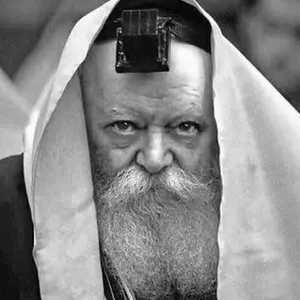
During these weeks in which we read in the Torah about the making of the Mishkan, the Rebbe1 raised: 'A new proposal-request, to be publicized in every place: Since we are entering the week of Parshas Terumah (beginning with the reading at Shabbos Mincha), and afterward Parshas Tetzaveh, in which parshiyos all the details of the commands regarding the making of the Mishkan, the vessels of the Mishkan, the priestly garments, etc., are explained — it is most fitting and proper that, in addition to studying a portion of the parsha each day (with Rashi's commentary) in the Chitas study cycle, one should add and also study from the commentaries of Chazal in the Oral Torah (at least one statement and one commentary on one verse), as they have already been gathered in the seforim2 (and there is no need to search through the seforim), 'like a table set and ready for a person to eat from'.
★ ★ ★
Question: Is it permitted to build a house like the structure of the Beis HaMikdash?
Answer: The Gemara in Maseches Avoda3 Zara states: 'It was taught: A person may not make a house in the form of the Heichal, a portico in the form of the Ulam, a courtyard corresponding to the Azarah, a table corresponding to the [Mikdash's] table, a menorah corresponding to the [Mikdash's] menorah. But he may make one of five [branches], or six, or eight. And one of seven he may not make, even of other kinds of metals.'
And so ruled the Mechaber4: 'One may not make a house in the form of the Heichal, of the same measure of its height, length, and width.'
If so, it is forbidden to make a house in the form of the Beis HaMikdash.
★ ★ ★
Question: Does this prohibition apply also to the Mishkan?
Answer: The Minchas Chinuch5 wrote: 'Were it not that I fear my colleagues, and all the more so my teachers, I would say that this law does not fall under this prohibition, but rather only at a time when the Beis HaMikdash stands is it forbidden to make in its form — for example, in the time of the Mishkan it was forbidden to make in the forms of the Mishkan, since it was then serving before Him, may He be blessed. And so too when Shiloh stood, and likewise Nov and Givon, and likewise the First Beis HaMikdash — at each of these times it was forbidden to make any form that resembled the form that was serving then. And so too in the Second Beis HaMikdash it was forbidden to build in its form. And so too in the Third Beis HaMikdash, speedily in our days, it will be forbidden to make in the form that will be then, for they serve before Him, may He be blessed. But nowadays, since on account of our many sins they do not serve before Him, it is possible that it is not included in this prohibition .. And behold, I write this with dread and fear, for it is to be lenient in a Torah prohibition against the poskim; yet it is Torah, and I must learn, and I cannot understand whether there is a prohibition at this time to make the form of the Azarah — from which form was it forbidden — and this requires further study.'
However, the Rebbe noted6 on the words of the Minchas Chinuch: 'But this is against the view of the poskim, the Tur and Shulchan Aruch YD 141:8, that it is forbidden even now (as he himself writes there), and if so, it may be said that the likeness of the Mishkan too, etc., is forbidden. And in the Responsa Beis Efraim OC, end of YD, he wrote that according to the view of Rashi and the Rambam (in conclusion) the prohibition applies also to the form of the First Beis HaMikdash. And also according to his words, it may be said that it is forbidden also in the form of the Mishkan.'
And in accordance with the words of the Rebbe that there is a prohibition in making the form of the Mishkan even today, so too it appears from the words of the Ritva7.
If so, it may be said: that in practice it is forbidden to make also the form of the Mishkan.
Tomorrow, with Hashem's help, we will discuss whether this prohibition applies also when one changes the size of the model from what the size was in the Mishkan.
Notes:
1 ש"פ משפטים תשמ"ט - ספר השיחות ע' 252 ↩
2 כמו 'תורה תמימה', 'תורה שלמה' וכיו"ב ↩
3 מג עמוד א. וכ"ה בר"ה כד, א. מנחות כח, ב ↩
4 יו"ד סי' קמא ס"ח ↩
5 פרשת קדושים מצוה רנד אות ו ↩
6 לקו"ש חט"ז עמ' 306 הערה 60 ↩
7 בר"ה כד, א ד"ה תנן ↩
From the 'Shoneh Halacha' project — a daily halacha with reasons and sources
Link to the (silent) group: 'Shoneh Halacha — Chabad Minhogim'
Join the WhatsApp groupBuilding a Scale Model of the Mishkan
[א] (halacha 216)
Building a model of the Mishkan
We learned in the previous halacha (number 215) that there is a prohibition to build a building resembling the Mishkan and the Beis HaMikdash.
Question: What is the law if one changed the size of the model?
Answer: a. Rashi wrote in Maseches Avodah Zarah1: 'A house in the form of the Heichal — in its length, its width, its height, and the measure of its entrances; but if it was changed in part, it is permitted', and so ruled the Tur2.
And so too it appears from the words of the Mechaber3: 'One may not make a house in the form of the Heichal in the measure of its height, its length, and its width.' And as the Shach4 explained: 'In the measure of its height, its length, and its width. But if it was changed in part, it is permitted'.
However, in Shu"t Maharik5 he wrote on the words of the Tosafos6: 'Behold you have it explicitly that even though the Ulam had four walls, since it appeared as if it had only three walls, it is forbidden to make a portico with three [walls] in its form. This shows that the matter depends on the appearance to the eye, even though he did not actually make it in the form of the Beis HaMikdash'.
And it appears from his words that he derives from the words of the Tosafos that even if one changes from the size, yet as long as in appearance to the eye it looks like the Mishkan, this is forbidden.
But in Shu"t Chacham Tzvi7 he disagreed with him and wrote: 'In my humble opinion, it never entered the mind of the Tosafos to say that even though it is not actually in the form of the Ulam it is forbidden because it appears in its form, for if so, what measure do we have for permission, and who will tell us up to where a person errs in the imagination of his eye's appearance'.
And behold, the Gri"ch Sonnenfeld wrote in Shu"t Salmas Chaim8: 'Who permitted making a model of the Mishkan in its entirety if not for the reason that it is in order to learn from it? But in my humble opinion the permission of "in order to learn" applies specifically where they need it for practical purposes, and behold we are warned not to make a menorah of seven branches, as is explained etc., and if so, to make the form in its entirety and in proportion I do not know of a permission'9.
But in Shu"t Minchas Yitzchak10 he wrote: 'And even though in practice there is still room to deliberate on this, nevertheless in our case, where there is also in it the matter of learning and understanding and ruling .. and moreover, that which in our case there is in any case room to be lenient, for the plain language of the Gemara proves that only when one makes a complete house and the like is it forbidden, as long as he does not change from its measure, but in our case the form has no designation of a house at all, rather one makes it from very small stones, and behold in this it does not apply that he is using the king's scepter and equates the honor of a servant to the master … and behold, in practice one should further ask the great ones of Torah, for due to my many burdens I have written only by way of give-and-take and not for practical halacha'.
And indeed, in practice the poskim permitted making a reduced model, and especially in order to learn11.
b. An additional reason to permit making a model of the Mishkan is when the material from which the model is made is not fit for making the Mishkan, as follows:
The Gemara in Maseches Avodah Zarah12 says: 'A person may not make .. a menorah .. even of other kinds of metals. Rabbi Yossi bar Yehudah says: even of wood he may not make'.
And Rashi wrote: 'But of wood it is permitted [=mutar], for it is not fit in the Mikdash, for the verse [=the pasuk specifies] explicitly states metal. And Rabbi Yossi bar Yehudah said: even of wood he may not make — for (he holds that) it too is fit in the Mikdash'.
And so ruled the Mechaber13 regarding the prohibition of making a menorah resembling the Mikdash: 'even of other kinds of metals'. And the Shach14 wrote: 'that even though it is not of gold it is fit in the Mikdash, but [if] it is not of metals, such as of wood and the like, it is permitted, for it is invalid in the Mikdash, (Sha"s and Rambam ch. 7 of Hilchos Beis HaBechirah), and all the more so of earthenware that it is permitted (as is found in Rashi there and in the Mahari"a), and this is why the Tur and Mechaber wrote "metals" specifically'.
If so, there is an additional permission: when one builds from material that is not fit, there is no prohibition15.
In practice, it is permitted to make models of the Mishkan when there is a change from the original size or when it is made from materials that are not fit for the Mishkan. And so it is related that the Rebbe in his youth built a model of the Beis HaMikdash16, and likewise it is a maaseh rav (ruling by precedent of action) that models of the Beis HaMikdash were brought to the Rebbe at the distribution of dollars.
Notes:
1 מג, א ↩
2 יו"ד סי' קמא. הרמב"ם (הל' בית הבחירה פ"ז ה"י) לא חילק בפירוש. אך כתב המעשה רוקח: 'רש"י ז"ל פי' דהיינו באורכו ורחבו ורומו ואם חסר שרי, וכן פסק הש"ע יו"ד סוף סי' קמ"א ורבינו סתם הדברים ואפשר דהעתיק לשון הברייתא ודו"ק' ↩
3 יו"ד סי' קמא ס"ח ↩
4 ס"ק לג ↩
5 סי' עה ↩
6 ר"ה כד, א ד"ה אכסדרה ↩
7 סי' ס ↩
8 או"ח סי' רעב, וראה דבריו גם ביו"ד סימנים לה ולו, ובהנהגות ופסקים הלכות עשיית צורות ותבנית המשכן ↩
9 אך ראה מ"ש באג"מ יו"ד ח"ג סי' לג ↩
10 ח"י סי' עג ↩
11 ראה אג"מ יו"ד ח"ג סי' לג. ילקו"י דיני חינוך קטן מהלכות עבודה זרה ס"ב ↩
12 מג, א ↩
13 יו"ד סי' קמא ס"ח ↩
14 ס"ק לה ↩
15 ולהעיר גם ממש"כ הרבי (לקו"ש חט"ז עמ' 306 הערה 59) שלכאורה אין איסור כיום לעשות משכן שהרי היריעות העליונות היו מעור תחש שהוא בעל חי שהיה רק בזמן עשיית המשכן, אך מבאר שם דעיקר האהל היה יריעות התחתונות שלא נעשו מהתחש וובזה כבר נקרא המשכן אהל, ולכן האיסור קיים גם כיום ↩
16 ימי מלך ח"א ע' 149 ↩