
V'Al HaNissim on Shushan Purim
[א] (halacha 225)
Shushan Purim - in the unwalled towns
Question: Do residents of the unwalled towns say V'al HaNissim on Shushan Purim?
Answer: The She'iltos D'Rav Achai1 wrote: 'to mention Al HaNissim in Modim only on the fourteenth day alone'. And so wrote the Seder Rav Amram Gaon2: 'And it is forbidden for the villages and the large towns and the cities that are not surrounded by a wall from the days of Yehoshua bin Nun, to read the Megillah and to read in the Sefer Torah in "VaYavo Amalek" and to mention Al HaNissim, whether in tefillah or in Birkas HaMazon, except on the fourteenth day alone. And the cities surrounded by a wall from the days of Yehoshua bin Nun read on the fifteenth of Adar alone. And so is the halacha'.
The Beis Yosef3 cited the Orchos Chaim4 who wrote that one does not say Techinah nor LaMenatzeach nor Shir Mizmor on the two days, but to read in the Torah and to mention Al HaNissim is forbidden except on the fourteenth'.
And the Beis Yosef raised a difficulty upon him: 'And I do not know what prohibition there is in mentioning Al HaNissim'?
And the Darkei Moshe5 wrote on the Beis Yosef: 'And I do not understand him, for since one need not say it, if he says it, it constitutes an interruption in the tefillah and in Birkas HaMazon, and you have no greater prohibition than this'.
And although there are those who justified the saying of Al HaNissim on Shushan Purim, as the Mor U'Ketziah6 wrote: 'And in truth, I say it to him, and if I had the strength I would establish it as halacha, and why not, since we have accepted the fifteenth also as a Yom Tov, as it is written in Megillas Taanis. And it was needed only to prohibit one of these on the other, etc. And on it was the essence of the miracle in its completeness .. therefore certainly one who mentions the nature of the event on the fifteenth is not pushed aside. So it appears to us.
But in practice the Rama7 already ruled: 'And one does not say Al HaNissim except on the fourteenth day, but not on the fifteenth'.
★ ★ ★
Question: What is the law in a case where a person erred and said V'al HaNissim on Shushan Purim?
Answer: The Bach8 wrote: 'And in my humble opinion the matter is simple that it is forbidden, and if he said Al HaNissim on the fifteenth he must go back and pray again, for it deviates from the formula of the bracha that the Sages coined .. on the fifteenth it is not Purim and it was not instituted to say Al HaNissim in the tefillah except for Purim'. And so wrote the Pri Chadash9: 'The matter is clear that since one is not obligated to mention it, it constitutes an interruption and he must go back to the beginning'.
But the Taz10 wrote on the words of his father-in-law the Bach: 'Except that he overstated the matter in saying that even after the fact, if he said it he goes back, because it deviates from the formula that Chazal coined; and this is not so, for it is found in Siman 108, Se'if 12 that one who errs and mentions the event of other days in the tefillah not in its proper time has not made an interruption, and even according to what we distinguished there between Havdalah and other matters11 nevertheless here there is some relevance on these days; therefore certainly he need not go back if he said it, as appears to me clearly'. And so ruled the Magen Avraham12.
If so, in practice a person who said V'al HaNissim on Shushan Purim need not go back and pray again.
★ ★ ★
Question: Is there an obligation to rejoice on Shushan Purim?
Answer: The Semak13 mitzvah 148 wrote: 'But eulogy and fasting are forbidden, whether on the fourteenth and fifteenth of the first Adar, or on the 14th and 15th of the second Adar, and the same applies to making a seudah and rejoicing'.
And in Sefer HaMinhagim - Tirna14 he wrote: 'On the fifteenth day, which is Shushan Purim, one does not say in it Keil Erech Apayim nor LaMenatzeach, and all the more so Tachanun and Tzidkascha Tzedek. And one is obligated in feasting and rejoicing [just as on the fourteenth day] as it is stated (Esther 9:27) "את שני הימים האלה" ("these two days")'.
But from the words of the Rama it is implied that it is not like the fourteenth day and it is only a partial obligation, for he wrote15: 'And one is obligated in feasting and rejoicing somewhat on the two days, the 14th and 15th, and so they were accustomed'16. And the Levush17 explained: 'For "days of feasting and rejoicing" is written, which implies the two days, and they were accustomed to rejoice even on the night of the fifteenth that is between them'. And in the Eliyah Zuta18 he wrote: 'That it is a mitzvah to rejoice also on Shushan Purim'.
And the Minchas Elazar19 wrote: 'Since we have explained with God's help the obligation, according to the view of the poskim, of feasting and rejoicing on the fifteenth just as on the fourteenth, and if so, the Magen Avraham20 already wrote in the name of the Terumas HaDeshen that the reason they were not accustomed to make the seudah in the morning of the fourteenth day is because they are busy with mishloach manos, as we find in chapter 5 of Chullin that they would not increase the seudah of the first Yom Tov of Sukkos because they were busy with sukkah and lulav, end of his words .. and if so, according to this, since on the fifteenth one is obligated in feasting and rejoicing just as on the fourteenth day, and on the fourteenth he has the other mitzvos of the day such as Megillah and matanos la'evyonim and mishloach manos, and there is no time to increase the seudah so much on the fourteenth day, whereas on the fifteenth day there are no other mitzvos, therefore one occupies himself more with this mitzvah which is the obligation of the day, in feasting and rejoicing on the fifteenth day. And the essence of the obligation is during the day, as we say in the Gemara: what is the reason — "days of feasting and rejoicing" is written; therefore also according to the law the custom of the tzaddikim and the chassidim who then increase on the fifteenth day in rejoicing even more than on the fourteenth day is well justified'.
And in Shu"t Mishneh Sachir21: 'On this I conclude that regarding feasting and rejoicing, all the poskim, and also the Rama agreed with them, that there is an obligation on the two days, and so it is fitting to do as our master wrote, and so they were accustomed. I then examined the She'iltos in the laws of Purim, and I saw that he reads "the two days of Purim" [see there in the Emek She'eilah]. So he too holds that the obligation of feasting and rejoicing is on the two days. And see there that the essence of the Purim seudah is because they gave thanks to the Holy One blessed be He, and it is explicit there that this means Al HaNissim .. or to sing other songs at the seudah, and it is also implied from there that the seudah requires bread, and not like the Magen Avraham22, and examine this carefully'.
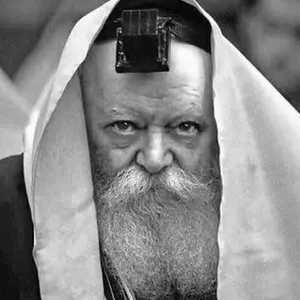
At the Purim 5727 farbrengen23, at its conclusion the Rebbe gave out the mezonos for the continuation of the farbrengen on Shushan Purim, and said: that in the Shulchan Aruch it states that on Shushan Purim one increases "in feasting and rejoicing somewhat", but, from the perspective of conduct beyond the letter of the law, there must be much rejoicing.
Notes:
1 פרשת ויקהל שאילתא סז ↩
2 סדר פורים ↩
3 סי' תרצג ↩
4 הל' מגילה אות לב ↩
5 אות ג ↩
6 סי' תרצג. וראה במהרי"ל הלכות פורים הגה באות ז. ויש שאכן נהגו כך ראה בדרכי חיים ושלום סי' תתנו, וראה באריכות בשו"ת דברי יציב או"ח סי' רצט ↩
7 או"ח סי' תרצג ס"ב בהג"ה ↩
8 סי' תרצג ↩
9 שם ס"ב ↩
10 סק"ג ↩
11 ولכن כתב אדמו"ר הזקן בסי' קח סי"ח שיחזור ויתפלל נדבה ↩
12 סק"א ↩
13 מצוה קמח ↩
14 פורים. הובא בדרכי משה ↩
15 סי' תרצה ס"ב. וראה באריכות במנחת אלעזר ובמשנה שכיר שמובאים לקמן ↩
16 אך ראה בגר"א אות ח, וחיי אדם כלל קנה דין לה ↩
17 סי' תרצה ס"ב ↩
18 סי' תרצה סק"ד ↩
19 שו"ת ח"ב סי' ה ↩
20 סי' תרצה סק"ה ↩
21 או"ח סי' שדמ ↩
22 סי' תרצה סק"ט ↩
23 תו"מ חמ"ט ע' 236 ↩
From the 'Shoneh Halacha' project - daily halacha with reasons and sources
Link to the group (silent): 'Shoneh Halacha - Chabad Minhogim'
Join the WhatsApp group