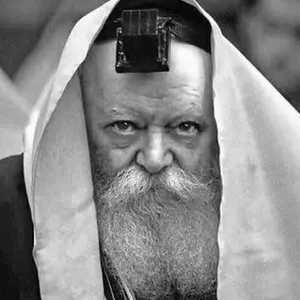

Tefillah b'tzibbur
[1] (Halacha 966)
The Merit of Tefillah B'Tzibbur
Below we will bring the words of the Gemara and the Zohar regarding the merit of tefillah b'tzibbur, and in the coming halachos we will see further details.
a) The Gemara in maseches Brochos1 says: '..for R' Yochanan said in the name of R"Sh ben Yochai: What is the meaning of that which is written ואני תפלתי לך ה' עת רצון ("And as for me, my tefillah is to You, Hashem, at a time of favor"), when is a time of favor? At the time that the tzibbur is davening2. Rebbi Yosi b'Rebbi Chanina said, from here: כה אמר ה' בעת רצון עניתיך ("So said Hashem: in a time of favor I answered you"). Rebbi Acha b'Rebbi Chanina said, from here: הן אל כביר ולא ימאס ("Behold, G-d is mighty and does not despise"), and it is written: פדה בשלום נפשי מקרב לי כי ברבים היו עמדי ("He redeemed my soul in peace from the battle against me, for they were with me in great number"). It is likewise taught in a beraisa, Rebbi Nosson says: From where do we know that the Holy One Blessed be He does not despise the tefillah of the many? As it says: הן אל כביר ולא ימאס, and it is written: פדה בשלום נפשי מקרב לי וגו'. The Holy One Blessed be He said: Whoever occupies himself with Torah and with gemilus chassodim and davens with the tzibbur, I consider it for him as though he redeemed Me, Me and My children, from among the nations of the world'.
b) Further on in the maseches3 it is brought: 'There was an incident with Rebbi Eliezer, who entered the beis haknesses and did not find ten, and he freed his slave and completed them to ten .. But how could he do so? Did not Rav Yehuda say: Whoever frees his slave transgresses a positive commandment, as it says: לעלם בהם תעבדו ("You shall work them forever")! For a matter of mitzvah it is different. But is it not a mitzvah that comes through an aveirah? A mitzvah of the many is different!'.
Rashi explained: 'A mitzvah of the many - to enable the many to fulfill their obligation with Kedushah'.
And the Rosh wrote4: 'For the positive commandment of the many is stronger, as it is written ונקדשתי בתוך בני ישראל ("And I shall be sanctified among the Bnei Yisroel"), that is to say the positive commandment of sanctifying the Name with ten among the many; and even though it is a matter of the Rabbonon, such as to hear Kedushah and Borchu, for which we have found no basis from the Torah, even so it overrides the positive commandment of the individual. For it does not seem reasonable to me that it speaks of a case of ten that is from the Torah, such as to read parshas Zachor which is from the Torah, for it implies that it speaks of every case ..'.
c) In maseches Pesachim5: 'Rebbi Abahu said in the name of Rebbi Shimon ben Lakish: For kneading and for tefillah and for netilas yodayim - four mil'.
And Rashi wrote: 'And so too for tefillah, if a person is walking on the road and the time comes to lodge and to daven, if there is a beis haknesses before him at a distance of four mil - he goes and davens there and lodges there6'.
And the Ritv"a explained there: 'But Rashi z"l explained "and for tefillah" as to daven in the beis haknesses with ten7, and it fits well with one who is walking on the road, that if he wishes to lodge in a village in which there are not ten, and there is before him a place in which there are ten, he must go and lodge there'.
d) The Gemara in maseches Yevamos8 says: 'Menashe killed Yeshaya. Rava said: He judged him and killed him. He said to him: Moshe your teacher said .. מי כה' אלהינו בכל קראנו אליו ("Who is like Hashem our G-d whenever we call upon Him"), and you said: דרשו ה' בהמצאו ("Seek Hashem when He is to be found") .. In any case the pesukim contradict one another .. דרשו ה' בהמצאו - this one refers to an individual, this one to a tzibbur'.
e) In the Zohar, parshas Vayishlach9: 'And come and see, for R"Sh said: the tefillah of the many ascends before the Holy One Blessed be He, and He is crowned with that tefillah, because it ascends in many hues and is composed of several sides; and because it is composed of several hues it becomes a crown and is placed upon the head of the Tzaddik, Chai HaOlamim and the tefillah of an individual is not composed, and is only of a single hue, and therefore the tefillah of an individual is not made fit to be accepted (except in tefillah) like the tefillah of the many [=R"Sh said: the tefillah of the many ascends before Hashem, and He is crowned with that tefillah, since it ascends in many forms (of various requests), and is composed of several sides (including the sinners of Yisroel); and since it is composed of several forms, it becomes a crown and is placed upon the head of the Tzaddik, Chai HaOlamim; whereas the tefillah of an individual is not composed and is only in one form, and therefore it is not made fit to be accepted like the tefillah of the many]10'.
f) And in parshas Vayechi11: 'Rebbi Abba opened and said12 פנה אל תפלת הערער ולא בזה את תפלתם ("He turned to the tefillah of the destitute one and did not despise their tefillah"). This posuk they have already expounded, and the chaverim raised a difficulty upon it (but there is yet another side to it): "he turned" - it should have said "he listened" or "he heard"; what is "he turned"? Rather, all the tefillos of the world are tefillos, but the tefillah of an individual does not enter before the Holy King except with mighty force for before that tefillah enters to be crowned in its place, the Holy One Blessed be He examines it and looks into it, and looks into the sins and the merits of that person - which He does not do with the tefillah of the many; for in the tefillah of the many there are many tefillos that are not from those who are meritorious, and they all enter before the Holy One Blessed be He and He does not look into their sins. Therefore "he turned to the tefillah of the destitute one" - He turns and looks into it (into its merit), and looks into it, with what desire it was made, and who is that person who davened this tefillah, and what are his deeds. Therefore a person should daven his tefillah with a tzibbur. What is the reason? Because "He did not despise their tefillah" even though not all of them are with kavanah and desire of the heart [=This posuk they have already explained, and the chaverim asked why it is written "he turned" and not "he listened" or "he heard" - what is "he turned"? Rather, that all the tefillos of the world that are with the many are accepted, but the tefillah of an individual does not ascend before the Holy King except with mighty force (that is to say, strong kavanah), since before the tefillah ascends to become a crown for Hashem, the Holy One Blessed be He examines it and looks upon it (how it is), and looks at the sins and the merits of that person, which He does not do with the tefillah of the many; since the tefillah of the many, although there are among them tefillos of such as are not meritorious, nevertheless they all ascend before the Holy One Blessed be He, for He does not look at their sins. Therefore it is written "he turned to the tefillah of the destitute one" [=an individual], that Hashem examines and looks upon it, and checks with what desire it was made, and who is the person who davened it, and what are his deeds. And therefore a person must daven his tefillah with a tzibbur, and the reason is because "He did not despise their tefillah", even though not all of them davened with kavanah and desire of the heart'13].
> If so, we have seen the words of the Gemara and the Zohar14 regarding the merit of tefillah b'tzibbur; in the next halacha we will see further from the words of the Rishonim, and additional details in this.
Notes:
1 8a ↩
2 In explanation of the words of the Gemara, some have written that the entire continuation of this Gemara was not said with regard to tefillah with a minyan, but rather that even an individual davening in his home should time it for the time that the tzibbur is davening in the beis haknesses (and see the Maharsh"a, and b'ezras Hashem we will expand on this in the coming halachos) [but certainly these merits apply also to one who davens with a minyan]. In this matter there is also the very obligation that there be a minyan, as the Gemara in Brochos (6b) says: 'Rebbi Yochanan said: At the time that the Holy One Blessed be He comes to the beis haknesses and does not find ten there, He immediately becomes angry, as it says: מדוע באתי ואין איש קראתי ואין עונה ("Why did I come and there was no man, I called and there was none who answered")'. However the discussion below is chiefly with regard to the obligation upon a person to daven with a tzibbur ↩
3 Brochos 47b, and see also Gittin 38b ↩
4 Brochos perek 7 siman 20; but the Ramban (Gittin 38b) wrote that it is on account of the Gemara in Brochos brought in note 2: 'I wonder: is it because of a mitzvah to daven with a tzibbur that they set aside a positive commandment of the Torah? And it is possible that the Torah said לעולם בהם תעבודו ("you shall work them forever") only so as not to give them free gifts, in the manner of that which is written בגוים לא תחנם ("you shall not be gracious to them"); but when he frees him because he pays his own value, or on account of a mitzvah and the need of the master, where there is no graciousness, it is permitted. *And one may also say: indeed so, that this mitzvah comes and overrides a positive commandment of the Torah, since when the Holy One Blessed be He comes to the beis haknesses and does not find ten there He immediately becomes angry'* ↩
5 46a ↩
6 Some have explained the words of the Gemara as referring to netilas yodayim; see the explanation of the Aruch brought in Tosfos there d"h ולתפלה. And Rambam Hilchos Tefillah perek 3 halacha 2 ↩
7 And see Shu"t Noda BiYehuda mahadura kama YD siman 23: 'And behold, for "tefillah" there are three explanations. One is Rashi's explanation, to daven with ten. The second is the explanation of the Aruch, to wash his hands for tefillah. And the third is the explanation of Rabbeinu Chananel, to immerse' ↩
8 49b ↩
9 167b ↩
10 And this is along the lines of the words of the Gemara in Kerisus 6b: 'Any fast in which there are none of the sinners of Yisroel is not a fast' ↩
11 234a ↩
12 Tehillim 102:18 ↩
13 See also Eichah Rabbah parsha 3:3: 'R' Acha said: One who davens with the tzibbur, to what is he compared? To people who made a crown for the king; a poor man came and gave his portion into it. What does the king say - because of this poor man shall I not accept it? Immediately the king accepts it and places it on his head. So too, if there were ten tzaddikim standing in tefillah and a rasha standing among them, what does the Holy One Blessed be He say - because of this rasha I will not accept their tefillah?' ↩
14 And see further Zohar Pekudei 245b ↩
[2] (Halacha 967)
The Merit of Tefillah B'Tzibbur
In the previous halacha we saw the words of the Gemara and the Zohar regarding the importance of tefillah b'tzibbur, and in this halacha we will see a little from the words of the Rishonim.
Rabbeinu Yehuda HaLevi in his sefer the Kuzari1 discusses the advantage of tefillah with a tzibbur over tefillah in private: 'The Kuzari said: And why is this? Is it not better that a person be alone, and his soul be pure and his thought more unencumbered? The Chaver said: Rather, the advantage belongs to the congregation in several respects. Among them, that the congregation does not daven for that which contains loss for an individual, whereas an individual may daven for that which contains loss for other individuals, and it is possible that among those individuals there is one who davens for that which contains his own loss. And among the conditions of a tefillah that is answered is that it be for that which will benefit the world and will not harm it in any way. And among them, that it is rare for the tefillah of an individual to be complete without error and negligence. And for this reason they established for us that the individual should daven the tefillah of the tzibbur, and that his tefillah should be with a tzibbur, so long as he is able, of not fewer than ten, so that some of them should complete what is lacking in others through error or negligence, and that from all of it there be arranged a complete tefillah with pure kavanah, and the bracha should rest upon all, and each one of the individuals should receive his portion of it. For the Divine matter is like rain that saturates one of the lands when the entire land is fit for it, and it is possible that it includes within it one of the individuals who is not fit for it, and they prosper on account of the majority; and the reverse of this, the rain is withheld from one of the lands because the entire land is not fit for it, and it is possible that it includes within it individuals who were fit for it, and it is withheld from them on account of the majority. These are His eternal laws, may He be blessed. And with Him, may He be blessed, is the recompense for those individuals in the World to Come; and further, that in this world He gives them a good exchange and does good to them with some good in which they are recognized above their neighbors - but it is rare that they escape the general punishment with a complete escape. And the parable of one who davens for his own need is like the parable of one who exerted himself to fortify his house alone and did not wish to join with the people of the city in assisting them in the fortification of their walls: he spends much and stands in danger; whereas one who joins in that which the tzibbur joins in spends little and stands in security, for what one falls short of, another completes, and the city stands at the utmost of what is possible, and its people all attain its blessing with little expenditure, with justice and agreement. And therefore Plato calls that which one expends on behalf of the Torah "the portion of the whole"; and while the individual ignores the portion of the whole - which is that which contains the welfare of his tzibbur, of which he is a part - and thinks that he is keeping it over for himself, he sins against the whole, and sins against his own soul all the more; for the individual within the tzibbur is like the single limb within the body. Had the arm been particular about its blood when bloodletting was needed, the entire body would have been ruined, and the arm ruined in its ruin. Rather it is fitting for the individual to bear the pain, and even death, on behalf of the welfare of the whole. And the most pressing of that which the individual should consider is the portion of the whole that he should give, and not ignore it'.
And the Ramban2 wrote: 'And the intent of all the mitzvos is that we should believe in our G-d and give thanks to Him that He created us, and that is the intent of the formation, for we have no other reason for the first formation; and G-d on High has no desire in the lower beings other than that man should know and give thanks to his G-d who created him. And the intent of the raising of the voice in tefillos and the intent of botei knesses and the merit of the tefillah of the many, is this: that people should have a place where they gather and give thanks to G-d who created them and brought them into being, and publicize this and say before Him: we are Your creatures ..'.
And Rabbeinu Yechiel ben Yekusiel the physician, of the family of the Anavim, wrote in his sefer Maalos HaMiddos3: 'Great is the tefillah of the many before HaMakom, for He gives them their needs before they daven for them, in the manner of that which is said והיה טרם יקראו ואני אענה וגו' ("And it shall be that before they call, I will answer, etc."). For the merit of the many is great before HaMakom, and so too the posuk says פדה בשלום .. כי ברבים וגו'. And Chazal said: from where do we know that the Holy One Blessed be He does not despise the tefillah of the many? As it says הן אל כביר לא ימאס. And they said: a person's tefillah is not heard except at the time that the tzibbur is davening; therefore a person must be careful and zealous to come early and to come late to the beis haknesses in order to daven with the tzibbur ..'.
Sharp words were written by the Rivash4: 'From the time the tomid was removed - which was the atonement of our souls, to bring an end to transgression and to finish sin - in our servitude our G-d has not forsaken us. He left us a blessing after it: the avodah of the heart, this is tefillah. And from the time the glory departed from the house of our holiness and our splendor, behold a house of tefillah is called a mikdash me'at. And there gather the nobles of the nations, the people of the G-d of Avrohom, to give honor to His Name, and He is sanctified in His glory, to fulfill that which is said ונקדשתי בתוך בני ישראל. And now it has been told to me, and I have heard, that there are among you some men whose hearts go after their gain; they rise early in the morning, roaring for prey, they go about the city to their work, and they do not set their hearts to go to the house of tefillah to accept upon themselves the yoke of Malchus Shomayim among their brothers, and to request their food from G-d. And on their account the bundle has come apart, and there are not the ten who are needed for every matter of kedushah. It is in vain for them to rise early; they have made flesh their arm, and their heart turns away from Hashem. And perhaps they are unwitting in this and have been silenced without knowledge. Therefore you should warn them, and inform them of what they z"l said: a person's tefillah is not heard except in the beis haknesses, etc.; when is a time of favor - at the time that the tzibbur is davening. And so too Chazal said: the Holy One Blessed be He does not despise the tefillah of the many. And so too they said: anyone who has a beis haknesses in his city and does not enter there to daven is called a bad neighbor, as it says כה אמר ה' על כל שכני הרעים ("So said Hashem concerning all My evil neighbors"). And needless to say concerning those who are needed to complete the ten. And in my opinion they will listen to you. For one whose fathers stood at Har Sinai, and who is of the seed of Avrohom, will not raise his head against the many in such a matter. Chalilah. And set a fine among yourselves of a peshut or two peshutim upon one who is not in the beis haknesses every day at the time of hanetz hachamah, so that each and every one should be zealous to be there And one who listens to me shall dwell securely, and be tranquil from fear of evil'.
The Mabi"t in his sefer Beis Elokim5 wrote: 'And the merit of the tefillah of the tzibbur is for three reasons. The first is on account of the matters of kedushah that are not said with fewer than ten. And it is possible that to this Dovid intended when he said6 אשר יחדו נמתיק סוד בבית אלהים נהלך ברגש ("who together would sweeten counsel; in the house of G-d we would walk with feeling") - the intent being that the matters of kedushah that are not said with fewer than ten is on account of the merit of a hidden secret that they contain in the kedushah of Hashem, and that therefore it is not fitting to mention the hint of the kedushah except with a tzibbur and not individually. And to this he said: that which I exert myself to go to the house of G-d "b'regesh", that is to say in a gathering of people, is because we sweeten the secret of the kedushah together, for with fewer than ten we cannot attain the hint of the sweetness of those matters: The second reason is that even in a tefillah that contains no matter of kedushah requiring many, even so there is a merit in it when it is said among many, or at the time that many are davening, as we have explained; because few who perform the mitzvah are not comparable to many who perform the mitzvah, for it is elevated far beyond the proportion of each one when it is done in a company of people .. The third reason is that the tefillah of an individual, when it is not fitting or is not said with kavanah, is not accepted at all; but when he says it among the many, at times it is accepted in the merit of the tefillah of the many ..'.
We will conclude with the words of the Meor VaShemesh7: 'The essence of the service of Hashem is that a person should join with the tzibbur in all the matters of avodah, both in Torah and in tefillah and not each on his own, as Chazal said: "a sword upon the badim" - a sword upon the enemies of talmidei chachomim who occupy themselves with Torah each on his own. Rather he must join with the tzibbur, and particularly at the time of tefillah every person must be exceedingly careful to daven together with the tzibbur And if he davens with the tzibbur he will be assured that his parnossah will be prepared for him every day in ample measure, and bracha will be found in the work of his hands; and through tefillas tzibbur one can nullify all harsh and evil decrees, Rachmana litzlan And we have already said this on ברוב עם הדרת מלך ("in a multitude of people is the glory of the King") - the explanation being that when the tzibbur gathers together to daven, then they nullify all the harsh decrees and bring the King, the King of the world, to retraction, that He retracts from what He decreed upon the Bnei Yisroel, chas v'shalom, some harsh decree, and He says הדרו בי from what you decreed upon them. And this is ברוב עם הדרת מלך - the explanation being that if a multitude of people gather together in tefillah, then הדרת מלך, the Holy One Blessed be He says הדרי בי from what you decreed upon them; and through their tefillah they draw down upon Knesses Yisroel good influences. And this is the explanation of the posuk ועבדתם את ה' אלהיכם ("and you shall serve Hashem your G-d") - the explanation being that it is in the plural; and which is the avodah that is in the heart? You must say: this is tefillah And the posuk says: if you will serve Hashem your G-d together - that is to say that you will daven together with the tzibbur - ובירך את לחמך ואת מימך ("and He will bless your bread and your water"), the explanation being that He will bless your parnossah, that you should have a good and ample parnossah. Also ובירך את לחמך ואת מימיך refers to the Torah: if you will daven with the tzibbur you will attain attainments in Torah'8.
In the next halacha we will see from the words of Rabboseinu Nesi'einu on this matter.
Notes:
1 maamar 3, osiyos 18 - 19 ↩
2 parshas Bo 13:16 ↩
3 in the chapter Maalas HaTefillah ↩
4 siman 518 ↩
5 Shaar HaTefillah, 11 ↩
6 Tehillim 55:15 ↩
7 parshas Mishpatim ↩
8 And see Chofetz Chaim, Shmiras HaLashon vol. 2, the conclusion of the sefer perek 1, who wrote 'A great arousal to tefillah b'tzibbur', and explained at length the obligations and the merits that there are in tefillah b'tzibbur ↩
[3] (Halacha 968)
The Merit of Tefillah B'Tzibbur
Below we will bring several quotations from Rabboseinu Nesi'einu1 that pertain to the matter of tefillah b'tzibbur:
The Alter Rebbe aroused regarding the need for everyone to begin davening together. It is written in Tanya2: 'And guard yourselves and be exceedingly careful regarding the Torah and regarding the avodah of the heart, this is tefillah, with kavanah, that all should begin together as one, word by word, and not this one in this manner and that one in that manner, and this one silent and that one speaking idle talk - may Hashem protect us'. And in Igros Kodesh3 he wrote: 'And in the course of my words I come as one who recalls ancient takanos: that each and every man should daven before the amud on the day fixed for him, and upon him rests the duty of hastening to gather to himself ten who daven aloud, who should stand near him to daven together from Hodu until after Shemoneh Esrei. And the rest, each and every one in his place, and they should not walk here and there, so as not to confuse, etc., as mentioned in the Gemara and the poskim'. And it is further brought there4: 'And he was also careful, on a fixed basis, to begin Hodu together with the first ten'.
The Mitteler Rebbe likewise aroused regarding the above in Igros Kodesh5: 'And particularly that they should all gather as one man, and each should help his brother and say "be strong", etc., and not to separate himself alone, chas v'shalom; and all the more so, a kal vachomer, that they should not form themselves into separate groups, this one davening and that one speaking idle words - for this evil thing causes several tremendous falls, in the throwing off of the yoke of Malchus Shomayim little by little, until the one who falls falls the utmost fall, chas v'shalom, as is known to us with complete clarity'. And further there6: 'And the matter of the second takanah, that they should make a fixed rule that they stand to daven together as one man with the shliach tzibbur, and to say after him, specifically aloud, all of Pesukei D'Zimrah, and the two before Krias Shema and one after it, until Shemoneh Esrei, which is specifically in a whisper; and to direct the kavanah properly in each and every word, with a voice that arouses the kavanah and the desire of the heart, according to his level, with what he has ready at hand of a little of מד"ח, which have been engraved in his heart and in his mind from what they learn each day, no fewer than the three times mentioned above, to join them to the meaning of the words, so that from them there should come at least the level of the essence, in brief'. And so too he wrote7: 'And that they should not treat tefillah b'tzibbur lightly, and should not shorten their tefillah, and should not walk back and forth during their tefillah with foreign thoughts, but rather stand in their places and direct their heart and their mind properly, for about an hour and more'.
The Tzemach Tzedek likewise mentioned8 the need to gather into one union, and the merit of tefillah b'tzibbur: 'But in the Midrash Rabbah the explanation is that "chaverim" refers to the neshamos of Yisroel, that is to say to that which precedes it, היושבת בגנים ("you who dwell in the gardens") - that when the neshamos of Yisroel are chaverim, who join together to be one union to daven with ten, tefillah b'tzibbur, then the Holy One Blessed be He and Knesses Yisroel are מקשיבים לקולך ("listening to your voice"), and we say השמיעני ("let me hear") .. And this is "chaverim": when the neshamos of Yisroel join together, ten together, for tefillah, then they are like the joinings of the chayos of the Merkavah, which reach the level of כי לא אדם הוא ("for He is not a man"). And this is השמיעני - the meaning being Me Myself, for through their being chaverim there is drawn down a revelation of His Essence, the level of כי לא אדם הוא'.
The Rebbe Mahara"sh writes9: 'And behold, Dovid was king of Yisroel, that is to say that he was the level of Malchus, Knesses Yisroel, the source of the neshamos of Yisroel; therefore his tefillah, which was as an individual, was also effective. But with every other person his tefillah as an individual is not comparable to the tefillah of the tzibbur, and as Chazal said here: when is a time of favor - at the time that the tzibbur is davening; for this is as it is written ואני תפלתי לך ה' עת רצון אלקים ברב חסדך ("And as for me, my tefillah is to You, Hashem, at a time of favor; O G-d, in the abundance of Your kindness"), for seemingly Elokim is the middah of din, and what is "in the abundance of Your kindness"? But the matter is that since at the time of the tefillah of the tzibbur it is a time of favor, therefore even Elokim, the middah of din, is sweetened to become ברב חסדך, and the meaning of ברב חסדך is that it is from the level of ורב חסד, for there is chesed and there is chesed: there is a chesed that is according to taam v'daas, which is the level of chesed in the order of hishtalshelus, ChaGa"T; and there is a chesed that is above taam v'daas, which is the level of ורב חסד .. And this level of chesed can sweeten even the level of the Name Elokim, so that it becomes אלקים ברב חסדך. And all of this is through tefillah among the many, or at the very least at the time that the tzibbur is davening, for then it is the time of favor .. And likewise through the tefillah of the many, etc. And as Chazal said on the posuk דרשו ה' בהמצאו etc. - these are the ten days between Rosh Hashanah and Yom Kippur, for then He is to be found even for an individual; that is to say, because then there is the revelation of the Yud-Gimmel Middos HaRachamim, therefore He is to be found even for an individual. And it is understood of itself that with a tzibbur the Yud-Gimmel Middos HaRachamim are drawn down at every time'.
And he further wrote10: 'And כי ברבים היו עמדי is the level of tefillah, which they instituted corresponding to the temidim. And behold, one may ask: what is the merit of tefillah specifically with a tzibbur? And the matter is that tefillah was instituted corresponding to the temidim, and the temidim came specifically from that of the tzibbur, from the terumas halishkah, and it was forbidden to bring the tomid from an individual; and so too tefillah must be specifically with a tzibbur, whereas tefillah as an individual is only like a korban of an individual .. And this is why the tomid came specifically from that of the tzibbur: because in order that it should cleanse the sins of Yisroel it is impossible except through a tzibbur; and therefore tefillah, which they instituted corresponding to the temidim, must likewise be specifically with a tzibbur. And this is that which is written כי ברבים היו עמדי, whereas if he davens as an individual it is only like a korban of an individual alone'.
The Rebbe Rashab writes11: 'And behold, very many of the businessmen and of those engaged in labor and craft are G-d-fearing, and tefillah is precious to them .. and their heart pains them exceedingly when they are unable to daven with a tzibbur .. among them are those who exert themselves with great effort to daven tefillah b'tzibbur and they snatch their tefillah and hurry to run to their affairs and their commerce .. and their tefillah too is mixed with foreign thoughts, to the point that many times they do not know what they are davening and in which mizmor they are holding, and only out of shigra d'lishna do their lips move while their heart is not with them, and with all this they do at least have the kabbolas ol to daven with a tzibbur, and there are those who are so preoccupied that only on Monday and Thursday do they come to daven with a tzibbur'.
The Rebbe Rayatz said12: 'Anyone who is called by the name chossid must not rise later than 7 o'clock, in order to daven tefillah b'tzibbur'. And so too he wrote13: And therefore one must keep the times of tefillah b'tzibbur .. and not only this, but he should not listen to the yetzer hora who entices him and incites him that it is impossible to keep the times of tefillah b'tzibbur ..'. And he further wrote there14: 'And when a person rises from his sleep, the nefesh hativ'is begins to preoccupy him with his physical matters, and the yetzer hora paints for him various images and confuses him with foreign thoughts in order to prevent him from Torah and tefillah b'tzibbur, and this is the matter of netilas yodayim, to drive away the ruach ro'ah of the yetzer hora; and he should contemplate that He, may He be blessed, who restores neshamos to dead bodies, will prepare his parnossah for him, and he should pay no heed to the enticements of the nefesh hativ'is'.
The Rebbe writes in the Kuntres Yud-Tes Kislev 575215: 'And behold, the explanation of the Alter Rebbe, the baal hageulah v'hasimcha, on the words of Chazal "here for an individual, here for a tzibbur", is well known: that "here for an individual" is the level of the yechidah of the soul. And from the fact that the Gemara compares 'here for a tzibbur' to the matter of 'here for an individual' (during the Aseres Yemei Teshuvah), it is understood that the matter of tefillah b'tzibbur too pertains to the level of yechidah'.
In a yechidus in the month of Tammuz 5733 the Rebbe said to the mashpia R' Nissan Nemanov16 (the content of his words): 'The matter of tefillah b'tzibbur has become very neglected of late, and it needs to be strengthened greatly .. however, for one who does not daven at length, there is no heter whatsoever to exempt himself from tefillah b'tzibbur'.
When R' Nissan Nemanov entered for yechidus another time on the night of the 9th of Teves 573517, the Rebbe asked him what was happening with regard to tefillah b'tzibbur (among the Temimim in the yeshiva in Brunoy), and he answered that it needs improvement. The Rebbe said to him: We are now coming from Yud-Tes Kislev, and the dibbur hamas'chil of the maamar is פדה בשלום נפשי - which comes about through the three matters of Torah, avodah [=and davening with the tzibbur] and gemilus chassodim. R' Nissan Nemanov related that in the course of the conversation the Rebbe made a motion with both his holy hands and asked: Why is there such great abandonment in this? Why do they not daven with a tzibbur?18.
> If so, we have seen the merit of tefillah b'tzibbur, and the importance of beginning to daven together from the start of the tefillah.
Notes:
1 In accordance with the Rebbe's instruction of Rosh Chodesh Kislev 5749 (Toras Menachem vol. 1 p. 384): 'And with regard to practice - on each and every one of the days of the month of Kislev they should learn, and it is best - (among many) an (additional) matter in Toras HaChassidus; and it is best - from the Torah of the three fathers of Chassidus, the Baal Shem Tov, the Maggid and the Alter Rebbe; and one who is able - should add and also learn from the Torah of all Rabboseinu Nesi'einu, up to the Torah of my father-in-law the Rebbe, Nasi of our generation' ↩
2 Kuntres Acharon p. 162 ↩
3 Igeres 81 p. 318 ↩
4 Igeres 67 p. 254 ↩
5 Igeres 1 p. 2 ↩
6 Igeres 40 p. 176 ↩
7 Igros Kodesh 46 p. 191 ↩
8 Ohr HaTorah, Shir HaShirim vol. 3 p. 1024 ↩
9 Sefer HaMaamarim 5627 p. 61 ↩
10 Sefer HaMaamarim 5630 p. 37 (and see also Yahel Ohr 55, 205) ↩
11 Kuntres U'Maayan, maamar 25, perek 3 ↩
12 Sefer HaSichos 5683 p. 46 ↩
13 Sefer HaMaamarim 5692 p. 262 ↩
14 p. 268 ↩
15 An addition from the sichos of Shabbos Kodesh parshas Vayeishev - Mikeitz 5726, os 2, (Sefer HaMaamarim Melukat vol. 6 p. 59) ↩
16 R' Nissan p. 486 ↩
17 ibid. p. 487 ↩
18 And see there, that the Rebbe elaborated there further on this matter ↩
[4] (Halacha 969)
The Obligation of Tefillah B'Tzibbur
In the previous halachos we saw the words of the Gemara, the Zohar and the Rishonim, and from the words of Rabboseinu Nesi'einu, on the merit of tefillah b'tzibbur; and in this halacha we will see how it is ruled in practice.
The Rambam wrote1: 'The tefillah of the tzibbur is always heard, and even if there were sinners among them the Holy One Blessed be He does not despise the tefillah of the many. Therefore a person must join himself with the tzibbur, and should not daven as an individual so long as he is able to daven with the tzibbur. And a person should always come early and stay late to the beis haknesses, for his tefillah is not heard at all times except in the beis haknesses; and anyone who has a beis haknesses in his city and does not daven in it with the tzibbur is called a bad neighbor'.
And the Tur wrote2: 'A person should daven only in the beis haknesses with the tzibbur, for R' Yochanan said: a person's tefillah is not heard except in the beis haknesses - meaning, with the tzibbur .. And Rashi explained "for tefillah" to mean to daven with ten: that if he is walking on the road and reached a city and wishes to lodge in it, if ahead of him within four mil there is a place where they daven with ten he must go there, and behind him he must go back up to a mil, in order to daven with ten. Even though there are other explanations that explain it with regard to netilas yodayim - that he must go four mil ahead so that he should have water to wash his hands for tefillah, and a mil behind - Rashi's explanation is the primary one; therefore one must endeavor with all his strength to daven with the tzibbur'.
The Mechaber3 brought the wording of the Tur: 'One should endeavor4 to daven in the beis haknesses with the tzibbur'.
And the Alter Rebbe wrote5: 'The tefillah of a tzibbur is always desirable and accepted, as it says כביר לא ימאס, and it says פדה בשלום נפשי מקרב לי כי ברבים היו עמדי. Therefore one who comes to the beis haknesses and finds the tzibbur at the end of Pesukei D'Zimrah should skip Pesukei D'Zimrah in order to daven with the tzibbur; for Pesukei D'Zimrah too were instituted only for the sake of the tefillah, that it should be desirable and accepted through his first setting out the praise of HaMakom and afterwards davening; and if so it is better to daven with the tzibbur, for then his tefillah is certainly accepted'.
Below we will see a little of the wordings of the poskim with regard to the importance of tefillah with a minyan. The Ba"ch wrote6: 'If so, that which he calls him one who is not kosher is because he is not scrupulous in pursuing the mitzvos and gemilus chassodim and davening with a tzibbur and the like, for it is the minhag of the kosher ones to hold fast to such mitzvos'.
The Chid"a7 wrote: 'Trembling has seized me: how has the strap been loosened, מחל"ה ונוע"ה, to daven as an individual, and also after the time of Krias Shema - for they said that he is liable to niduy; and in Midrash Konen they said that he is liable to niduy for neglecting Kaddish and Kedushah. And Chazal in the first perek of Brochos, and in the Zohar HaKadosh, extolled the merit of tefillah b'tzibbur, and the matter is a kal vachomer to be constant in this. May Hashem return us in complete teshuvah and enlighten our eyes to be saved from the yetzer hora, kein yehi ratzon'.
And it is written in the sefer Yesod V'Shoresh HaAvodah8: 'And from here is an open rebuke to shopkeepers, or to other people whose dwellings are far from the beis haknesses, who make light of the tefillah of Mincha and Maariv and daven in private, whether in their shops or in his home - woe to such shame. Even if a person knows within himself that he is a complete tzaddik, and is also confident that his tefillah will be pure and clear, the tongue of a tzaddik is choice silver when he davens with the tzibbur, as is explained in the Zohar HaKadosh parshas Vayishlach mentioned above: וצלותא דיחיד לאו איהי כלילא, etc. And all the more so - who can say "I have purified my heart, I am cleansed of my sin"? And a man knows within himself whether he is a complete tzaddik or not. With what countenance will this tefillah of his ascend for favor before Hashem, according to what the Zohar HaKadosh wrote in parshas Vayechi mentioned above - and see there well'.
And in a similar vein the Mateh Efraim wrote9: 'And there is one whose heart has been touched by yiras Shomayim, and he comes early to the beis haknesses to daven Shacharis with a tzibbur, but Mincha and Maariv he davens in private in his home. And concerning this the Gaon HaKadosh Mohar"m di Lonzano z"l wrote, and these are his words: If you are honest men, by this you shall be tested - whether you will come to the beis haknesses to daven the tefillah of Mincha and Maariv as well. And if not, by the life of Pharaoh, you are spies. And that you come early to the beis haknesses for the tefillah of Shacharis is because at that hour the shop is closed and none goes out and none comes in; but at the tefillah of Mincha, when the shop is open and the shopkeeper extends credit - behold, silver is reckoned in your eyes as more than the service of the Creator, may He be blessed. See there'.
The baal Pele Yoetz wrote in his sefer Beis Tefillah: 'And since in this orphaned generation it is well-nigh impossible to have kavanah throughout the whole tefillah - even for one whose Torah is his craft and who occupies himself with yiras Shomayim the entire day, and all the more so for the rest of the common folk, for we are as drunkards, and not from wine - we have nothing to lean upon except the tefillah of the tzibbur. Therefore it is fitting for a person to give over his soul to daven with a tzibbur'.
And it is written in the Shulchan HaTahor10: He should be very careful with tefillas tzibbur, that is to say Shemoneh Esrei with a tzibbur; and whoever has in him a Jewish point should daven with a tzibbur, for the yetzer is exceedingly zealous in this, to keep a person from tefillas tzibbur. Therefore let him be more zealous still, to fulfill the mitzvah of his Creator, and to have pity on his soul and to save it from the pit of destruction'. And he further wrote11: 'If they called him to be mohel for his friend's son, he should not go and daven afterwards in private, but rather he should daven with the tzibbur, and it is more important than a hundred circumcisions of sons and a hundred times being sandek. If he is poor and needs to go and seek his sustenance, he may daven earlier, in private; but one who trusts in Hashem Yisborach and davens with a tzibbur will succeed'.
> In these halachos the importance and the merit of tefillah b'tzibbur has been explained; in the next halacha we will discuss the parameters of the obligation to daven with a tzibbur
------------
Notes:
1 Hilchos Tefillah perek 8 halacha 1 ↩
2 OC siman 90 ↩
3 Shulchan Aruch OC siman 90:9, and see also se'if 16 and 17, and b'ezras Hashem we will elaborate in the next halacha ↩
4 The poskim (see what is brought in Piskei Teshuvos siman 90 os 8 p. 690) discussed the Mechaber's wording *yishtadel*, and it will be further explained in the next halacha ↩
5 Shulchan Aruch OC siman 52:1 ↩
6 YD siman 340 ↩
7 Kikar La'aden (245a) ↩
8 Shaar HaAshmores perek 7 ↩
9 Elef HaMagen siman 589:3 ↩
10 siman 52:1 ↩
11 siman 90:6 ↩
[5] (Halacha 970)
The Obligation of Tefillah B'Tzibbur
Question: In the previous halachos we saw the merit and importance of tefillah b'tzibbur; is there an obligation, or at least a mitzvah, to daven with a tzibbur?
Answer: The Sma"k wrote1: 'We learn in perek Bakol Me'arvin: one may make an eiruv techumin only for a matter of mitzvah, such as to go to a bris milah, or for tefillah'.
On the other hand the Mahari"l disagreed with the Sma"k2: 'Mahar"i Sega"l said that he had not seen in any posek that it is permitted to make an eiruv techumin to go to the beis haknesses in order to daven with ten, except in the Sma"k and in the sefer Agudah. HaR"R Ika said to him: let it be no less than a wedding feast! The Rov said to him: to daven with ten is not so much of a mitzvah, for he can direct his tefillah in his home, for we do not find that the chachomim required davening with ten. But a wedding feast is a mitzvah - and specifically a seudah of a marriage and not an optional seudah. And the proof is that for a marriage the chachomim permitted their shvus, through telling a non-Jew on Shabbos to play a musical instrument .. whereas for the beis haknesses they did not permit a shvus, as it is stated in Tosfos, perek HaDar, that they did not permit bringing a sefer Torah on Shabbos to read from it, or a chumash for the haftarah, by way of a karmelis - even though it is only a shvus of their words, for from the Torah it is permitted to carry by way of a karmelis'.
And although in halacha number 966 we saw the words of the Rivash, that in tefillah with a minyan there is also the fulfillment of the mitzvas asei of ונקדשתי; and so too the Rosh wrote3: 'For the positive commandment of the many is stronger, as it is written ונקדשתי בתוך בני ישראל, that is to say the positive commandment of sanctifying the Name with ten among the many and even though it is a matter of the Rabbonon4 such as to hear Kedushah and Borchu, for which we have found no basis from the Torah, even so it overrides the positive commandment of the individual. For it does not seem reasonable to me that it speaks of a case of ten that is from the Torah, such as to read parshas Zachor which is from the Torah, for it implies that it speaks of every case'.
However the Chavos Yair wrote5: 'Behold, davening with ten too is not so much of a mitzvah - and in the Mahari"l, Hilchos Eiruvin, regarding "one may make an eiruv only for a matter of mitzvah", that to daven with ten is lighter than going to a wedding feast. And chalilah for us to diminish the mitzvas asei of ונקדשתי בתוך בני ישראל, which is Kaddish and Borchu with ten, and the reward of Amen and of answering Amen Yehei Shmei Rabba; even so it is not a mitzvas asei that is incumbent upon him, nor is it nullified if he stands outside. And therefore one cannot learn from that which is in the Gemara Brochos daf 47 and in Gittin 46, that R' Eliezer freed his slave to complete him to ten because a mitzvah is different, and in Brochos it says a mitzvah of the many is different. And it appears to me that the intent is not that the mitzvah is practiced by all Yisroel, but rather he means to say that it is a kiddush Hashem, and specifically among the many; and had he not freed him the mitzvah would have been nullified from all those many who were gathered together'6.
> And based on this some have written7 that although there is a great merit in davening with the tzibbur, it is not an obligation and a mitzvah upon the individual.
But from the words of the Mechaber and the ruling of the Magen Avraham we see that there is in this an obligation and a mitzvah of the Rabbonon, as follows:
The Mechaber wrote8: 'One who is walking on the road and reached a city and wishes to lodge in it: if ahead of him, within four mil, there is a place where they daven with ten, he must go there; and behind him, he must go back up to a mil, in order to daven with ten. There is one who says that all the more so a person should not set out early from a city in which they daven with ten, if he is able to reach his destination while the day is still long and will not need to travel alone after the tefillah'.
And based on this the Magen Avraham wrote9 in the din of for which matters it is permitted to make an eiruv techumin: 'In the Mahari"l he was in doubt whether it is permitted to make an eiruv in order to go to a minyan, but according to what is written in siman 90 se'if 16 it is certainly permitted, and so it is implied from what is written in siman 311 at the end of se'if 2'.
And the Machatzis HaShekel explained: '"But according to what is written in siman 90 se'if 16" - he means to say that according to one opinion, in order to daven with ten one must go four mil ahead of him and a mil behind him; if so, it is a great mitzvah and so too R' Eliezer freed his slave to complete them to ten'.
> If so, the Mechaber ruled like Rashi, that one must take trouble and exert himself to go and daven with a minyan; and based on this the Magen Avraham wrote like the words of the Sma"k, that one may make an eiruv for the need of tefillah with a minyan, since it is a mitzvah - and not like the Mahari"l.
And beyond this, the Alter Rebbe wrote10: 'One who is walking on the road and reached a lodging while it is still day and wishes to lodge there: if there is ahead of him, up to and including four mil, a place where they daven with ten, he must go and lodge there, if he can arrive there while the day is still long [and] he will not need to travel alone; but more than four mil (the chachomim) did not trouble him. And behind him he must go back up to a mil, not including it, in order to daven with ten (and the same applies to one who lives in a settlement within a mil of a place where they daven with ten: he is obligated to go every day, morning and evening,11 to daven with ten). And all the more so, a person should not set out early for an optional matter from a city in which they daven with ten, if he is able to reach his destination while the day is still long and will not need to travel alone after the tefillah (and even if he wishes to set out early and go before the time of tefillah has arrived), for the tefillah of the tzibbur, even though it is a mitzvah of their words, is greater than a positive commandment of the Torah, since through it Hashem is sanctified among the many for behold it is permitted to transgress a positive commandment of the Torah and to free one's slave in order to complete him to ten, as it is written in YD siman [267]'.
And it is written in Shu"t Igros Moshe12: 'In any case, since we see that one must take much trouble, we are compelled to say that it is an obligation of mitzvah upon a person to daven with ten; and that they did not obligate him to take even very great trouble is because even in a mitzvas asei from the Torah there are shiurim .. And it is not comparable to another mitzvah, even one of the Rabbonon, where he does nothing at all of the matter of the mitzvah when he is lazy - for which reason they were stringent that nothing should be considered an oness except an expenditure of money in a large sum, and not trouble, even great trouble. But with tefillah, where he in any case performs the mitzvah of tefillah, they were lenient with him when he is lazy on account of the great trouble of walking more than a mil, that he should not be required to go in order to fulfill tefillah b'tzibbur as well'.
> If so, in practice there is a mitzvah and an obligation of the Rabbonon upon the individual to daven with a minyan, and it is greater than a mitzvas asei from the Torah, [and certainly if by his not participating the minyan will be nullified.]
Notes:
1 mitzvah 282 ↩
2 Minhagei Mahari"l, Hilchos Eiruvei Chatzeiros ↩
3 Brochos perek 7 siman 20 ↩
4 However see what the Rashbatz wrote, vol. 2 siman 163, and see the Birkei Yosef siman 135 s"k 1 ↩
5 Shu"t siman 115 ↩
6 And see also Mahara"tz Chayes, Shu"t siman 29: 'And it is not comparable to the incident of R' Eliezer who freed his slave, for there R' Eliezer benefited the many by this freeing, since in the absence of this slave there would not have been ten there, as is explained there; whereas in our case there are in the place where they daven more than ten people even in the absence of this man, and it is only this particular individual, who lives outside the techum and also wishes to daven with a minyan of ten - and for him it is no longer considered a mitzvah of the many' ↩
7 See the references in Birur Halacha vol. 5 p. 228 os 13 ↩
8 Shulchan Aruch OC siman 90 se'ifim 16 - 17 ↩
9 OC siman 415 s"k 2 ↩
10 Shulchan Aruch OC siman 90 se'if 17 ↩
11 The Gra"ch Naeh wrote (Ketzos HaShulchan siman 13, Badei HaShulchan 4): 'One must say that his intent is only to the tefillah of Mincha and not to Maariv, for regarding one walking on the road he wrote that only if he can arrive there while the day is still long is he obligated - it is explained that at night he is not obligated to go, and this is simple' ↩
12 OC vol. 2 siman 27 ↩
[6] (Halacha 972)
The Obligation of Tefillah B'Tzibbur
Question: What should a person do who has no possibility of davening with a minyan?
Answer: The Gemara in Maseches Brochos1 says: 'Rabbi Yitzchak said to Rav Nachman: What is the reason that the master does not come to the beis haknesses to daven? He said to him: I am unable. He said to him: Let the master gather ten and daven. He said to him: The matter is burdensome for me. Then let the master tell the shliach tzibbur, at the time that the tzibbur davens, to come and inform the master. He said to him: What is all this? He said to him: For Rabbi Yochanan said in the name of Rashb"i: What is that which is written, "ואני תפלתי לך ה' עת רצון" ("But as for me, may my tefillah to You, Hashem, be at a time of favor") - when is a time of favor? At the hour when the tzibbur is davening. Rabbi Yosi b'Rabbi Chanina said, from here: "כה אמר ה' בעת רצון עניתיך" ("So said Hashem: In a time of favor I have answered you"). Rabbi Acha b'Rabbi Chanina said, from here: "הן אל כביר ולא ימאס" ("Behold, G-d is mighty and does not despise"), and it is written: "פדה בשלום נפשי מקרב לי כי ברבים היו עמדי" ("He redeemed my soul in peace from the battle that was against me, for they were many with me"). So too it is taught in a beraisa, Rabbi Nosson says: From where do we know that the Holy One Blessed be He does not despise the tefillah of the many? As it says: "הן אל כביר ולא ימאס", and it is written: "פדה בשלום נפשי מקרב לי וגו'". The Holy One Blessed be He said: Whoever occupies himself with Torah and with gemilus chasodim and davens with the tzibbur, I consider it for him as though he redeemed Me, Me and My children, from among the nations of the world'.
And the Maharsh"a explained: 'It appears that the fact that tefillas tzibbur is more accepted and more favored needs no proof, for from the Torah there is room to learn so .. rather, what he needs to bring here is that even the tefillah of an individual in his home is more favored and more accepted at the time when the tzibbur is davening, and he brings this well from that which is written "ואני תפלתי" - by myself - "לך ה' בעת רצון" of the tzibbur; and likewise "בעת רצון" of the tzibbur "עניתיך" in private; and so too one may explain "כי ברבים היו עמדי" - that is, at the time when the many are davening together with me, when I am davening then in private. But from that which it says 'so too it is taught in a beraisa etc.', that the Holy One Blessed be He does not despise the tefillah of the many, as it says "הן אל כביר לא ימאס וגו'" - the implication is only that the tefillah of the many is favored, and it is not to be inferred from it that the tefillah of an individual is also favored at the time when the many are davening. And upon examination, the verse he brings in the version of the Gemaras before us, and so it is in Rashi's commentary - "הן אל כביר לא ימאס תם" - is not a pasuk in any place; but there are two pesukim in Sefer Iyov: in one, in siman 8, it is written "הן אל לא ימאס תם" ("Behold, G-d does not despise the wholesome one"), and in the other, siman 36, it is written "הן אל כביר ולא ימאס כביר וגו'". And now, he is relying upon those two verses: that "הן אל לא ימאס תם" - that is, the tefillah of a wholesome individual - at the hour of "הן אל כביר ולא ימאס כביר". And the word "כביר" the first time is to be explained in the sense of strong and mighty, and the second in the sense of many; and he means to say: Behold, G-d is the Mighty One, and He does not despise the tefillah of the many. And this is readily understood'.
And the talmidim of Rabbeinu Yonah wrote2: 'When is a time of favor? At the hour when the tzibbur is davening. And the Geonim z"l say that even when a person does not go to the beis haknesses, he should aim to daven at the hour when the kehillah is davening'3. And so wrote the Ritv"a4.
And the Sma"g5 wrote regarding the residents of the settlements: 'We have learned from there that at a time of pressing need, or the residents of the settlements, should daven in their homes shacharis and maariv at the hour when the kehillos of Yisroel are davening'.
However, Tosafos wrote6 that this does not carry the actual merit of tefillah b'tzibbur: '"Since there is a tzibbur davening, it is not rejected" - Rabbeinu Tam explained: That which is implied here, that it is effective even when the tzibbur is davening in another place, that is specifically that it is not rejected; but it is heard only in the place where the tzibbur is davening, as we say in the first perek of Brochos: a person's tefillah is heard only together with the tzibbur'.
And the Machatzis HaShekel7 explained: 'And the distinction is: "it is not rejected" means that the tefillah is accepted with favor Above, and he will receive his reward for it like one who receives reward for all the mitzvos of Hashem, but they do not fulfill the request over which he davened; whereas when they said "it is heard", they do his will in that over which he davened concerning that matter'.
And so wrote Harav Yosef David, Av Beis Din of Salonika8: 'And it appears that he means that it is effective at the hour when the tzibbur is davening, in the respect that they do not cast his tefillah back in his face; rather they reckon for him that he fulfilled the mitzvah of tefillah, but his requests are not heard. But it is difficult, for in the first perek of Brochos, daf 8, it is implied that his tefillah is heard, for it says "What is all this?" - for Rabbi Yochanan said in the name of Rashb"i: "ואני תפלתי לך ה' עת רצון" - when is a time of favor? At the hour when the tzibbur is davening; and there, "ענני באמת ישעך" ("answer me with the truth of Your salvation"). And if you will say that it was mercy that David sought, that Hashem should answer him - behold, he brings there another verse, "בעת רצון עניתיך", which implies that the tefillah is heard. And so it appears from the words of the Levush at the end of siman 591, and see there in siman 131 se'if 2. And as to the main question of Tosafos, one may say that one who davens at the hour when the tzibbur is davening is also called "together with the tzibbur"'.
And as to the halacha, the Mechaber wrote9: 'A person should endeavor to daven in the beis haknesses with the tzibbur, and if he is prevented and is unable to come to the beis haknesses, he should aim to daven at the hour when the tzibbur is davening'.
And the Rem"a in a hagahah brought the words of the Sma"g: 'And the same applies to people who live in settlements and have no minyan - in any case they should daven shacharis and maariv at the time when the tzibbur is davening'.
The Magen Avraham10 brought the words of Tosafos: '"He should aim to daven" etc. And this is specifically if the matter is burdensome for him, to gather ten; and in the Sma"g it is implied that Rav Nachman did not want to trouble ten men to come to him .. And it is stated there in Tosafos that if he davens at the hour when the tzibbur is davening his tefillah is not rejected, but it is heard only together with the tzibbur in the beis haknesses. However, it is possible that they said this specifically at a time of wrath - see what is written at the end of siman 591'.
And these are the words of the Alter Rebbe11: 'And if he is prevented and is unable to come to the beis haknesses, such as when his strength has weakened, even though he is not ill - if it is impossible for him to gather ten to himself, he should aim to daven at the hour when the tzibbur is davening in the beis haknesses, for that is a time of favor, and his tefillah is not rejected, even though it is not accepted with favor as it is in the beis haknesses with the tzibbur .. And the same applies to people who live in settlements and have no minyan: they should daven shacharis and mincha at the hour when the kehillos of Yisroel are davening'. (And see there further details in this matter).
> If so, we have seen that when a person is unable to daven with the tzibbur in one place, in any case he should aim for his tefillah to be at the same time at which the tzibbur is davening. And in the coming halacha we will see further details regarding what is considered a time when the tzibbur is davening
Notes:
1 7b ↩
2 Brochos 4a ↩
3 And see Shu"t HaRashba"sh siman 24 ↩
4 Brochos 8a ↩
5 Asin siman 19 ↩
6 Avodah Zarah 4b ↩
7 OC siman 90 s"k 17 ↩
8 Shu"t Beis David, Hilchos Tefillah siman 44 ↩
9 Shulchan Aruch OC siman 90 se'if 9 ↩
10 Ibid. s"k 17 ↩
11 Shulchan Aruch ibid. se'if 10 ↩
[7] (Halacha 973)
The Obligation of Tefillah B'Tzibbur
Question: What is meant by davening at the time when the tzibbur is davening?
Answer: a) The Rem"a wrote1 in a hagahah: 'And the same applies to people who live in settlements and have no minyan - in any case they should daven shacharis and maariv at the time when the tzibbur is davening'.
And the Pri Chodosh wrote there: 'At the time that the tzibbur is davening. That is to say, specifically to direct it to the time when they are davening the tefillah of Shemoneh Esrei, but not the rest of the tefillah. And the reason is that then it is a time of favor and all the tefillos ascend together; and that is what we say in the Gemara, "Let the master tell the shliach tzibbur, at the time that the tzibbur davens, to come and inform the master" - and not as is implied from the wording of the hagahah. And that which we say in the first perek of Avodah Zarah2, that a person may daven the tefillah [of the morning] as an individual during the first three hours [of the day] of Rosh Hashanah, since there is a tzibbur that is davening it is not rejected - that is where he is unable to aim for the exact hour, such as where he is not in a settlement; or alternatively, it is rejection that we do not reject it with, but it is not heard; whereas where he aims for the exact hour it is a time of favor and it is heard. And that which we say in the first perek of Brochos3, that a person's tefillah is heard only in the beis haknesses - that is where he is not prevented; but where he is prevented, since he aims for the hour, it is fine'.
And in Afikei Maginim4 he wrote: '"Together with the tzibbur" means that he should begin the tefillah of Shemoneh Esrei at the same time as the tzibbur, and even though he prolongs it greatly, it is all called tefillah b'tzibbur; but to begin Shemoneh Esrei before the tzibbur, even though he prolongs his tefillah until the tzibbur too begin to daven Shemoneh Esrei before he finishes his tefillah - that is not called "together with the tzibbur"'.
b) The Gemara in Maseches Avodah Zarah5 says: 'Rav Yosef said: A person should not daven the tefillah of mussaf during the first three hours of the day, on the first day of Rosh Hashanah, as an individual, for since judgment is being conducted, perhaps they will examine his deeds and push him aside, and he will be rejected. If so, that of a tzibbur as well! The merit of a tzibbur is abundant. If so, that of an individual in the morning too should not be davened! Since there is a tzibbur that is davening, it is not rejected'.
And the Magen Avraham wrote6: 'It is implied in ע"א, daf 4 amud 2, that if he davens mussaf at the hour when the tzibbur is davening shacharis, it is not called "at the hour when the tzibbur is davening"'.
And the Machatzis HaShekel explained: 'It is implied in Avodah Zarah daf 4 - for Rav Yosef said that a person should not daven mussaf on Rosh Hashanah during the first three hours of the day, for then it is a time of wrath Above, lest they examine his deeds and reject his tefillah. And the Gemara asks: If so, even the tefillah of shacharis he should likewise not daven during the first three hours. And it answers that since the tzibbur too is then davening shacharis, his tefillah is not rejected, since in any case he is davening at the hour when the tzibbur is davening - end quote. Behold, that even at the hour when the tzibbur is davening shacharis he should not daven mussaf, so that it not be rejected; perforce one must say that this is not called "at the hour when the tzibbur is davening"'.
And so ruled the Shulchan Aruch of the Alter Rebbe7: 'And if he davens mussaf at the hour when the tzibbur is davening shacharis, or the reverse, it is not called "at the hour when the tzibbur is davening"'.
c) The Mechaber wrote8: 'One should not daven the tefillah of mussaf on Rosh Hashanah as an individual until after the hours of the day'.
And the Magen Avraham wrote9: 'But shacharis he is permitted to daven, since there is a tzibbur that davens shacharis in all places, his tefillah is not rejected [see what is written in siman 90 se'if 9]. But mussaf, since its time is the whole day, there are those who daven it in the morning and there are those who delay [Rashi]. And if so, it appears that nowadays, when the practice in all the dispersions of Yisroel is to daven shacharis early, an individual should not daven shacharis after the first hour, for certainly the tzibbur has already davened; and even though the shliach tzibbur is still saying piyutim, in any case this is not called "at the hour when the tzibbur is davening", for even if they are davening shacharis and he is davening mussaf it is not called "at the hour of the tzibbur", and all the more so piyutim'.
And so wrote the Alter Rebbe10: 'And likewise the tefillah of shacharis of a weekday - even though in it he requests his needs and there is room to be concerned lest they examine his deeds, in any case, since presumably there is some tzibbur that davens at the hour when he davens, for its time is in the morning, his tefillah will be accepted together with the tefillah of the many, for the Holy One Blessed be He never despises the tefillah of the many, as it says "הן אל כביר לא ימאס". But with the tefillah of mussaf, since its time is the whole day, and there are those who daven early and there are those who delay, he has room to be concerned lest at the hour when he davens no tzibbur in the world is davening this tefillah, and his tefillah will be rejected. Therefore one must be careful in the summer not to daven the shacharis of a weekday in the first hour, for certainly the tzibbur is not davening at that hour at this time of year; and likewise in the winter he should not delay past two hours into the day, for certainly all the places have already davened; and the individual must be careful not to daven in the third hour'.
From the plain meaning of their words one could ostensibly learn that there is no need for a specific tzibbur to join oneself to; but the Achronim wrote that l'chatchilah it is fitting that a person aim his tefillah to his regular minyan, or at least to a particular minyan, and as also appears from the plain meaning of the words of the Gemara in Brochos that was brought in the previous halacha11, and so it was ruled as the halacha.
If so, we have seen that a person who is unable to go and daven with the tzibbur must at least daven the tefillah of the Amidah at the same time at which the tzibbur is davening that same tefillah that he is davening. [And it would appear fitting to aim the time to his regular minyan, or at least to a particular minyan that he knows davens the tefillah of the Amidah at this hour].
--------------
Notes:
1 OC siman 90 se'if 9 ↩
2 Avodah Zarah 4b ↩
3 6a ↩
4 OC siman 90, Chidushim s"k 23, and see there in Biurim s"k 6 ↩
5 4b ↩
6 Siman 90 s"k 17 ↩
7 Siman 90 se'if 10 ↩
8 Siman 591 se'if 8 ↩
9 Ibid. s"k 9 ↩
10 Siman 591 se'if 14 ↩
11 And see what is written in Meromei Sadeh, Brochos 7b: 'The implication is that we specifically require the tzibbur of the town, for it is impossible that there not be a tzibbur in some city that is davening'. And see Shulchan Aruch HaRav (with the commentary of Harav Alashvili) siman 90, Biurim os 118, that one must aim for the time of the beis haknesses in which he davens, (and see also Piskei Teshuvos siman 90 note 148 and the sources cited there, and that at least l'chatchilah one must aim the tefillah for a particular minyan.) And according to this one may say that the words of the Magen Avraham and the Alter Rebbe in siman 591 were said in a case of pressing need, where one relies on the fact that in general there are minyanim in the world, (and similar to the residents of the villages who have no minyan in their town, who may rely on a minyan of another place) ↩
[8] (Halacha 974)
The Obligation of Tefillah B'Tzibbur
In halacha number 965 and 970 we saw the words of the Gemara, and as Rashi explained, and so the halacha was ruled in the Shulchan Aruch, that one who is travelling on the road must go ahead of him up to four milin, and back behind him up to a mil, in order to daven with a minyan.
Question: How far must he go to the sides?
Answer: It is written in Birkas Avraham (Treves)1: 'But behind him, less than a mil he returns, whereas a mil he does not return; for granted, ahead of him this is no trouble, for he is going on his way, and the angels of G-d will meet him when he washes in water and davens to his King, but behind him, or to the sides, which are like behind him - presumably this is only on account of the trouble, certainly, and not in order that not so much time should pass after the time of mincha has arrived; for if so, what difference is there to me between ahead of him and behind him, for the measure ought to have been equal, either both four milin or both less than a mil. Rather, certainly, behind him a mil he does not return, because they touched upon excessive trouble for him, whereby by the sweat of his brow his time would go until his returning to the ground and to the dust where his tent was at first; and now he has spent his time and toiled for the sake of the tefillah. And he will surely say to his heart and consider that from the dust of such-and-such a place you run and return, and to daven like the commander of the host of Hashem you have now come, lest you be like the venom of an adder; and if from that dust you are, to that dust you shall return. But behind him a mil, we do not trouble him to go back such a measure for tefillah ..'.
And the Eliyah Rabbah brought it2: 'And it appears that the sides are like behind him, and so it is written in the sefer Birkas Avraham daf 40; also it appears to me that there is a proof from siman 79 [se'if 1], regarding excrement at his sides'3.
And the Pri Megadim wrote4: 'And the sides are like behind him - Eliyah Rabbah [s"k] 19; and it is obvious'. And so ruled the Mishnah Berurah5.
★ ★ ★
Question: What is the law of one who is sitting at home - is his measure four milin, like one going ahead of him, or up to a mil, like one going on the road behind him?
Answer: The Alter Rebbe wrote6 in parentheses: And the same applies to one who lives in a settlement within a mil of a place where they daven there with ten - he is obligated to go every day, morning and evening, to daven with ten'. And on the basis of this the Mishnah Berurah wrote7: 'And one who is sitting at home, his law is like that of one behind him, end quote'.
However, this ruling requires examination; and by way of introduction: regarding a person who wishes to eat bread and has no water, it is explained in the Shulchan Aruch8 that his law is likewise that he must go four milin ahead of him and a mil behind him.
And the Magen Avraham wrote9: 'The Yerushalmi: watchmen of gardens and orchards are like behind him - see there. It is implied that a person who is sitting at home must go four milin10 and it requires examination'.
However, the Pri Megadim commented on the words of the Magen Avraham: 'That which [the Magen Avraham] wrote regarding the Yerushalmi, "and it requires examination" - see siman 92 se'if 4, where it is implied that it is specifically one who is going on the road, not one who is sitting at home, see there'.
And so too the Mishnah Berurah wrote in practice11: 'And the Chayei Adam and the rest of the Achronim agreed that anyone who is sitting at home is likewise not obligated to trouble himself after water except for less than a mil, like behind him; for it is only ahead of him on the road, where he is going there in any case, that they required him to wait up to four milin'.
But the Alter Rebbe ruled there12 regarding netilas yodayim like the understanding of the Magen Avraham in the Yerushalmi: 'But one who is sitting at home must go four milin, if he knows that he will find water'.
And on the basis of this the Tehillah L'Dovid asked13 that the rulings of the Alter Rebbe ostensibly contradict one another: 'And that is, that his law is like behind him; and ostensibly so it stands to reason, and see the Derishah at the end of siman 92, and in the Perishah at the end of siman 233 it is explained so. But in siman 163, in the Magen Avraham s"k 1, he wrote as follows: "It is implied that a person who is sitting at home must go four milin, and it requires examination", end quote; and im yirtzeh Hashem it will be explained there that such too is the implication of the view of Rashi z"l in Pesachim 46a. And likewise the Rav z"l ruled there as the halacha that he must go four milin, whereas here he wrote a mil - and it requires great examination'.
In Ohr HaHalacha (Davidovitch)14 he wrote to resolve this: 'And it arose in my thoughts, with Hashem's help, to distinguish between netilas yodayim for eating and tefillah, on the basis of what the Ritv"a wrote in Pesachim: that what they said, that four milin suffice and he need not trouble himself further, is in a case where it is impossible for him to fast; for if not, he is obligated to go further, for with netilas yodayim they were more stringent, as we find that we require the strength of a person, etc. - see there. And according to this it is possible that for this reason they were stringent there as well, that he is obligated to go four milin from his home. I subsequently saw in Shu"t Shevet HaLevi [vol. 9 siman 37] that he wrote to distinguish between netilas yodayim for eating, which is on the level of "arise and do", for he is eating without netilas yodayim .. and therefore they are stringent as well, that four milin are required even from his home; whereas with regard to tefillah b'tzibbur, which is "sit and do not do" .. even with regard to his home they were lenient, that a mil suffices. However, according to what is written from the Ritv"a, the reason to distinguish between netilas yodayim for eating and tefillah is explained plainly'.
And in Machshavos Chaim (Shmerler)15 he wrote: 'And as to the Shulchan Aruch HaRav inclining to require only a mil in siman 90 with regard to davening with a tzibbur - perhaps he combined there the view of the Ri"f and the Rambam and Rabbeinu Chananel in Pesachim, and likewise the view of the Aruch in Tosafos, that what they said, "and for tefillah", means to wash his hands in order to daven; and if so, this law of four milin was not said at all with regard to tefillah b'tzibbur. Therefore he inclined in this that it is sufficient if we require of one sitting at home the measure of a mil, which is precisely the measure of his techum and his place; and examine this well. And thereby the wonderment of the Tehillah L'Dovid concerning the contradiction in the words of the Shulchan Aruch HaRav is settled'.
> If so, in practice, to the sides his law is like behind him - he must go up to a mil; and likewise one who is sitting at home must go up to a mil. And in the coming halacha we will see how the times are calculated in practice
--------------
Notes:
1 Vol. 2, 40a ↩
2 Siman 90 s"k 19 ↩
3 And see the Shulchan Aruch of the Alter Rebbe ibid. se'ifim 1-2, and siman 81 se'if 3 ↩
4 OC, Eshel Avraham, siman 90 s"k 30 ↩
5 Siman 90 s"k 50 ↩
6 Shulchan Aruch OC siman 90 se'if 17 ↩
7 Ibid. s"k 52 ↩
8 Siman 163 se'if 1 ↩
9 S"k 1 ↩
10 And the Machatzis HaShekel explained: '"It is implied that a person who is sitting" etc. For it might have entered your mind to say that specifically one who is going on the road must go four milin ahead of him, since in any case he will walk those four milin today or tomorrow, and therefore he must walk those four milin before eating; whereas a person who is sitting at home, where it is not applicable to distinguish between ahead of him and behind him, for he has no intention to walk at all - it might have entered your mind that a mil suffices in every case. *But from the Yerushalmi this is not implied, for if it were not so, why did it need to say that for watchmen a mil suffices? And that is perforce for the reason that it is impossible for them to distance themselves four milin from the garden and the orchard; let it be derived instead that he is not going on the road! Rather, perforce, that even one who is sitting at home must go four milin in every case, and the Yerushalmi excluded only watchmen'*. (And to note from the Magen Giborim (Elef HaMagen ibid. s"k 2) who wrote: 'However, according to what is written in שה"ג above, siman 8, in the explanation of the Yerushalmi there is no proof; and examine this well') ↩
11 Ibid. s"k 3 ↩
12 Se'if 1 ↩
13 Siman 90 s"k 6 ↩
14 Siman 90, Chidushim os 17 ↩
15 OC siman 28 p. 76 ↩
[9] (Halacha 986)
The Obligation of Tefillah B'Tzibbur
In halacha 970 we saw that a person who is within a mil of a place where they daven there with ten is obligated to go and daven with ten.
Question: Is the measure the distance itself, or a measure of the time it takes to walk that distance?
Answer: The Alter Rebbe wrote1: 'One who is travelling on the road and reached an inn while it was still day and wishes to lodge there - if there is ahead of him, up to four milin and including four milin, a place where they daven with ten, he must go to lodge there, if he can arrive there while the day is still long [and] so that he will not have to travel alone; but more than four milin (the Chachomim) did not trouble him. And behind him he must go back up to a mil, but not including a mil, in order to daven with ten (and the same applies to one who lives in a settlement within a mil of a place where they daven there with ten - he is obligated to go every day, morning and evening, to daven with ten)'.
And ostensibly, from the plain wording of the poskim, who wrote a measure of a mil and of four milin, and did not write "the time it takes to walk a mil" and the like, it appears that this measure is gauged by the distance of the place and not by the time of walking a mil. And see also Shulchan Aruch HaRav with the commentary of הרא"א2: 'That is to say, four milin in actuality (whether on foot or by vehicle), and in our present-day measure about four kilometers - and not the measure of the time it takes to walk four milin'.
And so it is written in Shu"t Shevet HaLevi3: 'Behold, the plain implication of the poskim in siman 90 se'if 16 is that even for us, who do not travel on foot, these four milin of Pesachim 46 are measured by distance, not by time, and he is not obligated to go more than four milin; and in our case he is certainly not obligated, for it is explained in the poskim there that one who is sitting at home, his law is like behind him, that he is obligated only up to a mil. And so too it is explained there in se'if 16, specifically if he does not need to travel alone - and that is because of a concern of danger; and all the more so in our case, where there truly is a concern of danger even at a distance, that he is not obligated. And as to what his honor wrote, that the women go by themselves - who says that they act according to the Torah? And in another place there would have been room to act beyond the letter of the law and go to a minyan; but in this case, since there is a concern of danger, even beyond the letter of the law he should not do so. But you should strive greatly that you should have a permanent minyan in your village'.
And in a further teshuvah4 the Shevet HaLevi was asked that we find that with regard to netilas yodayim the Mishnah Berurah wrote5 in the Biur Halacha: 'And it stands to reason that when he is travelling on a "flying camel" [such as on a פאס"ט (=a train) and the like], one does not reckon according to the length of the road but rather according to the reckoning of the time of walking four milin for an average person, which is a measure of 72 minutes'. [And so too it appears from the words of the Alter Rebbe6 regarding netilas yodayim, that the matter depends on time]. And these are his words: 'Concerning that which he commented on what I wrote in my humbleness in Shevet HaLevi vol. 8 siman 19, that the plain implication of the poskim is as explained, that even for us these four milin of Pesachim 46 are measured by distance and not by time - that is, that even one who travels is not obligated more than four milin in distance with regard to tefillah b'tzibbur - and his honor asked from what is written in the Biur Halacha, OC siman 163, that when he is travelling on a "flying camel" one does not reckon according to the length of the road but rather according to the reckoning of the time of walking four milin, which is 72 minutes. Behold, if this had been the view of the Gaon and Tzaddik, the author of the Mishnah Berurah, also with regard to tefillah b'tzibbur, and likewise in siman 92 with regard to water for tefillah, he would certainly have raised it there. And moreover, it is written in the Eliyah Rabbah, siman 92, in the name of the teshuvah of Beis Yaakov, that with regard to water for tefillah there is no difference between one who goes on foot and one who rides upon an animal, even though it is obvious that one who rides upon an animal covers this measure in a shorter time. To this it is possible to say that only with regard to netilas yodayim for a seudah, which is on the level of a prohibition by "arise and do", to eat without netilas yodayim, are we concerned for this; whereas with regard to tefillah b'tzibbur, which is "sit and do not do", and also is not a complete nullification of the mitzvah - and all the more so with the netilas yodayim of siman 92 with regard to tefillah - the poskim left the halacha in its plain sense: the measure of a distance of four milin. And further, my main reliance in Shevet HaLevi there was because there the distance was in the category of actual danger to life. And see further in Shu"t Shoel U'Meishiv, first edition, vol. 3, end of siman 103, that his view is that as a matter of halacha we gauge all the shiurim according to the way of nature and not according to newly introduced innovations - see there, with regard to "one who comes from a nearby place counts with them", that he does not gauge it according to the time but rather according to the distance in nature; and it is implied there that he wrote this as a general rule for other places as well'.
On the other hand, there are those who wrote that in our case the measure of distance that the Chachomim fixed is not for the distance itself but for the trouble and the delay involved in it, and therefore one does not take into account the distance of a mil but rather the time of walking a mil [and as in the words of the Mishnah Berurah mentioned above with regard to netilas yodayim], and if so, even if a person is at a distance of more than a mil from the beis haknesses, but it is possible for him to travel this distance in a short time by means of a vehicle, he is obligated to trouble himself and travel.
And so it is written in Shu"t Az Nidberu7: 'Tefillas haderech .. depends on a measure of ground and not on time8; but in the matter of tefillah and netilas yodayim for eating, the Rabbanan did not trouble him except with a certain measure of trouble, and one may say that with the means that have been newly introduced they troubled him according to the measure of the time of a parsah'.
And so it is written in Teshuvos V'Hanhagos9: 'Chazal were stringent to daven specifically with a tzibbur, for then a person's tefillah is heard; and by law one is obligated to go up to a measure of a mil, and likewise he is obligated to travel for the measure of the time of a mil in order to attain tefillah b'tzibbur; and the obligation regarding travelling in time, in the measure of walking a mil, is from the standpoint of the time'.
> And in practice it appears that because of the importance of tefillah b'tzibbur, and as the Alter Rebbe puts it: 'that tefillas hatzibbur, even though it is a mitzvah of Rabbinic origin, is greater than a positive mitzvah of the Torah, since through it Hashem is sanctified in public' - therefore it is fitting that even one who is at a distance of more than a mil from the beis haknesses should endeavor to travel within that measure of time.
--------------
Notes:
1 Shulchan Aruch OC siman 90 se'if 17 ↩
2 Os 193 ↩
3 Vol. 8 siman 19 ↩
4 Vol. 9 siman 37 ↩
5 Siman 163 se'if 1 ↩
6 Shulchan Aruch siman 163 se'if 1 ↩
7 Vol. 6 siman 66 ↩
8 That with regard to tefillas haderech the measure is not the measure of walking a parsah but rather a distance of a parsah, [see also in halacha 277], for there the reason is explained, 'that less than a parsah, close to the city, is presumably not a place of danger'; and the implication of the matter is that it was fixed according to distance, and not according to the measure of walking that distance. Whereas here one may say that it depends on the trouble. [And indeed there are those who held that with regard to tefillas haderech too it is a measure of time, as explained in Yabia Omer vol. 1 siman 13, and vol. 2 siman 14, and this is not the place to elaborate] ↩
9 Vol. 1 siman 98 ↩
[10] (Halacha 987)
The Obligation of Tefillah B'Tzibbur
Question: What is the importance of coming early to the beis haknesses, and does this apply also to mincha and maariv?
Answer: The Gemara in Maseches Brochos1 says: 'They said to Rabbi Yochanan: There are elders in Bavel. He was astonished and said: "למען ירבו ימיכם וימי בניכם על האדמה" ("in order that your days and the days of your children may be multiplied upon the land") is what is written - but outside the Land, no! Once they said to him: They come early and stay late to the beis haknesses, he said: That is what avails them2. As Rabbi Yehoshua ben Levi said to his sons: Come early and stay late and enter the beis haknesses, so that you may live long. Rabbi Acha b'Rabbi Chanina said: What is the verse? - "אשרי אדם שמע לי לשקד על דלתתי יום יום לשמור מזוזת פתחי" ("Fortunate is the man who listens to Me, to watch daily at My doors, to guard the posts of My entrances"), and it is written after it: "כי מצאי מצא חיים" ("for one who finds Me has found life")'.
And so too we find this merit of coming early and staying late to the beis haknesses in Tanna D'Vei Eliyahu Zuta3: 'But the Holy One Blessed be He speaks well of Yisroel, and says to the attribute of judgment: Yisroel come early to the botei knesses and to the botei medrash ..'. And in Tanna D'Vei Eliyahu Rabbah4: 'Remember how many elderly men and elderly women there are among Yisroel who come early and stay late to the beis haknesses and to the beis hamedrash, longing and yearning and hoping for Your salvation every day, constantly'.
And the Orchos Chaim wrote5: 'And it is a mitzvah upon every person to come early and go to the beis haknesses at every time of tefillah, and to daven with the tzibbur, for great is the reward of those who are zealous to come to the beis haknesses, as they said: Come early and stay late to the beis haknesses, so that you may live long'.
The Tur6 wrote: 'And Rabbi Yehoshua ben Levi said to his sons: Come early and stay late to the beis haknesses - its meaning: come early and come at nightfall to the beis haknesses, so that you may live long'.
And the Perishah explained7: 'The meaning of "come early and come at nightfall". (1) He means to say that in the morning you should rise early and come to the beis haknesses first, and "come at nightfall" - that you should leave last. (2) And there are those who explain that "come early and come at nightfall" means that they should enter the beis haknesses morning and evening; and so it is implied from the fact that he said "לבי כנישתא" and did not say "בבי כנישתא"; and so too it appears to be the intent of Rabbeinu, who wrote "come early and come at nightfall to the beis haknesses". (3) And these are the words of Rashi in the Gemara at the beginning of daf 8: '"מקדמי" - in the morning; "מחשכי" - in the evening', that is to say, they prolong their stay in the beis haknesses, end quote. It is implied that this is not like either of the explanations. And it appears that the explanation of his explanation is: in the morning it is not the way of people to rise early in the morning, therefore he warned them about being early to rise, and all the more so that they should be late to leave; and in the evening it is the reverse, for it is the way of people to hurry to go out, since the night has already darkened upon them, and their beis haknesses was in the field and they would not daven immediately after the time of mincha, therefore he warned them about the leaving, and all the more so about the entering, that they should come early, to be among the first. And this is readily understood'.
And it is written in Seder HaYom8: 'And it appears to me that the reward of one who comes early in the evening is greater than that of one who rises early in the morning, because in the morning he has no business of commerce and no work to do, and he has no other course but to come to the beis haknesses and to plead before his G-d, may He be blessed; whereas in the evening, when he is occupied with his work and needs to finish his affairs and all his concerns, and he leaves everything and comes to the beis haknesses to seek the concerns of Heaven - his reward is great, doubled and redoubled; and especially if he came early, from sunset onward, and he is in the beis haknesses alone, waiting and hoping that the people should come to daven - for he is exceedingly esteemed in the eyes of the King, and he is called a mighty man, since he has conquered his yetzer to nullify himself from all business and ran like a deer to do the will of our Father in Heaven; and He, may He be blessed, will pay him his reward in this world and in the World to Come, and through this he will lengthen his days and his years, as we find in the tzava'ah of ר"י to his sons: Come early and stay late in the beis haknesses, so that you may live long. And likewise, from this maamar it is possible to deduce that the earliness of the evening is the essential thing, as it says "אקדימו ואחשיכו", and that is about the earliness of the evening alone; and he did not say "אקדימו" concerning rising early in the morning and "ואחשיכו" concerning the evening - for if so, what relevance would "אחשיכו" alone have concerning the evening? Behold, the entire world stays until dark to daven the tefillah of maariv; and what extra tzava'ah was this beyond every person? Behold, the entire world does not refrain from that. Rather, certainly, the tzava'ah was that they should come earlier than every person and be counted among the first ten; and if so, he should have said "come early in the morning and in the evening, so that etc.". And since he did not mention the earliness of the morning, it appears that the earliness refers back to the evening; and it is one matter, and it does not refer to morning and evening but to the evening alone, and all the more so to the morning, and he did not need to warn them about it. But it is possible to say that in truth they are two matters, and "אקדימו" refers to the morning and "אחשיכו" refers to the evening; and the expression of earliness is applicable to the morning, for no person has yet entered there and it was closed all night; and he commanded them and urged them upon this, that they should be the ones who come before every person in the evening - but the expression of essential earliness is not applicable, since people have already come and entered there all day; but the expression "אחשיכו" is applicable, that they should wait there for the dark, and that the dark should not precede their coming to the beis haknesses. Further it is possible to say that "אקדימו ואחשיכו" he said concerning both of them as one: that even concerning the earliness of the morning "אחשיכו" is applicable, since he must come while the dark is still in the world, before the light of morning. And he did not say "אחשיכו" alone, because the tefillah of maariv requires coming early, before the dark, and the darkening alone does not suffice. And the explanation of the matter will be thus: in the morning, "אקדימו" in such a manner that you will be in the dark, that it should be before the light of morning; and in the evening, "אקדימו" in such a manner that you will be in the dark after your coming early, and not that it is already dark. And every matter is expounded according to its own subject: when the dark precedes the light, the earliness is the dark; and when the dark comes later, the earliness is before the dark; and in every case it is found in the two darknesses. And this reason is more correct, because it is then found that he commands about the two matters and not about the one alone; but for the matter about which I wrote, the first reason suffices. Another reason: that it is fitting to be careful about coming early to the tefillah of maariv, because the beginning of the day is the evening - so that the day should enter and find him in the beis haknesses, giving thanks and praise to the Master of all, may He be blessed; and that day will testify concerning him how he is a faithful servant to the Former of Creation, may He be blessed, and serves out of love and with a willing soul, and watches daily at His doors - that is to say, that he takes hold of this day and of that day; and that he leaves all his business and all his concerns and comes to complete and fulfill the concerns of Heaven - certainly his reward is great, and his service is a great service'.
> If so, it is explained in Seder HaYom that the law of coming early to the beis haknesses applies even more to the evening tefillah than to the morning tefillah.
As to the halacha, the Alter Rebbe wrote9: 'And whoever comes early and stays late to the beis haknesses merits length of days, as it says "אשרי אדם שומע לי לשקוד על דלתותי וגו'", and it is written after it "כי מוצאי מצא חיים וגו'"'.
> If so, we have seen that one must come early and stay late to the beis haknesses, both for the tefillah of shacharis and for the tefillah of mincha and maariv. In the coming halacha we will see the importance of being among the first ten.
Notes:
1 8a ↩
2 See the Maharsh"a in Chidushei Aggados there ↩
3 Parsha 22 ↩
4 Parsha 18 ↩
5 Dinei Beis HaKnesses os 27 ↩
6 OC siman 90 ↩
7 S"k 18 ↩
8 Seder Tefillas Mincha ↩
9 Shulchan Aruch OC ibid. se'if 12 ↩
[11] (Halacha 988)
The Obligation of Tefillah B'Tzibbur
Question: Is there a point in endeavoring to be among the first ten?
Answer: The Gemara in Maseches Brochos1 says: 'And Rabbi Yehoshua ben Levi said: A person should always rise early to the beis haknesses, in order that he should merit and be counted among the first ten, for even if a hundred come after him, he receives the reward of them all. "The reward of them all" - can that enter your mind? Rather say: they give him reward corresponding to them all'.
And the talmidim of Rabbeinu Yonah wrote2: 'That is to say, each and every one of the first ten receives reward corresponding to all those who come after them, and the reason for the matter is that the Shechinah rests in the beis haknesses when there is a tzibbur there, as it is written "אלהים נצב בעדת אל" ("G-d stands in the assembly of G-d")'.
And the Maharsh"a wrote3: 'For with every group of ten the Shechinah rests, and they are the first ten who brought the Shechinah to the beis haknesses; and those who come afterward accomplish nothing in this, only that they daven with the ten who brought the Shechinah there. And this is readily understood'.
However, the Rem"a MiPano wrote4: 'By way of one who is counted among the first ten, who receives the reward of all who come after him - not to diminish their portion; rather, all of them merit through him. It comes out that he receives the reward of them all and it was given to them, and there remains for him corresponding to them all; for the others receive from him and he lacks nothing, and both this and that are so, as we shall mention below'.
In the words of the talmidim of Rabbeinu Yonah it is explained that the first ten are equal among themselves and there is no preference of the first over the second; however, the Maadanei Yom Tov5 wrote: 'But to me it appeared that certainly whoever comes first has merited more; and this is its explanation: that even if a hundred come after him, he receives the reward of all who come after him; and if he is the first of the ten, he receives the reward of the nine counted with him and of all who come after them; and the second receives the reward of the eight and of those who come after them; and in this manner all ten. And in brief he wrote "corresponding to all who come after the ten" - this is like the explanation of the talmidim of the R"I z"l; but in the Tur he wrote in the language of the Gemara, "corresponding to them all"'.
In the Zohar, parshas Nasso6, it is written: 'And the Shechinah comes early to the beis haknesses. Fortunate is that person who is found among those first ten in the beis haknesses, for through them is completed that which is completed, and they are sanctified first together with the Shechinah, and this has been taught. And it is required that the ten be found at one time in the beis haknesses, and that they not come in intervals, so that the completeness of the limbs should not be delayed; for man - the Holy One Blessed be He made him at one time and set in order all his limbs as one. This is what is written, "הוא עשך ויכוננך" ("He made you and established you") (missing, and this is it). Come and see: since a person's limbs were completed at that time, each and every limb was set in order properly - in this manner, since the Shechinah comes early to the beis haknesses, ten are required to be found there as one, and that which is to be completed will be completed; and afterward everything is set in order. And with what is the setting in order of everything? As it is said, "ברב עם הדרת מלך" ("in the multitude of people is the King's glory"). And therefore the people who come after that are all of them the setting in order of the body. And when the Shechinah has come early and people have not come as one, properly, the Holy One Blessed be He calls out, "מדוע באתי ואין איש" ("Why did I come and there was no man?"). What is "ואין איש"? That the limbs were not set in order and the body was not completed; for when the body is not completed, there is no man - and therefore, "ואין איש", precisely. And come and see: at the hour when the body is completed below, the supernal holiness comes and enters into this body, and the lower is made literally in the manner of the supernal [=The Shechinah comes early to the beis haknesses, and fortunate is that person who is among the first ten in the beis haknesses, since through them is completed that which is completed, and they are sanctified first together with the Shechinah, as we have learned. And the ten must be found and come together and not in intervals, so that the completeness of the limbs of the Shechinah should not be delayed; for the Holy One Blessed be He made man all at once and set in order all his limbs together, as it says "הוא עשך ויכוננך". Come and see: just as a person is completed in all his limbs as he must be, so too, since the Shechinah comes early to the beis haknesses, ten must be found there together and that which needs to be completed will be completed; and afterward everything is set in order, as it says "ברוב עם הדרת מלך". And therefore all those who come afterward are already the setting in order of the body (that is to say, they are already only the details). And if the Shechinah comes early and the people have not arrived together as is fitting, then the Holy One Blessed be He calls out "מדוע באתי ואין איש". What is meant by "אין איש"? That they did not set in order all the limbs, and the body was not completed; since the body was not completed, it is considered that there is no man, and therefore it says "ואין איש". Come and see: at the time when the body was indeed completed below, the supernal holiness comes and rests in this body, and below there is made a supernal merkavah, literally like above]'.
And in the writings of the Arizal, in Shaar HaKavanos at its beginning, it is written: 'That which we say, that it is a mitzvah upon a person to be among the first ten in the beis haknesses - it is necessary that after one of the first ten comes to the beis haknesses he should not leave there until he completes his tefillah there, not like those who practice to be among the first ten in this beis haknesses and afterward turn back and go to daven in another beis haknesses where they were not among the first ten; it is an error in their hands, and it is not considered a mitzvah at all. I saw regarding my teacher z"l that he did not practice to be among the first ten, and he told me the reason: because he was sickly and needed to remain in his home in order to attend to his needs; and a further reason, so that afterward he would put on tallis and tefillin in his home and would go crowned and wrapped in tallis and tefillin to the beis haknesses - and he had to do this by day, for at night it is not the time for tefillin; and the first ten would come early to the beis haknesses at the ashmores, before the light of day; and therefore he was unable to fulfill this mitzvah for these reasons'.
As to the halacha, the Mechaber wrote7: 'A person should rise early to the beis haknesses, in order that he be counted among the first ten'.
And the Ateres Zekeinim wrote8: 'And a person should always endeavor to come early to the beis haknesses, even if he will not be among the first ten; for whoever comes earlier is closer to the root of holiness, while the later ones draw from branches of branches. And there are among the anshei maaseh who practice that on a day when they do not go to be among the first ten they fast; and from here you should judge upon yourself some penalty (Totza'os Chaim 8b), and go to the beis haknesses'.
The Magen Avraham9 brought the words of the Zohar and the Arizal: '"That he be counted among the first ten." And this is specifically that he daven there with them; and the Ari was not one of the first ones, for he needed to relieve himself, since he had an illness, and also in order that he should go wrapped in tallis and tefillin to the beis haknesses, and this is impossible before day [the Kavanos] - see what is written in siman 25. And in the Zohar it is stated in Nasso p. 239 that ten should gather and come together to the beis haknesses'.
And the Alter Rebbe wrote10: 'A person should always rise early to the beis haknesses, in order that he should merit and be counted among the first ten - and that is provided that he daven there with them - for even if a hundred come after him, they give him reward corresponding to them all. And it is good that ten should gather and come together to the beis haknesses'.
The Ben Ish Chai11 wrote: 'And just as it is a mitzvah to be among the first ten at shacharis, so too it is a mitzvah at mincha and maariv'.
> If so, we have seen that one must endeavor to be among the first ten, and it is good that all ten should gather together
Notes:
1 47b ↩
2 Brochos 4a of the pages of the Ri"f ↩
3 Brochos 47b, there in Chidushei Aggados ↩
4 Asarah Maamaros, Maamar Chikur Din, vol. 2 ch. 14 ↩
5 Brochos ch. 1 siman 7 os 10 ↩
6 126a ↩
7 Shulchan Aruch OC siman 90 se'if 14 ↩
8 Ibid. os 8 ↩
9 Ibid. s"k 28 ↩
10 Shulchan Aruch OC ibid. se'if 15 ↩
11 Shanah Rishonah, Mikeitz se'if 1. And see also Kaf HaChaim siman 90 os 99 ↩
[12] (Halacha 990)
The Obligation of Tefillah B'Tzibbur
Question: Is it permitted to daven ahead of the tzibbur? (1)
Answer: The Gemara in Maseches Berachos1 says: 'Rav Avya was ill and did not come to Rav Yosef's shiur. The next day, when he came, Abaye sought to settle Rav Yosef's mind. He said to him: What is the reason the master did not come to the shiur? He said to him: My heart was weak and I was unable. He said to him: Why did you not taste something and come? .. He said to him: And does the master not hold of that which Rabbi Yochanan said: A person is forbidden to daven his tefillah ahead of the tefillah of the tzibbur? - He said to him: Was it not stated regarding it: Rabbi Abba said: They taught this regarding a tzibbur'.
And Rashi wrote: 'They taught this regarding a tzibbur - if he is in the beis haknesses with the tzibbur, he should not daven ahead of them'.
And as to the reason that this din applies specifically to one who davens in a beis haknesses, we find several explanations among the Rishonim:
a) The talmidim of Rabbeinu Yonah2 [and so too wrote the Ritva there] wrote: 'And they taught this regarding a tzibbur - that is to say, when he is standing in the beis haknesses he should not daven ahead, but should wait so that he davens with the tzibbur, for the tefillah of the many is more favored before the Omnipresent unless he sees that the time is passing and the tzibbur is not davening, in which case he davens by himself'.
b) Rabbeinu Yehonasan of Lunel3 wrote: 'And they taught this regarding a tzibbur, since he is standing in the beis haknesses and would daven his tefillah ahead of the tefillah of the tzibbur and would stand idle while the tzibbur is davening, he brings himself to suspicion and chillul Hashem'.
c) Orchos Chaim4: 'And it is forbidden to daven one's tefillah ahead of the tefillah of the tzibbur. And the הר"ש z"l wrote that these words apply in the beis haknesses, because he is like one who disgraces the tzibbur but outside the beis haknesses they did not say so; rather they said that a person's tefillah is not heard except with a tzibbur. End quote. And these words apply where the time will not pass, but if the time is passing and he wishes to daven the tefillah in its proper time, it is permitted'5.
And the Rambam wrote6: 'It is forbidden for one who davens with a tzibbur to daven his tefillah ahead of the tefillah of the tzibbur'.
And so too wrote the Tur7: 'And Rav Nachman said: A person is forbidden to daven his tefillah ahead of the tefillah of the tzibbur, and they taught this regarding a tzibbur'. And in siman 620 he wrote: 'And my master, my father, the Rosh z"l, when he would see that they were delaying, would daven Musaf as an individual in order to daven it in its time'.
As for the halacha , the Mechaber wrote8: 'When he is standing with the tzibbur it is forbidden for him to daven his tefillah ahead of the tefillah of the tzibbur, unless the time is passing and the tzibbur is not davening because they are prolonging with piyutim or for some other reason'.
And the Rema wrote in a hagahah: 'But where the time is not passing, he should say the piyutim and techinos with the tzibbur, and should not separate from the tzibbur even to engage in divrei Torah; and see above, siman 48'.
★ ★ ★
Question: In a case where one is compelled to daven ahead of the tzibbur, is it preferable l'chatchilah to daven at home, or in the beis haknesses?
Answer: It is written in Shu"t Yad Eliyahu9: 'It appears to my humble opinion to be simple that it is more of a mitzvah to daven in his home as an individual than to daven in the beis haknesses before the tefillah of the tzibbur, if the tzibbur is there in the beis haknesses and is occupied with other matters, such as the saying of Tehillim or ש"ל, for it is forbidden to daven there on account of the din of the Gemara as I will explain with Hashem's help. For it is brought in the fourth perek of Berachos, daf 28b, and these are its words: ר"א was ill and did not come to Rav Yosef's shiur, etc. He said to him: My heart was weak and I was unable. He said to him: Why did you not taste something and come? He said to him: He does not hold of that which אר"ה said, that it is forbidden to taste anything before one davens the tefillah of Musaf: the master should have davened his tefillah as an individual. He said to him: And does he not hold of that which אר"י said, that a person is forbidden to daven his tefillah ahead of the tefillah of the tzibbur? He said to him: Was it not stated regarding it, אר"א: They taught this regarding a tzibbur. Rashi explained: They taught this regarding a tzibbur - if he is in the beis haknesses with the tzibbur he should not daven ahead. And so the poskim ruled. And here you see that even though he has somewhat of an oness - for only then is he permitted to daven as an individual, whereas without an oness it is obvious that it is forbidden to daven as an individual - rather, he had an oness, that his heart was weak, and therefore he had permission to daven as an individual; yet he held that even so it is forbidden to daven ahead of the tefillah of the tzibbur, and an oness is of no avail for this. .. It emerges explicitly that one who davens as an individual ahead of the tzibbur must daven inside his home and so it is implied from the words of the Ra"n, from what he wrote in the Beis Yosef in siman 114, that even on account of the oness he is not to daven among the tzibbur; see there. .. And it appears to my humble opinion that if it is revealed to all and evident that it is on account of the oness that he is davening as an individual and davening ahead of the tefillah of the tzibbur, it is permitted for him to daven in the beis haknesses with the tzibbur, and it is more of a mitzvah than that he should daven in his home if his oness is known and the reasoning I have written does not apply. And I have expanded somewhat, even though it is simple, because I have seen this with my own eyes as something of a wonder, and they do not conduct themselves so, in our many sins, וי"ל בידם'.
And in this vein the Ma'amar Mordechai wrote10 he wrote: 'It is explained in the Sha"s and the poskim that only when he is in the beis haknesses with the tzibbur is it forbidden for him to daven his tefillah ahead of the tefillah of the tzibbur, and there is a great prohibition in the matter, and no permission was mentioned in this in the Sha"s and the poskim even in a place of oness, other than on account of the time passing, as Maran z"l wrote here in the Shulchan Aruch. And therefore it appears clear that one who needs to set out on the road and knows that he will not be able to daven with the tzibbur because they delay the tefillah somewhat and he cannot wait, should not go to the beis haknesses to daven there while the tzibbur is saying techinos or zemiros And so it is implied to me from the sugya of the Sha"s, daf 28b, where we read there: Rav Avya was ill and did not come to ר"י's shiur; the next day, when he came, etc. He said to him: The master should have davened the tefillah of Musaf as an individual, and tasted something, and come. He said to him: And does the master not hold of that which Rabbi Yochanan said, that a person is forbidden to daven his tefillah ahead of the tefillah of the tzibbur? He said to him: And was it not stated regarding it, אר"א: And they taught this regarding a tzibbur. End quote. Here it is explained that even though Rav Avya was ill and there was a need in the matter to daven ahead, even so it was forbidden had he davened there in the beis haknesses; and consequently the same is true here, that he should not go to the beis haknesses to daven ahead of them. Afterwards I found in the Ba"ch explicitly like my words11 and it pleased me. And the world is not careful in this; on the contrary, they consider it a mitzvah to go and daven in the beis haknesses, it being a place designated for tefillah, and further, to answer some kaddeishim. And this is not correct, for it is better not to do a mitzvah and not to do an aveirah than to do a mitzvah that comes through an aveirah, However, one may find a merit for them, for the reason for the prohibition is because there is disgrace to the tzibbur, as is explained in s"k 14; and these places of ours, where we are few in number, and when a person sets out on the road it is almost known to all - there is no disgrace; but this is forced. And so I myself conducted when I was compelled to daven my tefillah ahead of the tefillah of the tzibbur, and I davened in the place where I learn and see what I wrote further on'.
> If so, we have seen that it is forbidden to daven in the beis haknesses ahead of the tefillah of the tzibbur, unless the time of the tefillah is passing. In the coming halacha we will see further details in this, and the words of the Alter Rebbe.
Notes:
1 28b ↩
2 19a of the pages of the Rif ↩
3 19a of the pages of the Rif ↩
4 Hilchos Tefillah, os 69 ↩
5 And see also Shu"t Yad Eliyahu siman 7 ↩
6 Hilchos Tefillah, perek 10, halacha 16 ↩
7 OC siman 90 ↩
8 Shulchan Aruch OC siman 90 se'if 10 ↩
9 Referenced in note 5 ↩
10 S"k 13 ↩
11 Apparently his intent is to what the Ba"ch wrote there: 'But if he needs to hasten his tefillah, such as one who is setting out on the road, he should leave the beis haknesses and daven in his home' - that is to say, from the fact that the Ba"ch held that in a case where one is compelled to daven ahead of the tzibbur he must leave the beis haknesses (in the coming halacha we will expand on this detail), it is proven that this is a complete prohibition that justifies tefillah outside the beis haknesses ↩
[13] (Halacha 991)
The Obligation of Tefillah B'Tzibbur
In the previous halacha we saw that it is forbidden to daven in the beis haknesses ahead of the tzibbur, unless the time of the tefillah will pass if he waits for the tzibbur.
Question: Is the prohibition only when one davens inside the beis haknesses, or is it also forbidden to leave the beis haknesses in order to daven at home? (2)
Answer: The Rivash wrote1: 'You further asked regarding that which you protested against those who daven their tefillah ahead of the tefillah of the tzibbur at the time that they are saying the Krovetz and daven as individuals - for they said in the Gemara: they taught this regarding a tzibbur, unless the time of Krias Shema was passing. Answer: You acted according to the letter of the law, for so they concluded in Berachos. And so I saw of Rav Rabbeinu Nissim z"l, that he would not say the Krovetz together with the tzibbur in the brochos of Krias Shema, so as not to interrupt, and would remain silent; and even so he would not go out in order to daven his tefillah ahead of the tefillah of the tzibbur. However, although he was stringent upon himself, he would not protest against the many who do so, even if it is a forbidden thing. For these matters and the like are mitzvos that a person tramples with his heels, and the generation is not fit to listen to the voice of one who reproves. And likewise, in the brochos of Krias Shema many interrupt to speak of idle matters with one another in the beis haknesses, and I have expounded to them several times and told them of the prohibition, and they did not refrain. And it is a mitzvah not to say a thing that will not be heeded, for they have grown accustomed to them and it has become to them like something permitted'.
> If so, the Rivash mentioned that his teacher the Ra"n would not go out in order to daven his tefillah ahead, but would wait, [and further on we will discuss his words].
But the Ba"ch2 wrote regarding one who is compelled to leave: 'That is to say, when he does not daven in the beis haknesses but rather davens in his home, there is no prohibition in it; but when he is in the beis haknesses with the tzibbur and davens his tefillah ahead of the tefillah of the tzibbur, there is a prohibition. However, if he needs to hasten his tefillah, such as one who is setting out on the road, he should leave the beis haknesses and daven in his home'.
On the other hand, the Magen Avraham3 wrote, based on the words of the Rivash, that the prohibition of davening ahead applies also to one who leaves the beis haknesses, and these are his words: 'It is forbidden for him to daven ahead. Even if he wishes to go outside the beis haknesses [Rivash siman 75]'.
The Ma'amar Mordechai4 took issue with the Magen Avraham: 'And it is implied from the plainness of his words that even one who goes out and davens outside the beis haknesses has in it the prohibition of davening his tefillah ahead of the tefillah of the tzibbur stated here; but according to my limited understanding it is impossible to say so .. Therefore it appears according to my limited understanding that what the Rivash wrote - "even if he goes outside" - does not mean that even in one who goes outside there is this prohibition; rather, his intent is to say that even though he does not transgress on account of this when he goes outside, nevertheless he does not act properly, for he loses at the least the tefillah of the tzibbur, for it is a great mitzvah to daven with the tzibbur, and further, that he does not daven in the beis haknesses, which is the place designated and sanctified for tefillah .. and he did not intend to say that there is in it the prohibition of davening one's tefillah ahead stated here, but rather it is for the reasons that we have written; and this is a simple matter. But if there was a need in the matter, in a manner in which it is permitted to daven in his home, so too it would be permitted if he was already with the tzibbur and goes outside and does not daven there'.
And so too wrote the Mishnah Berurah5: 'And even if he wishes to go outside the beis haknesses - so wrote the Magen Avraham in the name of the Rivash; but in the sefer Ma'amar Mordechai he wrote that there is no proof from the words of the Rivash, and he concludes that there is in it no prohibition of davening his tefillah ahead, but rather that he does not act properly, for he loses at the least the tefillah of the tzibbur'.
But as for the halacha, the Alter Rebbe6 ruled like the Magen Avraham7: 'One who has come to the beis haknesses is forbidden to daven his tefillah ahead of the tefillah of the tzibbur, whether in the beis haknesses, or where he wishes to go outside the beis haknesses rather, he should wait in order to daven with the tzibbur, for the tefillah of the many is more favored before the Omnipresent - unless he sees that the time of the tefillah is passing and the tzibbur is not davening because they are prolonging with piyutim or for some other reason, in which case he davens by himself in order to daven in its proper time. But if the time of the tefillah is not passing, then even though they are prolonging with piyutim, he should not daven his tefillah ahead of the tefillah of the tzibbur on that account; rather, he should conduct himself as is written in siman 68'.
★ ★ ★
Question: In halacha number 990 we saw that although Rav Avya was weak, even so he did not wish to daven his tefillah ahead of the tefillah of the tzibbur. Is this said regarding every ill person?
Answer: The Ravyah wrote8 , and it is brought in the Rosh9 , regarding the mention of Mashiv HaRuach U'Morid HaGeshem: 'We read in the Yerushalmi: R' Chagai in the name of R' Pedas said: An individual is forbidden to mention until the shliach tzibbur mentions. R' Simon in the name of Rabbi Yehoshua ben Levi: The matter depends on the shliach tzibbur [etc.]. This that you say, that an individual is forbidden to mention until the shliach tzibbur mentions (and it appears to me that this is how they explained "for the tefillah") - regarding rain, they rose for the tefillah, just as the shliach tzibbur mentioned. And it appears to me that this is its explanation: that an individual is forbidden to daven his tefillah ahead of the tefillos of the tzibbur - such as where he is ill, it is forbidden for him to mention before the shliach tzibbur mentions, whether silently or aloud ..'.
And the Ba"ch10 explained his words: 'And since during the rest of the days of the year it is likewise forbidden to daven his tefillah ahead of the tefillah of the tzibbur, therefore he said that here it speaks even where he is ill or under oness - for during the rest of the days of the year he is permitted to daven his tefillah ahead of the tefillah of the tzibbur, but here it is forbidden to daven ahead, because it is forbidden to mention until the shliach tzibbur mentions'.
And the Magen Avraham wrote11: 'It is brought in the Gemara that if his heart was weak he may daven in his home before the tzibbur, but in the beis haknesses even this is forbidden, and see siman 114 se'if 2, that if he is ill or under oness, even in the beis haknesses it is permitted - so wrote the Ba"ch there, unlike the Beis Yosef'.
And so too the Alter Rebbe wrote there: 'And if he is ill or under oness - another oness, such that it is impossible for him to wait for the tzibbur - he may daven his tefillah ahead even in the beis haknesses. But if he is not ill, but rather his heart is weak and he needs to eat, he is not permitted to daven ahead except when he is in his home (that is, where he did not come to the beis haknesses at all; but if he came, it is forbidden even if he wishes to go outside the beis haknesses and daven before the tzibbur)'12.
> If so, in practice: 1) In a case where a person is already in the beis haknesses, it is forbidden for him to go outside in order to daven his tefillah ahead. 2) Only for one who is genuinely ill, or in a situation of oness, did they permit davening ahead even in the beis haknesses13, whereas one who is merely weak and needs to eat is not permitted to daven his tefillah ahead.
Notes:
1 Shu"t siman 75 ↩
2 OC siman 90 ↩
3 Siman 90 s"k 20 ↩
4 S"k 14 ↩
5 OC ibid. s"k 35; and see also s"k 34, where he brought the words of the Ba'ch ↩
6 OC ibid. se'if 11 ↩
7 And see Piskei Teshuvos siman 90 note 198, where he wrote that this machlokes depends on the reasons for the prohibition that were explained in the previous halacha: 'And it is possible that he goes according to his own approach, for he brings the reason for the prohibition of davening one's tefillah ahead of the tzibbur in the name of Rabbeinu Yonah - that the tefillah of the many is more favored before the Omnipresent - and therefore, when he is already with the tzibbur it is forbidden for him to lose this merit, even if he goes outside; whereas according to the reason of the Orchos Chaim brought in the Mishnah Berurah, that the prohibition is because he appears like one who disgraces the tzibbur, it applies only when he is among the tzibbur' ↩
8 Hilchos Taanis siman 844 ↩
9 Taanis perek 1 siman 2 ↩
10 OC siman 114 ↩
11 OC siman 90 s"k 21 ↩
12 And see also siman 114 se'if 1: 'One who is ill or under oness, who is permitted to daven his tefillah ahead of the tefillah of the tzibbur even in the beis haknesses during the rest of the days of the year, as is explained in siman 90' ↩
13 In Piskei Teshuvos there, os 16, he wrote regarding the leniency of one who is ill or under oness that the leniency is: *when his illness or his oness and the reason for his davening ahead is evident to the tzibbur; but if it is not evident to the tzibbur why he is davening ahead .. he is not permitted to daven his tefillah ahead of the tefillah of the tzibbur unless he leaves the sanctuary of the beis haknesses and goes to a place where the tzibbur does not see him*. But in the words of the Alter Rebbe he did not write that it is specifically where the oness is evident to the tzibbur, and one may say that in such situations they did not forbid it from the outset, and not only because it is evident. [And especially since, as above, according to the opinion of the Magen Avraham and the Alter Rebbe, if he already came to the beis haknesses it will not help to remove the prohibition by going out and davening in his home; and therefore in a case of oness it is permitted for him to daven even in the beis haknesses] ↩
[14] (Halacha 992)
The Obligation of Tefillah B'Tzibbur
In the previous halacha we saw the various opinions, whether the prohibition of davening ahead of the tzibbur applies also to one who leaves the beis haknesses. And in halacha 990 we saw that in a case where the tefillah of the tzibbur is delayed and he sees that they will daven after the time, it is permitted to daven ahead of the tzibbur.
Question: May this person, who wishes to daven early before the time passes, daven with the tzibbur in the beis haknesses, or must he l'chatchilah hurry and leave the beis haknesses?
Answer: The Beis Yosef1 discussed this question: 'And Rabbeinu wrote in siman 620 that the Rosh, when he would see that they were delaying on Yom Kippur, would daven Musaf as an individual in order to daven it in its time and even though there is no decisive proof in his words whether he would daven with a tzibbur or not with a tzibbur, we may learn from the words of Harav R' Yonah that even with a tzibbur it is permitted'.
> If so, the Beis Yosef was in doubt as to the opinion of the Rosh, but ruled from the words of Rabbeinu Yonah that he may daven in the beis haknesses
However, the Ba"ch2 wrote: 'That is to say, when he does not daven in the beis haknesses but rather davens in his home, there is no prohibition in it; but when he is in the beis haknesses with the tzibbur and davens his tefillah ahead of the tefillah of the tzibbur, there is a prohibition; however, if he needs to hasten his tefillah, such as one who is setting out on the road, he should leave the beis haknesses and daven in his home. However, Harav R' Yonah wrote that if he hastens to daven his tefillah ahead with a tzibbur because he sees that the time is passing, it is permitted - for if he goes to his home to daven there, there is reason to be concerned that the time will pass during the walking; and it is simple that this is permitted. And so the Rosh conducted, as Rabbeinu wrote in siman 620. And from the words of the Beis Yosef it appears that he is in doubt about this in the opinion of the Rosh; but there is no doubt here rather it is certain that if there is a concern lest the time pass during the walking, he should daven; and if there is no concern that it will pass during the walking, it is forbidden for him to daven with the tzibbur'.
> That is to say, according to the opinion of the Ba"ch [there is nothing to be in doubt about in the opinion of the Rosh, and there is no machlokes between him and Rabbeinu Yonah, and it is certain that] l'chatchilah he must leave the beis haknesses, unless it is a case where, if he goes, he will himself miss the time of the tefillah.
And so too wrote his talmid, the Ateres Zekeinim3 in the name of his grandfather4: 'And it is good that he leave the beis haknesses when he davens his tefillah ahead of the tefillah of the tzibbur for some reason, if it is not a bother to leave (my master, my teacher, my grandfather)'.
But the Magen Avraham5 wrote: 'The time is passing. That is to say, that the time is so short that while he walks to his home the time of tefillah will pass; but if there is time, he should go to his home and daven as an individual [Ba"ch], and the language of the talmidim of Rabbeinu Yonah does not imply so; rather, even in the beis haknesses it is permitted'.
> If so, the Magen Avraham wrote like the words of the Beis Yosef, based on the words of the talmidim of Rabbeinu Yonah, that he may daven in the beis haknesses6.
And the Eliyah Rabbah agreed with him7, and these are his words: 'The Ba"ch, and the Olas Tamid, brought the language of Rabbeinu Yonah - if he sees that the time is passing, for if he goes to his home to daven there, there is reason to be concerned that the time will pass during the walking, it is permitted - and therefore they ruled that if there is time to go to his home, he must specifically go to his home. And I am astonished, for the language of Rabbeinu Yonah in perek Tefillas Hashachar is not so; rather, these are his words: if he sees that the time is passing and the tzibbur is not davening, he davens by himself, end of his words. This implies that even though it is possible to go to his home, nevertheless he davens in the beis haknesses; for since the time is passing he need not wait for the tzibbur, even in the beis haknesses. And so too wrote the Magen Avraham, and so it is implied in the Beis Yosef and the Levush'.
And these are the words of the Alter Rebbe8: 'Even though one whose strength has weakened and who cannot come to the beis haknesses should aim to daven at the time that the tzibbur davens, nevertheless this is only a mitzvah min hamuvchar, because it is an eis ratzon; but if he comes to daven his tefillah ahead of the tefillah of the tzibbur, there is no prohibition in this from the letter of the law. Therefore, if his heart is weak and it is difficult for him to wait from eating until after the completion of the tefillah of the tzibbur, he is permitted to daven his tefillah ahead in his home in order to eat immediately. But one who has come to the beis haknesses is forbidden to daven his tefillah ahead of the tefillah of the tzibbur, whether in the beis haknesses, or where he wishes to go outside the beis haknesses; rather, he should wait in order to daven with the tzibbur, for the tefillah of the many is more favored before the Omnipresent - unless he sees that the time of the tefillah is passing and the tzibbur is not davening because they are prolonging with piyutim or for some other reason, in which case he davens by himself in order to daven in its proper time. But if the time of the tefillah is not passing, then even though they are prolonging with piyutim, he should not daven his tefillah ahead of the tefillah of the tzibbur on that account; rather, he should conduct himself as is written in siman 68. And if he is ill or under oness - another oness, such that it is impossible for him to wait for the tzibbur - he may daven his tefillah ahead even in the beis haknesses. But if he is not ill, but rather his heart is weak and he needs to eat, he is not permitted to daven ahead except when he is in his home (that is, where he did not come to the beis haknesses at all; but if he came, it is forbidden even if he wishes to go outside the beis haknesses and daven before the tzibbur)'.
And seemingly, from the plainness of the words of the Alter Rebbe, who did not write to distinguish whether he is able to manage to leave before the time passes, it appears that he took the view of the Magen Avraham and the Eliyah Rabbah, that he may daven in the beis haknesses.
> If so, we have seen that when a person was permitted to daven ahead of the tzibbur because the tzibbur is delaying the tefillah past its time, he is permitted to daven with the tzibbur in the beis haknesses
Notes:
1 OC siman 90 ↩
2 OC ibid. ↩
3 Siman 90 s"k 5 ↩
4 The Gaon מהרר"ל Rofe z"l of the holy kehillah of Vienna ↩
5 Ibid. s"k 21 ↩
6 And the matter is explained based on his words (and the words of the Alter Rebbe) brought in the previous halacha, that leaving the beis haknesses was also forbidden; and therefore, when it was permitted to daven ahead of the tzibbur, one may say that it was permitted also among the tzibbur in the beis haknesses ↩
7 Ibid. s"k 11 ↩
8 OC ibid. se'if 11 ↩
[14] (Halacha 1002)
The Obligation of Tefillah B'Tzibbur
Question: Is it permitted to forgo a minyan and not to come to the beis haknesses for the sake of kavanah in tefillah?
Answer: The Radva"z wrote1: 'We read in perek Ein Omdin: One does not stand to daven out of levity, nor out of frivolity, nor out of conversation, nor out of quarrel, nor out of anger. And further we read: R' Chanina, on a day of wrath, would not daven - that is to say, on a day when he was angry. Further we read: Anyone whose mind is not settled upon him should not daven. Further we read: Shmuel would not daven in a house that had beer in it, because of the smell, which would disturb him and prevent him from having kavanah. You have learned from all of these that a person should not daven either in a place that disturbs his thought or at a time that nullifies his kavanah And now, the individual, or the many, who have enmity or hatred or anger or quarrel with the tzibbur - their tefillah is not favored, and it is forbidden for them to daven there, for his thought is disturbed and he will not be able to have kavanah in their tefillah; and all the more so if they anger him to his face constantly; and all the more so if the anger is with the leaders of the kehillah. And were it not that I fear, I would say that it is better for him to daven as an individual than to daven in the company of people with whom his mind is not at ease. There is yet another reason: that it is fitting for a person to daven only in a place that his heart desires, just as we say that a person learns Torah only in a place that his heart desires. And the reason for the matter is that when a person looks upon one with whom his mind is at ease, his soul is aroused to complete kavanah, and his mind expands, and his heart rejoices, and then the spirit of Hashem rests upon him, similar to what they said regarding nevuah'.
> If so, the Radva"z brought the words of Chazal on the importance of tefillah with a settled mind, and that a person should not daven in a place that nullifies his kavanah; and he wrote that were it not that he fears, he would say that it is preferable to daven in private than to daven in a place in which there is anger.
And similar to this we find in the words of the Prishah2, that the Rishonim brought the words of the Talmud Yerushalmi3: 'R' Abba bar Zavdi would daven aloud; Rabbi Yonah, when he would daven in the beis haknesses, would daven in a whisper, and when he would daven inside his house he would daven aloud until the members of his household would learn his tefillah from him. Said R' Mana: And the members of my father's household learned tefillah from him'.
And the Prishah explained: 'One may say that R' Yonah, when his mind was clear, would daven in the beis haknesses, and when his mind was not clear he would daven in his home aloud, in order to arouse the kavanah; and this is easy to understand'.
And in this vein the Ta"z wrote4: 'But the Rosh .. it appears that he holds that even if he is able to have kavanah in a whisper, nevertheless, if he cannot have kavanah as much as he can aloud, he is called one who cannot have kavanah, and he may daven aloud as an individual'.
And so too the Alter Rebbe wrote5: '.. with a tzibbur it is forbidden to raise his voice, because he disturbs the tzibbur; rather, if he cannot have kavanah in a whisper6 he should go and daven in his home aloud'.
And the Tehillah L'Dovid wrote7: 'And so it is implied from what is written in siman 94 s"k 2, that tefillah while standing is preferable to tefillah with a tzibbur; and according to the opinion of the Magen Avraham, siman 89 s"k 17, standing is on account of kavanah, and we see that kavanah is preferable to davening with a tzibbur'8.
And the Shaarei Teshuvah wrote9: 'And indeed, all this speaks of one who comes late, but one whose way is to daven deliberately and with kavanah - and even though he came at the beginning of the tefillah he cannot daven at the same pace - it will not help him to daven together with them, since he proceeds slowly and deliberately, and if he davens at the same pace as them he will lose the kavanah, it is permitted for him to daven in order and he should see to it that Borchu and Kedushah he says together with them, between the perakim, and he should not stand in the middle of a perek; and וכל לבבות דורש ה''10.
> If so, the poskim took the position that for the sake of tefillah with kavanah it is permitted to forgo tefillah with a minyan; however, some wrote several limitations in this, as follows:
The Pri Megadim11 brought the words of the Prishah and the Ta"z and wrote: 'And nevertheless, nowadays we are not to rule this leniency, to daven as an individual and to arouse the kavanah so that others should learn from him .. other than a gadol hador who is renowned, all of whose deeds are for the sake of Heaven. And see what I wrote in os 3'.
And in Shu"t Igros Moshe12 [at first he expands to explain his approach, that kavanah in tefillah does not take precedence over tefillah b'tzibbur13, but as above, seemingly the plain meaning of the words of the Alter Rebbe is not so; and he adds]: '.. and especially since it is not clear that he will have greater kavanah, for in our times there is no one who can say that he has kavanah properly, as is brought in Tosafos Berachos daf 17, and so it is ruled in the Shulchan Aruch siman 70 se'if 3 - so that certainly he cannot, on account of a kavanah that he imagines he has, push aside the obligation to daven with a tzibbur. And apart from this, it is brought in the Rema OC siman 90 se'if 18 that although he ruled that in a fixed beis hamedrash it is preferable to daven even without ten, nevertheless he should not accustom himself to do so; and all the more so in this case'.
And in Shu"t Or L'Tzion14 he wrote: 'Tefillah with kavanah and in private is preferable to tefillah with a tzibbur without kavanah; however, one is not to conduct oneself so other than occasionally, and a person should not accustom himself to daven in private for this reason'.
> If so, we have seen that some limited this leniency of forgoing the minyan for the sake of kavanah to the gedolei hador alone, and some wrote that it is permitted only occasionally; and in the coming halacha we will see further details in the importance of tefillah with kavanah.
--------------
Notes:
1 Vol. 3 siman 472 ↩
2 OC siman 101 s"k 7 ↩
3 Berachos perek 4 halacha 1 ↩
4 OC siman 101 s"k 1 ↩
5 Shulchan Aruch ibid. se'if 3 ↩
6 Some wrote that the intent of the Alter Rebbe is only regarding one who cannot have kavanah in a whisper, and not one who can have kavanah but cannot have kavanah as much as he can aloud; but seemingly the plain meaning of the words of the Alter Rebbe, who also referenced (in the mareh mekomos of the first printing) the Ta"z, indicates that he holds like the Ta"z ↩
7 Siman 101 s"k 2 ↩
8 In Shu"t Ketzinei Eretz (Katzin) siman 6 he expands to prove that tefillah with kavanah (according to the kavanos of the Arizal - the Rashash) as an individual is preferable to tefillah with a tzibbur; and according to his words there is here an all-the-more-so, for semichas geulah l'tefillah overrides tefillah with a minyan (Shulchan Aruch siman 111 se'if 3), and even so semichas geulah l'tefillah is set aside on account of tefillah while standing (Shulchan Aruch siman 89 se'if 8), and even so tefillah while standing is set aside in favor of tefillah with kavanah (Shulchan Aruch siman 94 se'if 4). And based on this he concludes: *'If so, according to this it follows all the more so that if he davens with kavanah from his home, and with a settled mind, it is preferable to davening with a tzibbur and without kavanah and a settled mind .. except that it appears that he must be certain that he has kavanah in his home properly, more so than if he were to daven with the tzibbur; for if not, the tefillah of the tzibbur is preferable, since it is accepted even without proper kavanah, because הן א-ל כביר לא ימאס. And so it is implied from the words of the Zohar .. it is explained that tefillah as an individual requires responsibility and care that it be with kavanah and a desire of the heart, and that his deeds be favored before the Omnipresent; and then it is certainly preferable to davening with the tzibbur without kavanah and without a settled mind, and as above, according to the ruling of Maran'* ↩
9 OC siman 52 s"k 1 ↩
10 And see Shu"t Pri Tevuah siman 68 ↩
11 OC, Mishbetzos Zahav, siman 101 s"k 1 ↩
12 OC vol. 3 siman 7 ↩
13 And these are his words: 'Regarding one who feels that when he davens in private he directs his heart to Heaven more than at the time that he davens with the tzibbur, how should he act - is tefillah b'tzibbur preferable, or is greater kavanah preferable? The correct view, to my humble opinion, is that if he has the kavanah that is required in order to fulfill his obligation even when he davens with the tzibbur, it is better that he daven with the tzibbur, even though he will lack the most desirable kavanah; for tefillas tzibbur is an obligation to exert oneself in, and one must go up to a mil in order to daven with ten, as is brought in OC siman 90 se'if 16. And see in my sefer Igros Moshe OC part two siman 27, where I expanded to prove that it is an actual obligation .. And I also explained that the fact that as an individual it is not guaranteed that his tefillah will be accepted is what creates this obligation, since with a tefillah that is known that it will not be accepted one does not fulfill the mitzvah of tefillah; and therefore, since with a tzibbur it is always heard, whereas the tefillah of an individual - even of a great and righteous person - is not certain to be accepted, there is an obligation to daven with a tzibbur so that he fulfill the mitzvah of tefillah b'tzibbur. And it emerges according to this that tefillah b'tzibbur is preferable to an increase of kavanah beyond the obligation, since tefillah b'tzibbur is an obligation in the essence of the mitzvah of tefillah, whereas an increase of kavanah beyond the obligation is only on account of importance and merit'. And see also Teshuvos V'Hanhagos כ"ח siman 98 ↩
14 Vol. 2 perek 7 - Hilchos Tefillah os 20 ↩
[15] (Halacha 1003)
The Obligation of Tefillah B'Tzibbur
In the previous halacha we saw the words of the poskim regarding preferring tefillah with kavanah at the expense of tefillah with a minyan, and the limitations that we find in the words of the poskim. Below we will see the words of Rabboseinu Nesi'einu on the importance of tefillah with kavanah:
The subject of kavanah in tefillah occupies a central place in Chassidus, and well known is the adage that the Kadmonim coined1 with regard to tefillah - brought by the baal hahilula, the Alter Rebbe, in Tanya2 perek 38: 'A tefillah [or any other bracha] without kavanah [is] like a body without a soul'.
And in his language in the Shulchan Aruch3 OC siman 101 se'if 5: 'that a tefillah without kavanah is nothing'4.
And as the Rebbe wrote5 [in translation into loshon hakodesh]: 'But in tefillah, the 'cheftza' of the act of tefillah is - 'he supplicates and davens', the kavanah of the heart (and as the language of the Rambam afterwards: 'and afterwards he requests his needs that he requires, with request and with supplication'), for which there must be the preface 'that he clear his heart of all thoughts and see himself as though he is standing before the Shechinah' (and afterwards, at the time of the tefillah, he will have 'request and supplication'), and without this, not only does the person - the 'gavra' - not fulfill his obligation of the mitzvah, but there is not even a 'cheftza' here; this speech is not a tefillah'.
> Based on this, the importance that Rabboseinu Nesi'einu attached to the matter of kavanah in tefillah is understood; and below we will see several letters that pertain to our subject, of a conflict between kavanah and tefillah b'tzibbur, as follows:
The Rebbe Rashab wrote6 to R' Nachman of Riashin z"l, in reply to his question that the minyan in his place began very early while he was accustomed to daven at length: 'Already from days of old they relied on this - that one davens at the time that the tzibbur davens, even in other towns; and especially now one may rely on this. And in no way should one hurry, chas v'shalom, in the tefillah on account of this, and one must exert oneself to daven, and Hashem yisborach helps him, etc.'.
The Rebbe Rayatz7 wrote: 'The glory of the holiness of our fathers, our holy Rebbes, זצוקללה"ה נבג"ם זי"ע, ruled as halacha for those who asked in the matter of tefillah b'tzibbur - how they should fulfill both, to engage in the avodah of the heart with length of tefillah, and to daven b'tzibbur - they answered them that the meaning of tefillah b'tzibbur is at the time that the tzibbur davens, and they arranged for them that they should hear the entire tefillah - the kaddeishim, Borchu, Kedushah, the reading of the Torah, and the kaddeishim of the tefillah of the tzibbur - and afterwards to daven deliberately, each one according to the grasp of his mind's reach in the avodah of the heart'.
The Rebbe said at the farbrengen of Yud-Tes Kislev 57118: 'And in this vein with regard to the avodah of the heart, which is tefillah: that even though conduct according to the Shulchan Aruch is demanded, and according to the Shulchan Aruch one must skip certain parts of the tefillah in order to daven b'tzibbur (if he came late to the beis haknesses and the tzibbur is in the middle of the tefillah), nevertheless, the Rebbeim say that one should not do so, but rather daven the entire tefillah in order, and the tefillah must specifically be with kavanah (as the ruling of the Rambam, that 'any tefillah that is not with kavanah is not a tefillah'), and with the preface of the matter of 'koved rosh' ('One does not stand to daven except out of koved rosh'), and for this it is worth losing tefillah b'tzibbur, and losing even the time of tefillah, for the main thing is that the tefillah itself be as it ought to be'.
And in a letter in Igros Kodesh9: 'Regarding what you wrote about the conduct of some who are not so particular about the reading of Krias Shema and its brochos in its time, but they do read the small Krias Shema in its time. - The ruling of the Mishnah is already well known: One does not stand to daven except out of koved rosh; and it is ruled in OC siman 98 se'if 2 that the intent in this is the appropriate hisbonenus. And it is likewise ruled in the Rambam, Hilchos Tefillah perek 4, 15-16, that a tefillah without kavanah is entirely void, and it has already been explained elsewhere regarding these kavanos that therefore there is no contradiction from what is written in the Rambam there, perek 10 halacha 1; and this is not the place to elaborate. And based on this it is understood that the aforementioned kavanah is even more essential than exactness in the time, since without it the tefillah is entirely void. And see Shulchan Aruch ס"פ'.
And in another letter10 he brought the words of the Rebbe Rayatz cited above: 'In reply to his letter .. in which he explains his daily order, and concludes with a question: that because of his habit of davening slowly, the matter of tefillah b'tzibbur is lacking with him, and sometimes also the time of the tefillah. Reply: The conduct of the chassidim in this is well known, and frequently it was according to the directive of our Nesi'im, our holy Rebbes, that in the matter of tefillah b'tzibbur they conducted themselves by hearing Borchu, Kedushah (and the reading of the Torah) with the minyan, and afterwards davened deliberately and sometimes also at length. And also well known is the explanation brought in Kovetz HaTomim in the name of the Avrutcher, son of the Rebbe the Tzemach Tzedek, that tefillah b'tzibbur means that one gathers and unites all the powers, the ten powers of his soul, in the matter of tefillah ..'.
And in another letter11: 'And regarding his question, that as a result of having become accustomed to daven at length he does not hear Kedushah from the shatz, and he asks whether he should conduct himself in this practice of his, or shorten his tefillah in order to hear Kedushah. It is understood - based on the principle that the kavanah is the essence of tefillah, to the point that there is also such a general kavanah without which the tefillah is void - that one should not shorten the hisbonenus in tefillah and the length of it, even in order to hear Kedushah, and this too is understood from the ruling of the Tzemach Tzedek in his Shu"t - printed in Shaar HaMiluim siman 11 - see there, and in the sefarim that he mentions'.
However, the Rebbe wrote several times12 that one must begin the tefillah together with the tzibbur, but daven at the personal pace that allows kavanah, without taking into account the pace of the chazzan: 'Regarding his tefillah - the minhag has spread that since they begin with the tzibbur, then even though the shatz and part of the kahal hurry, every generous-hearted one davens deliberately, even though he is delayed thereby. And it has already been said: תכין לבם תקשיב אזנך'.
In addition, there is a reply from the Rebbe13 to someone who asked regarding the order of his conduct on Shabbos and on a weekday: On what one person wrote regarding the order of his tefillah - that after learning Chassidus and after the tefillah of the minyan in the beis haknesses on Shabbos, he begins to daven after chatzos - the Rebbe wrote: 'Astounding (although he surely reads Krias Shema in its time). He should begin to daven when the tzibbur begins, even though he will continue much afterwards'.
And regarding the order of his tefillah on a weekday, that after learning Chassidus and preparation for tefillah he davens in private, the Rebbe wrote: 'He should daven with the tzibbur'.
> If so, the approach of Rabboseinu Nesi'einu is that kavanah in tefillah is the most essential thing, and this overrides even tefillah b'tzibbur; however, the intent is not to remain at home and daven as an actual individual, but rather the intent is to begin the tefillah together with the tzibbur and to hear Kaddish and Kedushah and so forth, but the personal pace of the tefillah should be in a manner that allows kavanah, without taking into account the pace of the minyan itself.
Notes:
1 See Tzeidah LaDerech ma'amar 1 perek 5. Akeidas Yitzchak, parshas Tzav. Nachalas Avos, Avos 2:13. Asarah Ma'amaros, Ma'amar Chakor Din, perek 14. Shela"h, Maseches Tamid. Midrash Shmuel, Avos perek 2 mishnah 15 ↩
2 Perek 35 ↩
3 OC siman 105 se'if 5 ↩
4 And see Likkutei Sichos vol. 22 p. 118 note 36 ↩
5 Likkutei Sichos ibid. p. 117 ↩
6 Igros Kodesh vol. 4 p. 93 ↩
7 Igros Kodesh vol. 3 p. 142. Brought in Sefer HaMinhagim p. 8 ↩
8 Toras Menachem vol. 2 p. 134 ↩
9 Vol. 13 p. 235 ↩
10 Vol. 4 p. 478 ↩
11 Igros Kodesh vol. 11 p. 176 ↩
12 Igros Kodesh vol. 14 p. 477 ↩
13 Gilyon Matnas HaBanim number 2 ↩
[16] (Halacha 1004)
The Obligation of Tefillah B'Tzibbur
Question: Is it permitted to travel on a trip to a place where there is no minyan?
Answer: It is written in Shu"t Yad Eliyahu1: 'And behold, it is a daily occurrence that people travel even for a stroll several parsa'os, and one is thereby prevented from davening with a minyan for all the days of the duration of the necessary delay on the road, and there is no one who raises a protest in this to forbid .. for there he goes and travels at a time when it is permitted, and no obligation is upon him then, and afterwards the exemption comes of itself, and he does no aveirah then ..'.
> It is explained from his words that if a person went out to a place where there is no minyan, but his departure was at a time when it was permitted, there is no problem in his being prevented from tefillah b'tzibbur.
However, the Alter Rebbe2 wrote: 'And all the more so that a person should not rise early to go for an optional matter from a city in which they daven with ten, if he is able to arrive at his destination while the day is still long and so that he will not need to travel alone after the tefillah (and even if he wishes to rise early and go before the time of the tefillah has arrived)'3.
> It is explained in the words of the Alter Rebbe that one who goes out for an optional matter, even if he wishes to leave before the time of the obligation of tefillah, should not go out.
[The Tehillah L'Dovid there4 commented: 'But in truth the matter requires study, as to what measure there is for this, for granted, that which he is obligated to go to a place where they daven with ten - what Rashi z"l wrote in Chullin 122b, d"h U'ltefillah, is well settled: that even while it is still day he is obligated to go up to 4 mil, and behind him a measure of a mil. But if he wishes to go from a city in which they daven with ten, then perforce, until the time that the tzibbur davens he would go two mil; for if until the time that the tzibbur davens he would go only less than two mil, then when he goes half the way, which is a little less than a mil, he would be obligated to return, since up to a mil he returns. And perforce it is as I wrote, that he goes two mil, and even so he is obligated to delay his journey by the measure of two mil; and it is difficult, for regarding a mil behind him he does not return, so that he not delay his journey by the measure of two mil in going and returning. And if we say that to go away from a place where they daven with ten is more stringent - that is, since the obligation of tefillah with ten has already taken effect upon him - then it is possible that even if he will delay his journey more than 4 mil it is forbidden. And this is well settled regarding one who goes after alos hashachar has risen, but regarding one who rises early before the time of tefillah has arrived - the obligation of tefillah has not yet taken effect upon him; and if it were forbidden, the entire night would be forbidden. And this requires great study'].
In practice , several of the Acharonim ruled so: that if there is no genuine need for this departure (where it is not a journey for the sake of medical need and the like), but only for a trip, he must go specifically to a place in which it is possible to find a place for a minyan, as follows:
In Shu"t Shevet HaLevi5 he wrote: 'And that which he asked, that there are people who travel to a vacation spot (not for medical need) or to a place of pleasures, a place where there is no minyan, whether it is permitted to do so, and their claim in their mouths is that the obligation of tefillah b'tzibbur is specifically when there is a minyan in his place, but to travel to a place where there is no minyan there is no prohibition; and they brought from tzaddikim who did so. And his honor brought a proof from the incident of ר"א in Berachos 47b, that he did not find ten and freed his slave; and according to the reasoning of those people the question of the Gemara is still difficult: since in a place where there is no minyan he is not obligated in tefillah b'tzibbur, then how did he transgress a positive commandment? If because of this - that is no difficulty, for just as we hold in Pesachim 46, and in Shulchan Aruch OC siman 109 se'if 15, that regarding one who travels on the road, if there is a minyan within 4 mil he is obligated to go after it, so too, since there is a possibility by means of freeing him, this is within the category of a mitzvah. And if because of the positive commandment of לעולם בהם תעבודו - ultimately it is a mitzvah of the many, for even if we say that he is not obligated, nevertheless, since he brought about a sanctification of Hashem's Name with ten, he performs a mitzvah .. And as to the essence of the matter, it is simple in my eyes that if they travel merely for pleasure they are doing something forbidden; for whether regarding a positive commandment or a prohibition, whether of the Torah or of the Rabbanan, it is forbidden to bring oneself into a situation in which afterwards the prohibition will be pushed aside, or that he will be exempt from a mitzvah - and the matter is lengthy elsewhere - for ultimately he causes the nullification of the sanctification of Hashem with ten: Kaddish, Kedushah and Borchu, and the answering of the amens, and more; and to nullify this without need, it is obvious that he does something forbidden, even though we may say that one who lives in a place where there is no minyan on account of the need of his livelihood, or the like, does not do something forbidden - but to bring oneself into this is forbidden. And the tzaddikim of whom his honor wrote - perhaps they had some proper reason according to halacha, or for medical need and the like; and if it was truly for no need at all, of such tzaddikim we have not heard'.
And so too in Ahalech Ba'amitecha6 he wrote: 'that for pleasure alone it is forbidden to travel to a place where there is no minyan'.
And in Halichos Shlomo7 he wrote: 'It is not fitting8 to travel knowingly to a place where there are not ten who daven unless he travels for the needs of health, livelihood or a mitzvah, so that he not be prevented from tefillah b'tzibbur'.
> If so, in practice one should not go out for an optional matter, such as a trip and the like, to a place where there is no minyan9, even in a case where he goes out before the time of the obligation of tefillah has arrived, unless the journey itself - the trip - is on account of an important need, or a journey for the sake of livelihood or health and the like.
--------------
Notes:
1 Siman 6 ↩
2 Shulchan Aruch OC siman 90 se'if 17 ↩
3 In the mareh mekomos of the first printing it is written: *'So it is implied from the commentary of Rashi regarding maariv, whose time has not arrived'*. [See Rashi, Chullin 122b: 'And for tefillah - one who travels on the road and has resolved in his heart and wishes to lodge while it is still day: if there is a beis haknesses before him within four mil, he should trouble himself and go there in order to daven'. And in the Shulchan Aruch, new edition, os 155, they referenced Rashi in Pesachim 46a, d"h Legabel; and this is not the place to elaborate] ↩
4 Ibid. s"k 8 ↩
5 Vol. 6 siman 21 os 3 ↩
6 Perek 1 se'if 28. And see also Ishei Yisroel perek 12 os 2 ↩
7 Tefillah perek 5 os 4 ↩
8 However, see there on p. 72, and p. 358, what his son-in-law הגרז"נ wrote: that he wrote that there is room to examine the language of his father-in-law הגרשז"א - whether by the expression 'is not fitting' his intent is that it is forbidden by law, or that it is not fitting only as a middas chassidus but is not an outright prohibition. And he explained that this depends on the essence of the ordinance of the law that one is exempt from going more than a mil behind him: for if we say that the exemption is because such was the ordinance of the Chachomim, then for one who goes out before the time of the obligation it is only *not fitting - a middas chassidus*; however, if we say that the law of the exemption is on account of the fact that in such a situation the person is an oness, then this is not only a middas chassidus but rather *by law*, for it is forbidden for a person to bring himself willingly into a place where afterwards he will be an oness from fulfilling the mitzvah. And if so, one may say that such is also the understanding of the Alter Rebbe; and this is not the place to elaborate ↩
9 And to note that also in Shu"t Shevet HaKehasi vol. 4 siman 44, who brought the words of the Yad Eliyahu above as a halachic ruling, even so he wrote: 'But in our times, certainly the wise man has his eyes in his head, and he can travel to vacation places where there is a minyan there and the like' ↩
From the 'Shoneh Halacha' project — a daily halacha with reasons and sources
Link to the (silent) group: 'Shoneh Halacha — Chabad Minhogim'
Join the WhatsApp group