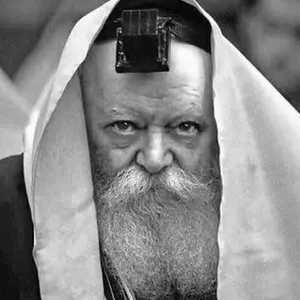

The kavanah of the holy Names
[A] (halacha 324)
The Intention of the Holy Names
Question: What must one have in mind when mentioning the names of Hashem, may He be blessed?
Answer: Rabbeinu Bachya wrote1: 'And likewise, correspondingly, regarding the bracha and the reward, when one blesses Hashem he must first contemplate2 in his heart the meaning of the letters of [the Name of] Hashem, and what they signify, and to direct his thought toward them, and afterward he should bless Hashem and mention Him with his mouth, and with this he will receive his full reward and live an eternal life. A hint to the matter is what is written: (Tehillim 145:1) "אֲרוֹמִמְךָ אֱלוֹהַי הַמֶּלֶךְ וַאֲבָרְכָה שִׁמְךָ לְעוֹלָם וָעֶד" ("I will exalt You, my God the King, and I will bless Your name forever and ever"); he should say: I will exalt You first in my thought and with the intention of the heart, and afterward: and I will bless — like the matter of what they said: (Brochos 8a) a person should always enter [a distance of] two doorways and afterward pray.'
And in Sefer HaYirah by Rabbeinu Yonah he wrote: 'And in each and every one of the three Names stated in the first verse he should prolong [his concentration] until he contemplates "was, is, and will be" .. and each time he mentions the unique Name he should contemplate within it the meaning of its reading, that He is the Master of all.'
And the Tur wrote3 Orach Chaim siman 5: 'And when he mentions the Name he should have in mind the meaning of its reading with aleph-daled, an expression of lordship, that He is the Master of all; and he should further have in mind the meaning of its writing with yud-heh, an expression of "Havayah," that He was, is, and will be; and when he mentions "Elokim" he should have in mind that He is mighty and powerful, who has the ability over the upper and lower worlds, for "Keil" is an expression of strength and power, as in "וְאֶת אֵילֵי הָאָרֶץ לָקָח" ("and the mighty of the land he took").' And so wrote the Mechaber4.
And the Magen Avraham added5: 'But when it is written with aleph-daled, one should have in mind only that He is the Master of all.'
However, in the Biur HaGra6 there he disagreed with this: 'And he should have in mind etc. — Tur, and he derived it from the words of the Rabbeinu Yonah in Sefer HaYirah, who wrote regarding the first verse of Keri'as Shema, "and in each of the two Names stated in the first verse he should prolong [his concentration] until he contemplates was, is, and will be etc.," and afterward he wrote "and each time he mentions the unique Name he should contemplate within it the meaning of its reading, that He is the Master of all." But it implies there that one need only contemplate the meaning of its reading specifically in Keri'as Shema, where the two Names there signify "was etc." And so is it correct according to the depth of the law, for in all [cases] we follow the reading, and one need not reflect at all upon the writing — even though there are great secrets in the writing, and they are a law given to Moshe at Sinai.'
This dispute was brought in the Aruch HaShulchan7: 'And accordingly, at the time of saying "Baruch atah Hashem" he should have in mind lordship and "was, is, and will be"; and in a place where the Name "Adni" is written, such as "אֲדֹנָי שְׂפָתַי תִּפְתָּח" ("Hashem, open my lips"), he should have in mind only that He is the Master of all. And some say that even with the Name Havayah he should have in mind only the Master of all, for in every place we follow the reading [the Gra].'
However, in practice the Alter Rebbe8 ruled in accordance with the words of the Tur and the Mechaber and the words of the Magen Avraham, that one must have in mind, with the Name Havayah, also as it is written: 'One must have in mind during the brochos the meaning of the words that he utters from his mouth; and when he mentions the Name he should have in mind the meaning of its reading with aleph-daled, an expression of "Adnus," that He is the Master of all; and he should further have in mind the meaning of its writing with yud-heh, an expression of "Havayah," that He was, is, and will be. But in a place where its writing too is with aleph-daled, one need only have in mind that He is the Master of all.'
And in se'if 3 he wrote: 'And when he mentions the Name "Elokim" he should have in mind that He is mighty and powerful, who has the ability over the upper and lower worlds.'
If so, we have seen the words of the Shulchan Aruch and the Alter Rebbe that when one says a Name written as Havayah, even though its reading is as the Name "Adni," he should have in mind that He was, is, and will be — this in addition to the intention as its reading, like every Name "Adni" — that He is the Master of all. And the intention when one says the Name "Elokim" — that He is mighty and powerful, who has the ability over the upper and lower worlds.
And in Sefer Tehilah LeDavid9 he added: 'In a place where the Name Havayah is found with the vowelization of "Elokim" — it would seem one must have in mind the meaning of its reading, that He is mighty etc., and the meaning of its writing, "was, is, and will be."'
The Rebbe Rashab wrote10: '.. This past Tuesday R' Yaakov Meir of Minsk was here. He had previously printed siddurim in which the Names would not be in their [proper] writing, namely: for the Name Havayah, two yuds are printed, with the vowelization "sheva" under the first and "kamatz" under the second; and for the Name "Adni" also two yuds, except that they are vowelized with the aforementioned vowelization .. And he has an approbation from some of the great Ashkenazic rabbis, and also from the rav of Sochaczew, and it is enclosed herewith. And he requested an approbation from me on this .. But I have a concern in this matter, that by their not having the holiness of the Holy Names within them, they will, G-d forbid, be treated more lightly, for when the Names are in their proper form the holiness of the Names rests upon them, which is not so [otherwise] etc. And further, that the Name "Adni" is not recognizable at all; and although there is no difference in the reading, yet many will not know at all that it is the aforementioned Name.
And it would seem that the intention of the Rebbe Rashab is that the drawback is that when it is not marked where this is the Name Havayah and where this is the Name "Adni," they will not know which Name it is, and the appropriate intention will be lacking.
Footnotes:
1 פרשת אמור פכ"ד פ"י ↩
2 אך ראה להלן בדברי הרבינו יונה וכן נראה פשטות לשון דברי אדה"ז שהכוונה תוך כדי האמירה, אלא שיתכן שגם הרבינו בחיי כוונתו שכהכנה לכוונה בשעת האמירה יתבונן לפני. וראה גם מ"ש באז נדברו ח"ב ע' קמב ואכמ"ל ↩
3 או"ח סי' ה, הובא באבודרהם ברכת המצות ומשפטיהם ↩
4 סי' ה ס"א ↩
5 ס"ק א ↩
6 הובא במשנ"ב סי' ה ס"ק ג ↩
7 סי' ה ס"ד ↩
8 סי' ה ס"א ↩
9 סי' ה אות א ↩
10 אג"ק א, עמ' שה ↩
From the 'Shoneh Halacha' project — a daily halacha with reasons and sources
Link to the (silent) group: 'Shoneh Halacha — Chabad Minhogim'
Join the WhatsApp groupA General Intention for the Holy Names
[ב] (halacha 325)
Question: Is it sufficient to have, in the morning at the start of the day, one general intention covering the entire day?
Answer: Several of the poskim wrote that since it is difficult to remember and to have the proper intention each time at every holy Name, in its place, they therefore wrote a good piece of advice: that one should have the intention one time at the start of the day in the morning, and this will be effective for the entire day, as follows:
In the name of the holy Rav, Rabbi Pinchas of Koritz, it is brought1: 'It is stated in the seforim regarding what is written in the Shulchan Aruch, to have intention when saying the Name Havayah [that it means] Master of all, and Was, Is, and Will Be — that it is difficult to have intention each time one mentions the Name; therefore one time suffices, like a scribe who has intention in his writing at the first Name and sanctifies it, and afterward all the Names relate back to the first Name (see Orach Chaim 33, 19), so too with saying [the Name] as well. And he, of blessed memory, said that this is why they instituted "Adon Olam" before the tefillah, in which is written "asher malach" — that is, Was; "le'eis na'aseh" — that is, Is; "ve'acharei kichlos" — that is, Will Be; up to here it relates back to the Name Ad-nay, which is also Was, Is, and Will Be — even though "Is" is alluded to only in the Name Havayah, nevertheless the Name Ad-nay is also Havayah. And afterward one says the Name Havayah, and afterward one says "vehu haya vehu hoveh" etc., which relates back to the Name Havayah, and afterward one recites the brochos and prays, and it relates back to the aforementioned'.
And so wrote the holy Rav, Rabbi Avraham David of Butchatch2: 'And regarding the intentions of the holy Names in siman 5, one may say that a declaration of intent at the outset is effective even after an interruption; nevertheless, one should have intention on the holy Names when he is not overtaken by forgetfulness or haste, or one should have intention based on the proper intention that he already had well'. And he even wrote3 a special formulation that was printed in several siddurim: 'This is the formulation — each day in the morning, before Birkas HaTorah, one should say this: "I hereby have intention, from now, upon each and every detail of my deeds, my words, and my thoughts of the entire day, until tomorrow at this time, for the sake of the unification of the Holy One, blessed be He, and His Divine Presence, in the name of all Israel, to tip the scales for myself and for the entire people of the Children of Israel and the entire world to the side of merit; and I hereby have intention, from now until tomorrow at this time, each time that I mention the holy Name Havayah — which in its writing is Was, Is, and Will Be, and in its reading is Ad-nay, which is Master of all — and when I mention the Name Elokim, which is Mighty and the Possessor of ability and the Possessor of all powers, the Cause of causes and the Reason of reasons"'.
And so wrote the sefer Ma'aglei Tzedek4, and this is his wording: 'To see, to the best of one's ability, to have intention at least one time in each tefillah at its beginning, at the mention of the Name, with the intention explained in Orach Chaim siman 5'.
And so wrote Halichos Shlomo5, to rely on the formulation of the Eshel Avraham, apart from the first pasuk of Krias Shema and the first bracha of Shemoneh Esrei.
And see also the words of Rav Mordechai Eliyahu at the time of his visit to the Rebbe on the 6th of Marcheshvan 57526: 'I did not know the Chabad custom [regarding saying Lesheim Yichud one time a day], but I had the same intention as yours regarding the intention of the Names .. that since it is difficult for a person to have intention at each and every bracha, he should have intention one time at the start of the day and say that this is his intention in all the brochos he says throughout the day, similar to the Chabad approach in saying Lesheim Yichud'.
Similarly it is brought in Sefer HaMinhagim7 regarding the general intention of the tefillos: 'It is well known and accepted regarding the matter of the intentions in tefillah, that those whose minds are not fit to have intention — whether due to lack of knowledge or because they do not have the ability to remember the specific intentions at the time of tefillah — it suffices that they have a general intention, that his tefillah should be heard before Him, may He be blessed, with all the intentions explained in the seforim of Kabbalah'.
But it is important to clarify [that, a priori, it is certainly proper, in accordance with the words of the Shulchan Aruch and the Alter Rebbe8, to have intention each time at the saying of the Names; rather] it is only when one is unable to have intention each time he mentions Hashem that we say that he should at least have intention in the morning. And see the Shulchan HaTahor (Komarno)9, who wrote a formulation for one intention in the morning but concluded: 'and this tefillah will be effective for him if, through circumstances beyond his control, he forgets to have intention at some Name'10.
Notes:
1 אמרי פנחס (קאריץ) השלם שער ג סצ"א (ע' פז) ↩
2 אשל אברהם מהדו"ת סוף סי' צח ↩
3 קונטרס תפלה לדוד ברכות השחר אות כא ↩
4 ח"א בהנהגות טובות שבתחילת הספר אות ט ↩
5 תפלה פ"א דין ג ↩
6 תורת מנחם התשנ"ב ח"א ע' 236 ↩
7 עמ' 8 מהיום יום יא אדר א ↩
8 סי' ה, הובא בהלכה מספר324 ↩
9 סי' ה ↩
10 וראה שו"ת אז נדברו ח"ג עמ' ל, וח"ב עמ' קמב. וראה עוד בזה בשו"ת בצל החכמה ח"ד סי' א ↩