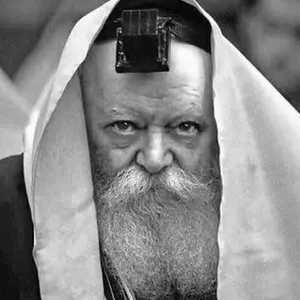

The Four Species
[1] (Halacha 364)
Thirty days before the Yom Tov - choosing the esrog correctly!
פרי עץ הדר - Esrog [1]
Question: When one chooses an esrog for the four minim, is the whole esrog equal with regard to the disqualifications in it, or is there a place on the esrog in which one must be more stringent?
Answer: In the Mishnah1 it is stated: 'If a chazazis came up over its minority, if its oketz was removed, if it was pierced and nothing at all is missing - it is kosher'.
And it is explained in the Gemara2: 'Rava said: and on its chotem, even in the slightest amount it is likewise posul'.
And the Rishonim disagree as to which place is defined as the chotem of the esrog, and we find four views, as follows:
a) Rashi3 wrote: 'At the thickness of its height, from where it slopes and descends toward its top - even the slightest amount is posul, for it is visible to the eye there more than in the other places on it, since it is at that thickness that a person sets his eyes'.
And the Rosh4 wrote: 'It emerges from Rashi's commentary that not the whole slope up to the pitom is called the chotem, but rather the thickness of its height, from which it slopes and descends'. That is, according to Rashi only the place of the thickness of its height is the place called its chotem, and only there must one be stringent, and not over the whole slope from there until the pitom, and so it appears that the Ran understood in d.h. 'Amar Rava', as is explained in the Beis Yosef5.
b) But the Rosh himself disagreed with Rashi, and wrote: 'But since the Rav Alfasi z"l and Rabbeinu Chananel z"l mentioned the chotem next to the pitom, it implies that the slope is called the chotem, and so is the practice of the people, that from the thickness of its height until the pitom a chazazis of any amount at all disqualifies, and the same applies to dryness and to all the disqualifications on account of hadar'.
c) A further view is that of the Rambam6, who wrote: 'And if it came up on its teat, even the slightest amount is posul', and the Magid Mishneh wrote: 'And Rabbeinu explained "its chotem" as its teat, and so did a number of commentators z"l explain. And in the Halachos of R' Yitzchak Ibn Gias they explained "its chotem" as the point and top of the esrog, and his words are close to the words of Rabbeinu. And I have seen one who explained "its chotem" as from the place where it begins to narrow and to taper toward its top'.
d) The Ran7 wrote: ''And others said that its chotem is that raised place beneath the blossom, which is formed like a crown. And it appears that just as they said regarding a chazazis that on its chotem even the slightest amount is posul, so is the law regarding all the things that disqualify an esrog'.
Thus we have seen in the words of the Rishonim that the chotem of the esrog is more stringent than the rest of the esrog, and that not only regarding a chazazis is one stringent in it, but one must be stringent at its top regarding the other disqualifications as well8.
And so ruled the Tur: 'And from its chotem .. a chazazis and any change of appearance disqualify', except that they disagree as to what is called its chotem.
Now, in practice the Beis Yosef wrote to explain the words of the Rosh in what he wrote that such is the practice of the people, in two ways: 'And one may say that the practice of the people is to be concerned also for the words of Rashi, and therefore they disqualify at the thickness of its height as well. Alternatively, that which he said that the practice of the people is to disqualify from the thickness of its height until the pitom means from the thickness of its height and upward, and not including the thickness of its height itself, and this accords with the explanation of Rabbeinu Chananel and the Rif'.
And in the Shulchan Aruch he wrote9: 'And its chotem means from the place where it begins to narrow and to taper toward its top'.
And in this vein the Alter Rebbe wrote10: 'Anything that disqualifies an esrog because it is not hadar, such as dryness, or a chazazis, or a change in the appearance of the esrog - that is, that part of the esrog was peeled and its appearance changed from the appearance of the rest of the esrog - even though all of these do not disqualify unless they are of the measure that was specified for them, nevertheless if one of them was on its chotem, that is, from the place from where it slopes and descends toward its top and begins from there to narrow and to taper, this entire place, if there is on it any one of all these things that disqualify on account of hidur, even if there is on it only the slightest amount, it is posul, since the essential hidur of the esrog depends on its chotem, which is visible to the eye more than the other places, and it is upon it that a person sets his eyes at his first glance'.
And from the plain meaning of the words of the Mechaber [and likewise the Alter Rebbe] it appears that he ruled that only the place of the slope is included in its chotem. Like the view of the Rif and Rabbeinu Chananel, and he was not concerned for the view of Rashi11 that the thickness of its height, which is beneath the slope, is the chotem, and likewise he did not agree with the view of the Rambam that only the teat is the chotem, and as is written in Shulchan Gavo'ah12: 'And since the Rif and the Rosh and Rabbeinu Chananel and the rest of the poskim z"l disagree with the Rambam in this, all the more so since such is the practice of the people, to disqualify from the place where it begins to narrow and to taper toward the top, he ruled anonymously against the explanation of the Rambam and Rashi, and so we hold'.
And so too wrote the Machatzis HaShekel13: 'And since the Rav Beis Yosef wrote here in the Shulchan Aruch "from the place where it begins to slope", it implies that he ruled exactly like the Rif and Rabbeinu Chananel, that the height itself is not included in its chotem; he also took the latter answer as the primary one, that such too is the practice of the people14.
But in Shaarei Teshuvah15 he wrote: '[But] in Machzik Bracha (os 6) he wrote in the name of his teacher the Rav z"l that the thickness of its height is included in the disqualification, to disqualify a chazazis of any amount, see there. It is possible that in the Shulchan Aruch too, that which he wrote "from the place where it begins" etc., that place too is included, since where he rules anonymously we take the stringent view, and it is somewhat reasonable to say so, and follow the reason: that on its chotem it is visible to the eye more, and if so, at the thickness of its height too it is no less than the slope, for there too it is plainly visible to the eye. Nevertheless, it is possible that in a pressing situation one may be lenient on the remaining days'.
Thus in practice, on the upper part of the esrog, at the place of the slope, if there is a disqualifying change of appearance or a chazazis, even in a small measure, this disqualifies the esrog [and there are those who were stringent also regarding the thickness of the height of the esrog that is beneath the slope].
https://did.li/Shonehalacha
Notes:
1 Sukkah ch. 3 Mishnah 6, 34b ↩
2 35b ↩
3 in d.h. 'u'vchotmo' ↩
4 ch. 3 siman 20 ↩
5 siman 648. But note the Aruch HaShulchan se'if 33, who wrote: 'It is possible to say that this is Rashi's intent as well [=that the slope is its chotem], and that which he wrote "at the thickness of its height" is only a marker of the place, that from there onward it is called its chotem, but not the thickness of the height itself .. and the Rosh wrote that according to Rashi not the whole slope is called the chotem, see there, and it requires investigation' ↩
6 Hil' Lulav ch. 8 halacha 7 ↩
7 on the Rif, Sukkah 17b ↩
8 And as the Bach wrote: 'So wrote the Rosh there, and this is the reason: since a chazazis disqualifies because we require hadar, and it disqualifies on its chotem in any amount, then so too all the rest of the disqualifications on account of hadar, for what is the difference' ↩
9 OC siman 648 se'if 9 ↩
10 siman 648 se'if 21 ↩
11 And see Ateres Tzvi on the Shulchan Aruch there s"k 12. And Biur Halacha there d.h. 'mimakom' ↩
12 os 20 ↩
13 siman 648, at its end ↩
14 But he concludes: 'Nevertheless, in my humble opinion every baal nefesh should be stringent upon himself also like the view of Rashi and like the first answer of the Rav Beis Yosef, to disqualify at the thickness itself too in any amount, and in accordance with the stringency of both, Rashi and the Rif and Rabbeinu Chananel' ↩
15 s"k 16 ↩
[2] (Halacha 365)
פרי עץ הדר - Esrog [2]
Question: We learned in the previous halacha that when there is a chazazis or a change of appearance on the chotem of the esrog it is posul in any amount at all. What is the law when the chazazis or the change of appearance is found beneath the chotem of the esrog?
Answer: The Mishnah1 says: 'over its minority it is kosher', and in the Gemara there2: 'over its minority - it is kosher. Rav Chisda said: this matter our great Rabbeinu said it, and may the Omnipresent be his help. They taught this only in one place, but in two or three places - it is like a spotted one, and it is posul'.
The Rishonim disagree regarding the words of the Gemara that in two or three places it is posul, whether one must be stringent to regard it as spotted and to disqualify it even when the spots are close together and they are a minority of the surface of the esrog. As follows:
The Ritz Gias3 wrote: 'Over its minority in one place it is kosher; in two or three places it is like a spotted one and it is posul'.
But the Raavad4 disagreed and wrote: 'And also regarding the spotted one in two or three places, it appears to me that this is specifically where the spotting is spread over the majority of the esrog, and even though the blotches themselves are a minority; but if it is in its minority, such as where it is only on one side of the esrog, it is kosher5'.
And the Rivash6 wrote: 'And know that where a chazazis came up on an esrog in two or three places, which is the disqualification always found on esrogim, because it appears spotted, we rely on the reasoning of the Raavad z"l, that it is specifically where the spotting is spread over the majority of it, even though in the area of the blotches it is a minority; but if it is in its minority, such as where they are all on one side of the esrog, it is kosher. And so did the Rosh z"l agree'.
And in practice the Mechaber7 wrote: 'If a chazazis came up on it, if in two or three places, it is posul; and if in one place, if it came up over the majority of it, it is posul. Some say that this, that in two or three places it is posul, is specifically where the spotting has spread over the majority of it, even though in the area of the blotches it is a minority, but if it is in its minority, such as where they are all on one side of the esrog, it is kosher. And there are those who disqualify even in the minority of one side'.
And the Kaf HaChaim8 wrote: 'The view of the Shulchan Aruch .. is that wherever the Shulchan Aruch writes "some say" and "some say", his intent is to rule like the latter "some say", and if the first "some say" is the lenient one, he relies on them only in a pressing situation, see there at length. However, in this matter, since there is a dispute in something that involves a bracha, and we hold safek brochos l'hakel, one must be concerned for a doubt regarding brochos, and one should not make a bracha except in a place where they were accustomed to be lenient, for where there is a minhag we do not say safek brochos l'hakel'.
And so too wrote further among the poskim of Sefard9 that such is the view of the Mechaber, and that in practice one is to be stringent regarding a chazazis and a change of appearance in two places even though they are only in a minority of the esrog.
And indeed several of the poskim of Ashkenaz took the lenient view, and as the Levush wrote10: 'And that is where the spotting is spread over the majority of it, even though in the area of the blotches themselves it is a minority; but if the entire spread is in its minority, such as where they are all on one side of the esrog, it is kosher, and there are those who disqualify in this case too'.
And so too wrote the Eliyah Rabbah11: 'And the first reasoning appears to me to be the primary one, for so ruled the Rosh and the Tur and the Ran and the Tzeidah LaDerech12 and the Rivash and the Radbaz'13. And so too wrote the Pri Megadim14 in the view of the Levush. And in the Mishnah Berurah15.
But the Alter Rebbe16 decided to be stringent, and these are his words: 'In what case is this said? Where there is from the beginning of the one chazazis until the end of the second chazazis the measure of the majority of the circumference of the esrog .. but if the entire chazazis is on one side of the esrog .. it is kosher and there are those who disagree with this and say that even if it has on it only two spots of a chazazis of the slightest amount, and between these two spots there is no empty place having the appearance of an esrog other than the measure of one chazazis, this is like a spotted one and it is posul; and one is to be stringent like the latter reasoning, but in a pressing situation, where it is impossible to find another esrog, one may rely on the first reasoning'.
Thus we have learned that according to the view of the Alter Rebbe, regarding a chazazis beneath its chotem, even if the two chazazis marks or the disqualifying appearance are only a minority of the esrog, one should not take it l'chatchila. Thus it is very important, particularly according to the view of the Alter Rebbe, to know which are the disqualifying appearances such that even when there are two of them one should not take the esrog l'chatchila, and we shall learn about them in the coming days.
It is important to note that l'chatchila it is fitting to find an esrog that has no chazazis or change of appearance at all, even a single one, even beneath the chotem, as the Kolbo wrote17: 'And one should be particular that there be no chazazis on it at all'. And in the Pri Megadim18 he wrote: 'And fortunate is he who is able to take an esrog that is beautiful, hadar and clean of everything'.
Notes:
1 Sukkah 34b ↩
2 35b ↩
3 Hil' Lulav page 142 ↩
4 Temim De'im siman 232 ↩
5 And the Rosh wrote, ch. 3 siman 19: 'And according to this, that which was taught that a spotted one is posul means that the spotting has spread over the majority of the esrog, and it is a good boundary and measure, for it is not reasonable to say that if there were on the esrog something like two or three drops of spotting of any amount at all, one beside the other, that it should be disqualified thereby; but the language does not indicate his explanation, for it implies that "in two or in three places" is comparable to "in one place": just as one place is in its minority, so too two or three places are in its minority - unless we say that in this it is comparable to it, that the blotches in three places are a minority of the esrog as in one place, but the spread of the spotting is over the majority of the esrog' ↩
6 siman 139 ↩
7 siman 648 se'ifim 9 - 10 ↩
8 s"k 74 ↩
9 Shu"t Or L'Tzion vol. 4 ch. 35 os 4. Chazon Ovadia, Esrog, page 260 os 9 ↩
10 se'if 10 ↩
11 s"k 19 ↩
12 maamar 4 klal 6 ch. 6 ↩
13 vol. 4 siman 1182 ↩
14 Mishbetzos Zahav s"k 15 ↩
15 s"k 42 ↩
16 Shulchan Aruch siman 648 se'if 20 ↩
17 siman 72 - brought in the Eliyah Rabbah s"k 20 ↩
18 at the end of siman 648 - a few laws of the esrog ↩
[3] (Halacha 366)
פרי עץ הדר - Esrog [3]
Question: We learned that various disqualifications of appearance disqualify even when their size is the slightest amount, but what is the law in a case where they are of a very small size?
Answer: The Radbaz wrote1: 'It further appears reasonable to me that a chazazis which is not visible except by great scrutiny and much examination does not disqualify, for the reason is because it appears spotted, and this does not appear spotted. And so may be inferred from the language of Rashi: "on its chotem, at the thickness of its height, from where it slopes and descends toward its top, even the slightest amount disqualifies, for it is visible to the eye there more than in the other places, since it is at that thickness that a person sets his eyes", end of his words. It implies that the matter depends on its being visible to the eye. And I have written that which appears to me in my humble opinion'.
And so too wrote the Mabit2: 'I further say that even if this chazazis, which is common on our esrogim, exists, it is not called "the slightest amount" unless it is visible to every person, that it is not hadar; but with our esrogim, where most of those things we call a chazazis are not visible to the eye because of their fineness, and one must look at them a great deal in order for them to be perceptible to sight, such that one person sees the entire esrog as hadar without any mark while another person, whose sight is clearer, sees it - this is not called "the slightest amount"; and it is called hadar for the one who holds it in his hand, since from the sight of his eyes until his hand it is not visible except when he looks at it a great deal, and all the more so for others who see it, even if they are next to him, who do not perceive it except with a good look, and it is called hadar'.
And so ruled the Magen Avraham regarding a chazazis3: 'And that is where they are visible to the eye when he holds it in his hand'. And regarding a change of appearance4: 'specifically where it is plainly visible to most people'.
And these are the words of the Alter Rebbe5: 'In any case, even on its chotem a chazazis does not disqualify unless it has on it two blisters .. and that is where they are visible to the eye when he holds it in his hand, and not that he needs to fix his scrutinising eye upon them until he sees them. And likewise any change of appearance does not disqualify unless it is visible to most people at first glance'
Thus we have seen that the definition of a disqualifying chazazis or change of appearance is on condition that it is visible to most people at first glance when he holds it in his hand6.
Question: We learned that when there are two disqualifying appearances one must be stringent l'chatchila also beneath the chotem of the esrog. However, it is very common that near the oketz at the bottom of the esrog there are spots and a disqualifying appearance - is there a basis to be lenient?
Answer: It is written in the Eshel Avraham (Butchach)7: 'And perhaps also at the bottom of the esrog, near its attachment to the tree, in the entire area that is below, a chazazis or an appearance is not relevant to disqualify, even on the first day, and the strictness applies only in the place of the circuit around it from below to above. And all the more so, in light of what the poskim wrote, that the concern applies only where it is plainly visible. So it may well be said from sound reasoning'.
And in practice this is indeed the ruling of many of the morei hora'ah8, that one need not be stringent when there is a disqualifying appearance in a place that is not visible when the esrog is standing upright.
But it would appear that where it is possible it is fitting to be stringent, particularly since this leniency was not brought explicitly in the poskim who preceded him.
Tomorrow we shall discuss, with Hashem's help, a change of appearance on the pitom or on the shoshanta
Notes:
1 vol. 4 siman 111 ↩
2 vol. 3 siman 49 ↩
3 siman 648 s"k 16 ↩
4 there s"k 18 ↩
5 siman 648 se'if 22 ↩
6 The morei hora'ah wrote various measures as to what the proper distance is for holding the esrog in the hand from the eye, and in the sefarim that deal with the four minim the measures are between 35-60 cm. And some took the view (Otzar Arba'as HaMinim page 194 and note 294) that the distance is as one holds the four minim at the time of the taking, without bringing it close to the eye ↩
7 siman 648 ↩
8 As brought in the collected sefarim on the kashrus of the four minim, see Nitei Gavriel ch. 32 os 15. And more ↩
[4] (Halacha 367)
פרי עץ הדר - Esrog [4]
Question: What is the law regarding a change of appearance on the pitom of the esrog?
Answer: In Halacha number 364 we learned of the dispute of the Rishonim as to what is called the chotem of the esrog, in which one must be stringent regarding the slightest amount of a disqualifying appearance, and we saw that according to the view of the Rambam1 the chotem is the teat [=pitom] of the esrog, in which one must be stringent regarding a chazazis and a change of appearance.
Some understood2 in the view of the Mechaber, who wrote3: 'From its chotem and onward, that is, from the place where it begins to slope until the pitom, a chazazis and any change of appearance disqualify in the slightest amount', that his intent is to be stringent also according to the view of the Rambam that the teat is called the chotem, and that his words 'until the pitom' mean up to and including it. And therefore they wrote that in practice one must be stringent regarding the pitom as regarding the chotem, and therefore a change of appearance on the pitom disqualifies.
On the other hand, some wrote4 that the pitom is not included in the chotem, and therefore one may permit disqualifying appearances on it. And they explained that the reason one may be lenient regarding a disqualifying appearance on the pitom is based on the view that even where the pitom was removed the esrog is kosher; consequently it is certain that even if it was not removed but has a disqualifying appearance on it, it is kosher. And therefore they wrote to distinguish between a disqualifying appearance on the pitom in the lower part of the pitom, whose absence disqualifies, and the upper part of the pitom, whose absence, in their view, does not disqualify.
However, some wrote5 that even if we say that where the pitom was removed it is kosher, nevertheless as long as the pitom exists any disqualifying appearance on it disqualifies the esrog, since this is not hadar.
[And some wrote6 that regarding a pitom that is literally of the colour of, and a continuation of, the chotem of the esrog, one must be stringent in it like all the other laws of the appearances of the chotem of the esrog. But7 a pitom that has dried out, such that it is dry like wood, in it there are no stringencies regarding black spots].
And in practice the Alter Rebbe8 wrote, regarding those who say that it is posul even where only the upper part of the pitom - the shoshanta - was removed: 'that the halacha is not like their words; nevertheless it is good to be concerned for their words where it is possible, that is, that if there are before him two esrogim equal in beauty and hadar, and on one of them the shoshanta was removed, then he should take the one that has the shoshanta on it, but if the one that has the shoshanta on it is not as mehudar and as splendid as the one from which the shoshanta was removed, he should take the one that is more mehudar and more splendid, even though it does not have a shoshanta, for the primary view is like the first reasoning'.
And since the view of those who permit is founded on the fact that where it was removed it is permitted, then according to the words of the Alter Rebbe that even where the shoshanta was removed one is to be concerned l'chatchila for the words of those who forbid9, therefore, when one comes to choose an esrog one should prefer l'chatchila10 an esrog that has no disqualifying appearance on it even on the pitom11.
Notes:
1 Hil' Lulav ch. 8 halacha 7 ↩
2 See Machatzis HaShekel at the end of siman 648, d.h. 'Da', who wrote: 'And so the language of the Shulchan Aruch implies, for he wrote "until the pitma", and the pitma is explained in the gloss of the Rema se'if 7 to be what is called the shoshanta - so the teat is included in its chotem. And so it is explained in the Rambam [Lulav] ch. 8 din 7, and these are his words: a chazazis came up etc., and if on its teat, even the slightest amount is posul; and therefore one must watch out for this on its teat'. And see also Biur Halacha se'if 12 d.h. 'mimakom' ↩
3 siman 648 se'if 12 ↩
4 Minchas Pitim in siman 648 at its end. And the Maharsha"m in his Shu"t vol. 7 siman 167, and see Neta Sorek siman 56. And in Chaim U'Bracha he wrote that (although the Maharsha"m retracted and wrote 'that he does not decide to be lenient', even so) the Gaon Rav Chaim of Brisk strengthened the view that permits, and his reasoning was that the pitom is like mere wood and is not considered part of the body of the esrog; but as regards the law he did not reveal his view in this. And see also words like these in the words of the Eshel Avraham (of Butchach) regarding a change of appearance on the oketz ↩
5 Chaim U'Bracha (printed in the addenda to Mateh Efraim) os 80 siman 260, and he wrote that he wrote so to the Maharsha"m, and following this the Maharsha"m retracted his permissive ruling; and therefore in practice he proposed in Chaim U'Bracha to peel off the place of the change of appearance ↩
6 See Halichos Shlomo, Moadim, ch. 10 os 19, and he wrote that all the words of the poskim to be lenient where a little of the pitom is missing apply specifically to a pitom that is dry like wood; but a pitom whose appearance is like the appearance of an esrog has all the laws of an esrog and is disqualified when it is missing ↩
7 See also in the sefer Arba'as HaMinim LaMehadrin (Ades) page 328 ↩
8 siman 648 se'if 17 ↩
9 And particularly according to the words of the Alter Rebbe in siman 648 there, and 649 se'if 17, that where the entire pitom was broken off: 'its disqualification is not on account of the missing part alone, but on account of the fact that this is not hidur' ↩
10 And note also from Halichos Shlomo there os 20, that if there is a black appearance that is visible to the eye it is fitting not to take it for the mitzvah. And so too it is written in Nitei Gavriel ch. 34 os 4, that l'chatchila one should be particular that there not be a chazazis on the wood of the pitom, or to peel it off. And see also Otzar Arba'as HaMinim (London 5782) page 191 ↩
11 And regarding a black spot on the shoshanta: we learned that some permitted even a change of appearance on the pitom, and according to their view it is certain that on the shoshanta there is no disqualification of a change of appearance; but even according to the views that one must be stringent regarding the pitom, and that it is included within the definition of the chotem of the esrog, nevertheless regarding the shoshanta, which is like mere wood and does not have the appearance of an esrog, it would appear that there is no disqualification of a small change of appearance in it. See Arba'as HaMinim LaMehadrin (Ades) page 382. And see also, regarding a chazazis on the shoshanta or a change of appearance on the oketz, the Eshel Avraham (Butchach) siman 648, who inclined to be lenient ↩
[5] (Halacha 368)
פרי עץ הדר - Esrog [5]
In the previous halachos we dealt with cases where a chazazis or a change of appearance is seen on the esrog, and in which situations this disqualifies the esrog; but the question is, what is the chazazis, and which disqualifying appearance is common nowadays?
Chazazis - the Mishnah in Maseches Sukkah1 says: 'if a chazazis came up, it is posul'. And Rashi explained: 'chazazis - like a sort of fine blisters'. And the Rosh2 added: 'and that is where they have substance, such that its place is discernible by touch, in that it is higher than the rest of the esrog'.
And the Pri Megadim wrote3 that it is: born from the rotting of the fruit'. And see in the Chiddushei HaTzemach Tzedek4, who discussed at length the views of the poskim in explaining the chazazis.
Except that in practice the Pri Megadim already wrote there: 'And know that this chazazis - I still do not know what it is, for as it appears, it is that its place is a blister or a scab ..'.
And in addition the poskim wrote5 that nowadays a chazazis is not so common6, and therefore we shall not elaborate on this, but it is important to clarify that when one sees a change on the peel of the esrog one must have it checked by a moreh hora'ah that it is not a chazazis.
Question: An esrog that has an unusual colour on it, such as a black or white colour - what is its law?
Answer: A black appearance - the Gemara in Maseches Sukkah7 says: 'Come and hear: an esrog that is swollen, rotten, pickled, boiled, black, white, or spotted - is posul'.
The Rosh, Maseches Sukkah8, wrote: 'Black and white, if they are in one place, disqualify over the majority of the esrog, like a chazazis; and if it is in two or three places, that is a spotted one'.
And so too wrote the Tur9: 'And if it is black or white in one place, it is posul over the majority of it; in two or three places its law is like that of a chazazis, to be disqualified even in its minority'.
And so ruled the Mechaber10: 'If it is black or white in one place, it disqualifies over the majority of it; in two or three places, its law is like that of a chazazis, to be disqualified even in its minority'.
And these are the words of the Alter Rebbe11: 'A spotted esrog is posul, since it is not hadar. Which is a spotted one? One that has on it several colours, such as black and white, which are not of the appearance of the esrog. And even one colour in two places on the esrog - this is like a spotted one and it is posul, even if they cover only a minority of the esrog. But if the disqualifying colour is in one place only, it does not disqualify unless it covers the majority of the esrog or half of it, as was written regarding the chazazis, for the law of a change of appearance is like the law of a chazazis in every respect'.
And from the language of the Alter Rebbe, who wrote such as black and white, which are not of the appearance of the esrog, it is understood that any colour that is not the appearance normally found on an esrog is liable to disqualify, and as the Pri Megadim wrote12: 'The appearance of an esrog is like the yolk of an egg and like wax and the like, see Tosafos [Sukkah] 31b [d.h. 'HaYarok']. And it implies that all the other appearances are posul, and that black and white in se'if 16 is not exclusive'.
Thus in practice a black13 or white appearance disqualifies because it is not hadar, and therefore such an appearance on its chotem disqualifies in the slightest amount, and beneath the chotem it is posul l'chatchila when there are two disqualifying appearances. And regarding the other unusual colours one must ask a rov14.
Notes:
1 34b ↩
2 ch. 3 siman 15 ↩
3 OC, Eshel Avraham, siman 648 s"k 19 ↩
4 on the Shas, daf 73c and onward ↩
5 See the references in Piskei Teshuvos siman 648 os 10. And see Arba'as HaMinim LaMehadrin (Ades) page 364. And more ↩
6 In the sefer Pri Etz Hadar (Lieberman) he wrote on page 69 that on the esrogim of the shmittah year, where the esrog is not tended, something like warts on the fruit is more common, and it is possible that these are the chazazis ↩
7 36a ↩
8 ch. 3 siman 22 ↩
9 OC siman 648 ↩
10 Shulchan Aruch OC siman 648 se'if 16 ↩
11 siman 648 se'if 26 ↩
12 OC, Eshel Avraham, siman 648 at the end of the siman, and so too he wrote in s"k 7 and s"k 18 ↩
13 To note that in Halachos Shlomo, Sukkos, ch. 10 os 20, in note 30, he wrote that the black spots that are common nowadays are not considered the black appearance that the poskim disqualified. Likewise it should also be noted from the words of the Terumas HaDeshen, who wrote that in a case where there is an appearance on the esrog but it is common on esrogim, it is considered the appearance of an esrog. And it would seem that nowadays black spots are very common, but see in Halacha 369 that one may say that they permitted this only where it is not on account of the esrog itself, and this is not certain regarding the spots that are common nowadays; and see the sefer Pri Etz Hadar (Lieberman) page 71 ↩
14 See what the poskim discussed (Shu"t Pnei Aryeh siman 5. Shaarei Teshuvah siman 648 s"k 21. Chochmas Shlomo on the Shulchan Aruch. Biur Halacha on se'if 16. Chaim V'Shalom os 1, os 20, and os 302. And in several places) regarding various appearances such as red and blue and brown, and this is not the place to elaborate ↩
[6] (Halacha 369)
פרי עץ הדר - Esrog [6]
bletlach
Question: On many esrogim there are commonly found spots of a light colour, which are called in the language of halacha פלא"ט מאל, and in the language of the people 'bletl' - what is their law?
Answer: It is written in Minhagei Mahari"l, Hilchos Esrog: 'Said Mahar"i Segal [=the Mahari"l]: these are the white spots that are seen on the esrog. And some of them come from the leaves or from the branches of the tree, and they do not render it posul. But the sign of a chazazis that is posul is that they are raised and the esrog is sunken between them'.
And so too wrote the Mabit1: 'And so too with our esrogim, on which it is common for small dots of any size to grow - they are not garav, for that which is like garav is where that dot is born from the substance of the esrog itself, like [an esrog that is] swollen or rotten or spotted or green and this that we call chazazis is not from a defect of the esrog, but rather from the thorns, ברקני', on the esrog tree, which prick it; and through that pricking, while it is growing on the tree, the place of the prick changes and its place becomes like red, and they call it chazazis - and it is only on account of the prick, not on account of a defect in the esrog that is called chazazis, like the garav of a person, which we render as chazazan, which is from a defect that a person has within his body and from which that garav, which is chazazis, breaks out to the outside. And even with the chazazis itself, which is like garav, it is not posul with any amount whatsoever, but only when it is of an amount that has substance, such that its place is discernible by touch as is written in Orach Chaim siman 648; and the Rosh wrote that its place is discernible by touch, in that it is higher than the rest of the esrog. And this which they call chazazis on our esrogim - most of those on which there is any amount, their place is not discernible by touch and it is not higher than the rest of the esrog, and they are not posul; and it is better to fulfil one's obligation with them, since it is acquired with his own money, than to chase after one that has none of these and is not his, and he needs it to be given to him as a gift - and perhaps he does not fully resolve in his heart to transfer it, and it turns out that he does not fulfil the obligation of taking the lulav and esrog'.
But in the Terumas HaDeshen2 he wrote a different reason: 'However, the world is accustomed, as a matter of course, to permit that פלא"ט מא"ל, even though they are felt by the touch of the hand. And it is possible that we rely on that which the Ashiri wrote, that the chazazis that is posul is blotches that are felt by the touch of the hand. And afterwards he wrote in the name of the Raavad, that a chazazis that is of the appearance of the esrog is kosher. And these פלא"ט מא"ל are common and usual, they are considered the appearance of the esrog, and it is not called lacking in hiddur on account of this, and this requires investigation'.
We thus learn that the poskim wrote that there is room to be stringent when there is a change that protrudes from the esrog. And they wrote two ways in which there is room to be lenient with a change of appearance: a) when the change does not come from the esrog itself. b) when the commonness causes this not to be a change of appearance.
And in halacha the Mechaber wrote3: 'A chazazis is like blisters, and it has substance, such that its place is discernible by touch, in that it is higher than the esrog'. And the Rema wrote on this in a gloss: 'And therefore one should permit that chazazis which is called בל"א מו"ל, since they are not higher than the rest of the esrog; and there is one who wrote that they should be permitted for the reason that they are considered the appearance of an esrog, since it is usual for many to be so'.
If so, the Rema brought the two views regarding the question whether one may be lenient with a bletl when it is raised and protrudes from the esrog.
And in practice the Eliyah Rabbah wrote4: 'Also the Terumas HaDeshen himself, siman 99, inclines in this to be stringent; therefore one should not be lenient where it is possible'. And so too wrote the Shaarei Teshuvah5: 'And since he left it as requiring investigation, when it is not a time of pressing need one should not be lenient with those that are felt by the touch of the hand'. And so too wrote the Mishnah Berurah6.
But in practice the Alter Rebbe brought both reasons, and wrote7 to be lenient even when the bletl protrudes and is higher than the esrog. And these are his words: 'Neither the chazazis nor a change of appearance renders it posul unless they were born from the substance of the esrog itself; but if, on account of thorns pricking it, red and crooked places formed on it, it is kosher. And likewise those chazazis that are called בלא"ט מו"ל - one should permit, even if they have substance such that their place is discernible by the touch of the hand, in that they are higher than the esrog, since they too are considered the appearance of an esrog, given that it is usual for many esrogim to be so - this is not a great change'8.
If so, we have learned that although an esrog is rendered posul by a change of appearance, nevertheless there are changes that do not render the esrog posul, such as that which is very common - 'bletlach' - and even if they protrude there is no concern in this.
Notes:
1 vol. 3 siman 49 ↩
2 siman 99 ↩
3 In Shulchan Aruch OC siman 648 se'if 13 ↩
4 Ibid. s"k 25 ↩
5 Ibid. s"k 23 ↩
6 Ibid. s"k 50 ↩
7 Ibid. se'if 23 ↩
8 It requires investigation whether the Alter Rebbe's intent is that there are two reasons and each reason on its own suffices (and the Alter Rebbe holds that a bletl is considered as being from the substance of the esrog itself). Or whether, from the combination of the two reasons of the Mabit and the Terumas HaDeshen, the Alter Rebbe wishes to teach us that only when both conditions are present - namely, external and the appearance of an esrog - only then is it permitted ↩
[7] (Halacha 379)
ענף עץ עבות - Hadas [1]
Question: Which hadas is it that we must choose l'chatchila?
Answer: The Gemara in Maseches Sukkah1 says: 'It was taught: a tree that is avos - kosher, and one that is not avos - posul. What is the case of avos? Said Rav Yehudah: where three leaves stand in each kan. Rav Kahana said: even two and one. Rav Acha the son of Rava would seek after two and one, since it came forth from the mouth of Rav Kahana. Mar bar Ameimar said to Rav Ashi: my father would call that a wild hadas'.
We have thus learned in the Gemara that among the laws of the hadas is that all three leaves emerge from one place, and this is what is called nowadays 'meshulash'.
Except that the Rishonim disagree as to what measure of avos is required in the hadas, as follows:
a) Some wrote that it is required that all the leaves along the entire length of the measure of the hadas be avos, and this is indispensable.
And as the Ran wrote2: 'You find it with a hadas metzra'ah - that which grows on the boundary; but with an ordinary hadas, some of whose leaves fell off, its law was not made explicit and there is one who says that it must be avos in its entirety, and if even one leaf fell off from its whole measure it is posul.
And so too wrote the Tur3 in the name of the Geonim: 'The Geonim wrote that it must be avos along the entire measure of the length of the hadas, and if not it is posul. And so too wrote the Maggid Mishneh4: 'And I say all of them precisely, for whatever is not avos is like another species and the measure is lacking'.
And so too wrote the Kol Bo5 in the name of the Baal HaHashlamah: 'And he further wrote that all three tefachim of the hadas require avos'6.
b) But some wrote that although l'chatchila it is proper that it be avos in its entirety, yet it is kosher also when only its majority is avos.
And as the Raavad wrote in Temim Deim7: 'However, we require the entire measure of the hadas to be avos for the mitzvah, or its majority as an indispensable requirement'. And so too he wrote in his glosses on the Rambam there. And the Rosh8 brought the Raavad and ruled like his words.
And so too wrote the Kol Bo9: '..and from the words of the Rif z"l it appears that avos is not required at the top of each one, but rather its majority suffices, whether it be at its top or at its end, and with a minority it is posul'.
c) And some wrote that although l'chatchila it is proper that it be avos in its entirety, yet it is kosher even if only at its top there are three kinim that are avos.
And as Rav Saadia Gaon wrote10: 'In every kan of its kinim there should be three leaves arranged, and if the whole stem is not found in this manner, three kinim at its top being in this manner suffices etc.'
And in halacha the Mechaber wrote11 like the view of the Raavad and the Rosh: 'For the mitzvah we require the entire measure of the length of the hadas to be avos, and as an indispensable requirement, its majority'. And the Rema wrote - 'and even if it is not at its top'.
And so too wrote the Alter Rebbe12: 'And l'chatchila it is a mitzvah to seek after a hadas that is avos in its entirety, that is, that all the kinim of leaves that emerge along the entire length of its measure, which is three tefachim, as will be explained in siman 650, have in each and every kan three leaves; and in any case, if it is not avos in its entirety, since its majority is avos, that is, that the majority of the kinim of leaves that emerge within the length of its measure, which is three tefachim, have in each and every one of them three leaves - it is kosher, and it is permitted to recite a bracha over it l'chatchila'.
If so, when choosing hadassim l'chatchila one should look for hadassim in which, along the entire length of the three tefachim [the upper ones13], they are meshulash; but in a case where the hadas is meshulash only in its majority, he has fulfilled his obligation.
Notes:
1 32b ↩
2 Sukkah 15b of the pages of the Rif ↩
3 OC siman 646 ↩
4 Hilchos Lulav ch. 7 halacha 2 ↩
5 siman 72 ↩
6 But some wrote that although avos is required in its entirety, yet where it was in its entirety and then fell off it is kosher. See the view of the Ra'ah brought in the Ran ↩
7 siman 228 ↩
8 Sukkah ch. 3 siman 10, and see also in Shu"t HaRosh klal 24 siman 11 ↩
9 Ibid. ↩
10 In his siddur p. 235 ↩
11 OC siman 646 se'if 5 ↩
12 OC siman 646 se'if 3 ↩
13 See what is written in the sefer Arba'as HaMinim al pi Shulchan Aruch HaRav (Weiner) vol. 1 p. 94 os 4, that it may be said that this is the reason the Alter Rebbe omitted, regarding its majority being avos, what the Rema wrote: 'even if it is not at its top' - for it may be said that the Alter Rebbe holds that the law of avos is the same as the law of leaves at its top that dried up or fell off, which he holds is not hadar, as explained in se'if 11. And in any event, in our case, where l'chatchila it is proper that it be avos in its entirety, one should be mehader that the measure of three tefachim be at its top. And so too the הרא"א told us, that l'chatchila it is proper to be mehader that the avos be in the upper three tefachim ↩
[8] (Halacha 380)
ערבי נחל - Aravah [1]
Question: What is important to be particular about in choosing an aravah?
Answer: The Gemara in Maseches Sukkah1, in the Mishnah, says: 'An aravah .. whose top was broken off, whose leaves were stripped, and the tzaftzafah - are posul. A withered one, and one some of whose leaves fell off, and one of ba'al - are kosher'.
The plain meaning of the words of the Mishnah is thus that when the top of the aravah is broken off it is posul.
And so the Rishonim held in halacha, as the Beis Yosef wrote2 regarding the view of the Rif (and the Rosh), who copied this Mishnah in his Halachos; and that such is the view of the Ramban3, and so too ruled the Tur.
Except that the Rambam4 wrote: 'An aravah whose top was broken off is kosher'.
And the Maggid Mishneh wrote, to explain the Rambam: 'Even though we learned in the Mishnah that one whose top was broken off is posul, Rabbeinu holds that just as the posul of the breaking off of the hadas is set aside on account of that [teaching] of Rabbi Tarfon, as written above, the same applies to the posul of the breaking off of the aravah, that it is set aside, for the hadas and the aravah have one way. But it does not appear so from the Halachos [=the Rif], for they wrote this Mishnah of the aravah according to its plain meaning, without setting it aside; and so it is written in the Halachos of the Ritz Gias, even though they permitted a hadas whose top was broken off. And this is the view of the Ramban z"l, to distinguish between them. And he gave a reason for the matter: because the hadas - all its hiddur is in its avos, in that its leaves cover its wood, and the breaking off of the top is not discernible in it; but with the other minim the breaking off of the top is discernible in them and impairs their hiddur. Thus far'.
In halacha the Mechaber wrote5 anonymously [=meaning that such is the halacha in practice] like the majority of the Rishonim, and as a 'yesh omrim' he brought the Rambam; and these are his words: 'An aravah that dried up, or the majority of whose leaves fell off, or whose top was broken off, is posul; but a withered one, or one some of whose leaves fell off, is kosher; and the Rambam permits one whose top was broken off'.
And regarding one whose top was broken off, the Raavad wrote6: 'The posul is not in the leaves but in the top of the stem itself'7, and the Magen Avraham8 copied it in halacha; and these are his words: 'Whose top was broken off. That is, that its wood was broken off'.
And in practice the Alter Rebbe brought9 the words of the Maggid Mishneh, who distinguished between hadassim, in which by the essential law it is kosher when the top is broken off, and the aravah, in which they disqualify when the top is broken off; and in the laws of the aravah10 he wrote: 'An aravah whose top was broken off - that is, that the top of the wood itself, on which the leaves grow, was broken off - is posul, since this is not hadar. And therefore one must be very careful, when the stems of the aravah are longer than they should be and he wishes to trim them, that he not trim them at their top, but rather below, at the place where they join the branch'.
That is to say, the Alter Rebbe wrote only the view of the Rishonim who disqualified an aravah whose top was broken off, and did not mention the view of the Rambam at all; and he likewise ruled like the Magen Avraham, that the posul of a top that was broken off is not in the upper leaves but in the wood at the top of the aravah, so that only when that is broken off is the aravah posul, and not when the leaves above fell off.
If so, we have learned that one should choose an aravah that is entirely whole at the top, and from whose top wood nothing has been broken off.
Question: What is the reason that some are mehader to look for an aravah that has a livluv on it?
Answer: Since we have learned that an aravah whose top was broken off is posul, there are many who have the minhag to take an aravah that has a livluv at the top, which indicates that the aravah was not broken off.
This relatively new minhag has been brought in many of the Acharonim; and see Teshuvos V'Hanhagos11: 'And it is proper to be very careful with the aravah that it have a 'livluv', that is, a small narrow leaf emerging at the top of the branch of the aravah; for as we have heard, it is common in our country (South Africa) that in the summer the top falls off, and a broken-off top in an aravah is posul; and since in most of the world Sukkos is after the summer, it is common that it is broken off, and therefore a livluv is required. However, even if it was broken off, it is not my view to disqualify it when it is not discernible to everyone, for the root of the posul in one that was broken off is that it is not hadar; and since after it fell off it grew and the deficiency is not seen in it, it stands to reason that it is kosher b'dieved, even if from the outset its top fell off, since it is not discernible. And in any case, if a temarah grew at the top of a hadas there is no posul, for that is its hiddur; and so too with these aravos, when such is their growth we do not disqualify, and its top is as is accepted among us'.
Also in Halichos Shlomo12 he writes that they already had this minhag in Yerushalayim, to be mehader after a 'livluv'13.
But there are those14 who emphasised that 'Kehal Yisroel until the last generation did not look for an aravah with a livluv', and that certainly an aravah whose livluv fell off in the course of its growth on the tree is also kosher and mehudar.
And the poskim of our generation wrote several reasons for this: a) When the breaking off is not discernible it is not considered broken off15. b) On account of the heat, for the most part the livluv falls off while the aravah is still on the tree, and they compared this to the law of a pitom that fell off and of thorns that wounded the esrog while it was still on the tree in the course of its growth16. c) The livluv has the law of a leaf and not of the wood of the aravah, and we have learned that only when it is broken off from the wood is it rendered posul17.
If so, we have learned that there is a new hiddur to find an aravah with a livluv, but certainly a whole aravah without a livluv is also kosher l'mehadrin.
Notes:
1 daf 33b ↩
2 siman 647 ↩
3 In his glosses on Hilchos Lulav of the Raavad siman 5 ↩
4 Hilchos Lulav ch. 8 halacha 6 ↩
5 siman 647 se'if 2 ↩
6 Temim Deim siman 231 ↩
7 And see also the words of the Rosh, Sukkah ch. 3 siman 2: 'The hadas and the aravah - the upper leaves do not emerge from the top of the stem; rather, sometimes the top of the stem is bare. Therefore their top is the top of the stem and not the top of the leaves, and even if a leaf emerges from the top of the stem it is not called broken off until the top of the stem is broken off' ↩
8 Ibid. s"k 2 ↩
9 siman 646 se'if 11 ↩
10 siman 647 se'if 4 ↩
11 vol. 3 siman 187 ↩
12 ch. 10, Devar Halacha os 23 ↩
13 See also in Yalkut Yosef, Moadim, the laws of the hadas and the aravah se'if 9 ↩
14 See Even Yisroel vol. 9 p. 125 ↩
15 See above in the words of the Teshuvos V'Hanhagos there, and see also in the Even Yisroel there ↩
16 Halichos Shlomo there note 22. And see also Pri Etz Hadar (Lieberman) p. 340. And see what he elaborated on this in the sefer Toras Daled Minim (Schneebalg) vol. 2 simanim 7 - 9 ↩
17 See Halichos HaMoadim - Arba'as HaMinim (Oz Vehadar) ch. 5 p. 77 ↩
[9] (Halacha 381)
https://did.li/Shonehalacha
כפת תמרים - Lulav [1]
Question: Many have the minhag to take a lulav that has at its top a brown husk called a kora. Why is there no need to remove the kora in order to see whether there may be a concern of a posul at the top of the lulav?
Answer: Tosafos wrote1: 'the Ri found in the Teshuvos HaGeonim that "the tiyomes was removed" [refers to] that uppermost hutza at the top of the lulav, above which there is no hutza, and it is like two hutzin joined one to the other, and they are called tiyomes. And so it appears from the Halachos Gedolos (Hilchos Lulav 34c), that they wish to explain it so; and according to their words we would not find a kosher lulav, for it is only with difficulty that one finds those that have such a tiyomes, even one in five hundred. And it may be said that even according to their words it is not posul unless it was originally in this condition and was split, so that it changed from its natural formation'.
And the Beis Yosef wrote2 to explain: 'And it appears that they were speaking of lulavim that end in the middle in two leaves, each of which is doubled in the manner of the other leaves of the lulav, and they are called hutzin; and according to what the Ri found in the Teshuvos HaGeonim, these two hutzin must be truly joined without any separation, as though they were one body - and this is something not found in their land, but by us there is often found a sort of red substance on the lulav on its front side, which joins these two hutzin, and the entire top of the lulav appears as though it were one piece of wood without any separation ..'
We have thus seen that according to the Beis Yosef's explanation of the words of the Geonim there is a concern when one removes the kora.
And so too wrote the Maamar Mordechai3: 'Many times I have seen that they separate the upper leaves one from the other in order to check whether the middle leaf is split, and its stringency turns out to be its leniency; for according to the explanation of the Geonim, whenever the upper leaves have been separated one from the other it is called "the tiyomes was split", and indeed there are found many by us that end above in two leaves and they are joined one to the other by means of a red substance, as Maran z"l wrote in the Beis Yosef, see there. And in their checking after the middle leaf, whether its back is split or not, they are separating the two upper leaves. Therefore one who wishes to check the upper leaf should be careful not to separate the leaves one from the other, but he may check it by mere sight; and whenever he sees there a joining by means of a red substance or the like, he should not touch it, so as not to separate the joined leaves, for presumably the middle leaf is then not split; and if it is split, it is split only slightly, as above, and see the Taz'.
And indeed the Bikkurei Yaakov4 (although regarding the kora on the middle leaves he wrote like their words: and these are his words, 'And in any case, if it is possible to find a lulav whose upper leaves are still joined by means of that red substance which is called פאסט, that is a mitzvah min hamuvchar, for with this he fulfils his obligation according to all the views. And all the more so should he not separate them to see whether they have two equal leaves, which are called two tiyomos, for even if they have them, it is nevertheless kosher even for the Beis Yosef according to the Geonim, since they are still joined..'. But in any case, regarding a lulav that is entirely covered, he wrote5: 'Sometimes there are found lulavim, particularly among those that grow in our country, in which all the leaves are joined one to the other by means of that red substance which is called פאסט בל"א, and the lulav is on account of this like a stick. And in my humble opinion it is not correct to take it so, for we require in the lulav a tefach with which to shake it, protruding outside the agad, for that which is within the agad is not fit for shaking, as explained in Sukkah daf 32 (b). And from this the Ritva proved there, daf 38 (a, d"h 'Amar Rava, v'chein l'lulav'), that the shaking of the lulav is specifically the rustling of the leaves, and not like the view of the Geonim that it is merely moving it out and bringing it back, see there. And since the leaves are joined one to the other they are like being within the agad and are not fit for shaking; therefore one must separate the majority of the leaves. However, the three upper leaves he should not separate one from the other, as written in s"k 9. And see in the Taz at the beginning of siman 651 (s"k 1), that for this reason, that shaking is required, he wrote that one should not bind the lulav high up in a way that would impede the shaking of the leaves - all the more so in this case, where they are completely joined. And I wonder that the poskim did not mention this; therefore one certainly must separate them'.
But in the Ruach Chaim6 he wrote regarding the Bikkurei Yaakov: 'And a matter such as this is considered as something foreign in the eyes of the Sephardim, and it is a matter from one extreme to the other; and see the Rav Erech Lechem, and the Yad Aharon, and the Shulchan Gavoha ..'.
And so too the Sdei Chemed7 testified that such is the minhag of the Sephardim, to use such a lulav. And so too several of the gedolei Yisroel of the Ashkenazim conducted themselves; and see in Yevakesh Torah8, where he wrote that such was the practice of Harav Y. C. Zonnenfeld, and that so ruled Harav Sh. Wosner.
We thus find that we have learned that there was an ancient minhag to use a lulav with a kora; and as regards the concern that perhaps beneath it there is a problem, we have found two explanations: a) That one need not be concerned about this, since presumably it is not split9. b) Even if beneath it it is split, in any case, so long as it is covered and joined by the kora from the manner of its growth, there is no problem in its being split beneath it, for it is considered joined by means of the kora10. (And the Bikkurei Yaakov too, who rejected a lulav that is entirely wrapped in a kora, was on account of the shaking and not out of a concern of a posul in it).
And so too is the minhag of the Rebbe11, and as can be seen in the accompanying photograph of the Rebbe. And it is brought that so did the Rebbe Rayatz instruct, that they should bring him a lulav that: 'און אויף דער אנדער זייט זאל זיין נאך די מאך', (=that on the other side there should still be the kora).
Harav Itche Meir Gurary שיחי' (who was occupied with bringing the lulavim to the Rebbe) related that he asked the Rebbe about what he had heard, that the Rebbe wants only a lulav with a kora, and the Rebbe answered him that this is correct. And he asked: but we do not know what is beneath it? And the Rebbe answered that this is, after all, just as it is from the beginning of its natural formation (that is to say, seemingly, that this should not be a problem). And he asked again, that it could be that in practice they would find some problem beneath it (that is, if the kora were to fall off for some reason), and the Rebbe answered that this would already be on the second day (the first day was on Shabbos that year). [And it is understood that this was in addition to the other things we were particular about - we were particular to bring lulavim whose kora was firm and not loose. And likewise that there should not be at its top a curvature like the beginning of kneplach. And likewise only a straight one, that the lulav should not be bent to any side. And that it should be green and fresh all the way down to the bottom. And not very thin, but rather that it should have a substantial number of leaves - as far as possible].
We have thus seen that there is an ancient minhag to buy specifically a lulav that has a kora on it - and such is the conduct of Rabboseinu Nesi'einu - and one need not be concerned that beneath the kora there is a posul.
Notes:
1 In Bava Kamma 96a, in d"h 'nechlekah hatiyomes' ↩
2 OC siman 645 ↩
3 siman 645 s"k 4 ↩
4 siman 645 s"k 1, and s"k 9 ↩
5 (Palagi) siman 645 s"k 1 ↩
6 Klalim, Maareches HaLamed, klal 141 os 48 p. 398, and Asifas Dinim, Maareches Arba Minim siman 2 os 1 p. 685 ↩
7 (Kaufman) p. 19. And see also Mibeis Levi 2, 32 ↩
8 See in the aforementioned Maamar Mordechai ↩
9 See the aforementioned Bikkurei Yaakov s"k 9, and the kovetz Mibeis Levi there, and see Pri Etz Hadar (Lieberman) p. 190, and see also the words of the Rebbe below ↩
10 As brought in Otzar Minhagei Chabad, Chag HaSukkos p. 271 ↩
[10] (Halacha 382)
The order of the na'anuim (1)
Question: What is the source for the na'anuim of the four minim at the time of fulfilling the mitzvah of taking the lulav?
Answer: The Mishnah in Maseches Sukkah1 says: 'And where does he shake? At Hodu..', and further on the Mishnah enumerates the other places at which one must shake during the saying of Hallel; but the Mishnah does not mention that one must shake also at the time of fulfilling the mitzvah and the bracha of taking the lulav.
And some learned from this that there is indeed no need to shake the lulav after the bracha and the taking, and as the Baal HaIttur wrote2: And since the na'anua of the bracha was not mentioned, learn from this that the essential na'anua is that of Hallel; rather, one who does not have a lulav at the time of Hallel shakes at the bracha. And likewise the Hagahos Maimoniyos3 brought the view of Rabbeinu Simcha; and these are his words: 'But Rabbeinu Simcha wrote that a na'anua after the taking we have not found, not in our Gemara, nor in the Yerushalmi, nor in the Tosefta - only at Hallel.
But the Gemara in Maseches Brochos4 says: 'As it was taught: one who rose early to set out on a journey - they bring him a shofar and he blows, a lulav and he shakes it5, a megillah and he reads it; and when the time of krias shema arrives, he reads'. And in Maseches Sukkah6: 'Our Rabbis taught: a minor who knows how to shake - is obligated in lulav'.
And in the Talmud Yerushalmi it is brought (according to the version of the Rishonim, though it is not found in the Yerushalmi that is before us) that: 'Rav Acha the son of Rav would move it away and bring it back, and said: this is in the eye of the Satan'. (-that Rav Acha, when they brought him the four minim, would say of the na'anua that it is an arrow in the eyes of the Satan).
And from these Gemaros the Geonim and the Rishonim learned that one must shake also after the bracha and the taking, and as the Ritz Gias wrote7: 'And Rav Paltoi bar Abaye said etc. .. that he shakes it at the time that he recites the bracha, for we say: Rav Acha the son of Rav would move it away and bring it back and said: this is in the eye of the Satan; and that of Rav Acha was at the time that he recites the bracha, for if it should enter your mind that it was at Hallel, how could he interrupt and say it? Rather, learn from this that it was at the time of the bracha .. It has thus been clarified that when it was taught "they bring him a lulav and he shakes it", it was taught concerning a time that is not the time of tefillah; evidently he recites a bracha over it and shakes and fulfils his obligation with it, and learn from this that a na'anua exists at the bracha as well, and such is the minhag'.
And so too wrote Tosafos8; and these are their words: 'And at the time of the bracha we have not found whether he is obligated to shake at the beginning of the taking, except from what we say in our perek, "a minor who knows how to shake is obligated in lulav" - which implies that he shakes at the beginning of the bracha, even though he does not know how to recite Hallel. And further, from what was taught in Maseches Brochos at the end of Tefillas HaShachar: one who set out early on a journey - they bring him a shofar and he blows, a lulav and he shakes it, a megillah and he reads it - which implies that he shakes without Hallel'.
And the Rosh9 in the name of the Ravyah10; and these are his words: 'And the Ravyah brought a proof from the Yerushalmi, for the text there reads: why does he shake? In order to shake the power of the kateigor. Rav Acha bar Yaakov would move it away and shake when he recites the bracha over it, and say: an arrow in the eye of the Satan - and it is not proper conduct, lest he provoke him. And the Ravyah further wrote that the essential na'anua, as its law will be explained, appears in my eyes to be at the time of the bracha; but the na'anua of the Mishnah, at Hodu and at אנא ה' הושיעה נא, is a mere na'anua. And regarding that na'anua of the Mishnah, it is explained in the Yerushalmi: why does he shake? In order to shake the power of the kateigor; and then it says: Rav Acha bar Yaakov would move it away and shake when he recites the bracha - and so it implies, that when he recites the bracha he moves it away, but at the first na'anua that it mentioned he does not move it away, but rather performs a mere na'anua. And it is similar to that which Rabbi Yitzchak said (Rosh Hashanah 16b): why do they blow and then blow again etc. - in order to confuse the Satan; and those of sitting are the essential ones, as I explained in Rosh Hashanah, even though they are not upon the order of the brochos, and those of standing are the confusing - and so too regarding na'anua'.
And so too wrote the Ran11 on the Mishnah, which writes "and where does he shake" and mentioned only the na'anuim at Hallel: 'The explanation: it is about the na'anuim at the time of the reciting of Hallel that we are asking, for at the time of the taking it is obvious that he must shake, since that is the essence of its mitzvah'.
And in practice the dispute was summed up in Shu"t Maharalba"ch12: 'And regarding the second doubt, namely whether one must perform all these na'anuim at the time of the taking of the lulav as well - know that there is a minority of the poskim, a minority of a minority, who hold that no na'anua is required at the time of the taking of the lulav, but only lifting alone, and they bring a proof for their words from the fact that it was not mentioned in the Mishnah, for so we learned: "and where does he shake? At Hodu, at the beginning and at the end" etc. - and the time of the taking it did not state. But the majority of the poskim, a discernible majority, wrote that the essential na'anua is at the time of the taking of the lulav, and in the Mishnah it is about the na'anuim at the time of the reciting of Hallel that we are asking, for at the time of the taking it is obvious that he must shake, since that is then the essence of its mitzvah, as we say: one who rose early to set out on a journey - they bring him a shofar and he blows, a lulav and he shakes it. And even though there is one who rejected this proof, on the grounds that specifically with one who is setting out on a journey, who will not have a lulav on the way to take at the time of the reciting of Hallel, must he shake at the time of the taking - nevertheless there is another strong proof, namely that which is said in the Gemara, that Rav Acha bar Yaakov, when he would bring it and move it away, would say: an arrow in the eye of the Satan; and certainly it was at the time of his taking it that he would say so, for at the time of Hallel he would not interrupt. If so, it appears that at the time of the taking of the lulav too one must shake. And so it appears to be the view of the Rambam z"l (Hilchos Lulav ch. 7)13, and so the whole world has the minhag'.
We have thus seen that there are some of our Rishonim who held that the law of na'anua is only at Hallel, but the majority of the Rishonim hold that one shakes both at the time of the taking of the lulav for the bracha and at the time of the saying of Hallel; and so the world has the minhag14.
And so the Mechaber ruled in halacha15: 'He shall shake at the time that he recites the bracha'. And the Magen Avraham wrote16: At the time that he recites the bracha. Even if he takes it not at the time of Hallel, he shakes in all directions, and even though he will take it again at the time of Hallel (R. L. Chaviv siman 79)'. And so too wrote the Alter Rebbe in his siddur.
https://did.li/Shonehalacha
Notes:
1 37b ↩
2 Hilchos Lulav 92b ↩
3 Hilchos Lulav ch. 7 os 60 ↩
4 30a ↩
5 But the Baal HaIttur answered this proof: 'One who does not have a lulav at the time of Hallel shakes at the bracha, as we learned: one who rose early to set out on a journey - they bring him a shofar and he blows, a lulav and he shakes it; and there it is not at the time of tefillah'. And in this vein it is also written in the Hagahos Maimoniyos there ↩
6 42a ↩
7 Hilchos Lulav p. 150 ↩
8 37b d"h 'b'Hodu l'shem' ↩
9 Sukkah ch. 3 siman 26 ↩
10 siman 683 ↩
11 18b of the pages of the Rif, d"h 'u'masnisin' ↩
12 siman 79 ↩
13 But some noted (see Hilchos Chag BeChag 'Arba'as HaMinim' p. 345 note 29) that from the language of the Rambam in halachos 9 - 10 it appears that one shakes only at the time of Hallel ↩
14 As the Ritz Gias wrote, the Hagahos Maimoniyos there, the Beis Yosef OC siman 651, and more ↩
15 siman 651 se'if 8 ↩
16 s"k 19 ↩
[11] (Halacha 383)
The order of the na'anuim (2) [b'dieved, women]
Question: A person who took the lulav but did not perform na'anuim - must he take it again and shake?
Answer: The Rema wrote1: 'And all the na'anuim are not indispensable, and in whichever manner he shakes he has fulfilled his obligation b'dieved'.
And the Magen Avraham wrote2: 'This requires investigation, for even if he did not shake at all he has fulfilled his obligation, as we say in the Gemara that once he lifted it he has fulfilled his obligation with it; and it may be said that if he did not shake, it is good to take it again and shake'. And the Divrei Nechemiah3 brought it; and these are his words: 'And if he did not shake at the time that he took them to fulfil his obligation, it is good to take it again and to shake afterwards'.
If so, a person who took a lulav and did not shake at all - it is good that he take the lulav again and shake.
Question: Do women who recite the bracha and take the lulav also need to perform the order of the na'anuim?
Answer: We have seen that the Magen Avraham wrote that if he did not shake he should take it again and shake; and we further saw in the previous halacha the Mishnah: 'a minor who knows how to shake is obligated in lulav'; and so the Mechaber ruled4: 'a minor who knows how to shake a lulav as its law requires5. And some learned from this that part of the fulfilment of the mitzvah is specifically the na'anua6.
And if so, it would seem proper that women who recite the bracha should also perform a na'anua; and where it is possible, that they perform the entire order of the na'anua as its law requires.
Except that the Ben Ish Chai wrote7: 'Regarding women in the mitzvos of sukkah and lulav .. And I, the servant, wonder at the question they asked concerning the lulav, for this matter of the lulav is explicit in the words of Rabbeinu the Ari z"l, that it does not apply to females but only to males, as he wrote in Shaar HaKavanos daf 105d, in d"h "v'atah"; and these are his words: and he shall intend that you, who shake the lulav, are alluded to in Zeir Anpin, which shakes the chassodim within it and draws an illumination to its nukva, whose head is opposite the chest within it, etc. - end of his words, see there. It thus emerges explicitly from these words that the secret of the drawing down of the chassodim by means of the mitzvah of the lulav does not apply except to males, who are the likeness of Zeir Anpin, and not to females .. And it appears to me, with the help of Heaven, that for this reason which Rabbeinu z"l wrote regarding the lulav, it may be said that even though women may take and recite a bracha, in accordance with the reasoning of Rabbeinu Tam, nevertheless it is not fitting for them to perform the order of the na'anuim, moving out and bringing back to the chest as the men do. And therefore in our house, although our women have the minhag to recite a bracha over the lulav, I do not allow them to perform the order of the na'anuim, moving out and bringing back to the chest as we do, but rather they only recite the bracha and take the lulav in their hand'.
Except that the Mahari"l8 wrote regarding shofar: 'And since the women have brought themselves into the obligation of the tekiah, it is a proper thing, if they are able in any way, that they leave the children at home so that they should not interrupt them from hearing the sound of the shofar; for they do not fulfil their obligation unless they have in mind to hear the sound of the shofar from its beginning to its end ..'.
And the poskim learned9 from these words of the Mahari"l that even mitzvos from which women are exempt and which they have merely accepted upon themselves, they must fulfil as it was enacted; and all the more so with the lulav, over which they also recite a bracha.
And on this basis he raised a difficulty in the sefer Ki HaAdam Etz HaSadeh10: 'And behold, in all my days I have not seen and have not heard that women - even the learned and the pious ones - are careful with moving out and bringing back and raising and lowering; rather they shake in whatever manner. And it was difficult for me from the aforementioned words of the Mahari"l, and further, for according to the view of Rabbeinu Tam and א"ח, brought in 651 os 51, in a positive time-bound mitzvah of rabbinic origin women are obligated by law; if so, with the na'anuim, which are rabbinic, they should be obligated all the more. And perhaps the reason for the minhag is on the basis of what is said in Nazir 59, that a woman should not go out with weapons of war, as it says לא יהיה כלי גבר; and in view of what the Zohar called the four minim, instruments of war, and in our tractate 38, "this is an arrow in his eye" - they refrain from moving out and bringing back .. And with a common minhag such as this, "we have not seen" is a proof; see the Shach, Yoreh Deah, at the beginning of siman 1. It may further be said, because the majority of the masses do not perform the moving out and bringing back, only the chassidim and the scrupulous, as is known; and if the women were to perform the obligation of the mitzvah more than the men, there is some concern of לא תוסיף, see 651 os 52. Therefore they all do not move out and bring back, and they fulfil their obligation with a na'anua of any kind whatsoever'.
And among the poskim of our generation - behold, in Shu"t Lehoros Nosson11 he wrote: 'And now we shall come to the question with which we began, whether women who recite a bracha over a lulav need to shake; and seemingly it depends on whether the na'anua is of the body of the mitzvah of taking .. However, it appears that there is no necessity in this, for even if we were to say that the na'anua is part of the mitzvah of taking, nevertheless it may be said that the Sages obligated shaking only for a man, who is obligated in the taking; but for a woman, who is not obligated in the taking, and who is only like one who is not commanded and yet performs, as in Tosafos, Rosh Hashanah (33a) - it may be said that with regard to her they did not obligate shaking, and she fulfils the mitzvah of taking even without na'anuim. And it seems that such is the practice of the people, that even women who recite a bracha over a lulav do not perform na'anuim'.
But in Teshuvos V'Hanhagos12 he wrote 'Even women who wish to fulfil the positive mitzvah of lulav - it is proper for them to shake, for the mitzvah as its halacha requires is specifically with na'anuim .. And perhaps in former times the four minim were not common in large numbers, but only a few.. but today .. why should we not allow women to fulfil the enactment of Chazal to shake as its halacha requires .. And I have heard that there is some reason on the basis of Kabbalah that women should not shake, and והנסתרות ל' אלקינו והנגלות לנו ולבנינו, and since the na'anuim are included in the mitzvah as its halacha requires, it appears that it is proper for them too to shake - even if they are not exacting in every direction, they must fulfil the essence of the mitzvah of na'anuim, for with this the taking is as its halacha requires, and with minors too their mitzvah is specifically with a minor who knows how to shake'.
If so, we have seen a dispute among the Acharonim as to whether women too must shake the four minim after the bracha. However, as it appears, the minhag has spread nowadays in many families of Anash that the women too perform the order of the na'anuim after the bracha.
https://did.li/Shonehalacha
Notes:
1 siman 651 se'if 11 ↩
2 s"k 22 ↩
3 Additions to the Shulchan Aruch of the Alter Rebbe siman 651 se'if 18 ↩
4 Shulchan Aruch siman 657 se'if 1 ↩
5 And see the words of the Magen Avraham there: 'That is to say, moving out and bringing back, raising and lowering' ↩
6 And further, that the measure of the lulav is: '..enough to shake with it'. And see also what Rav Y. Perla wrote on the Sefer HaMitzvos of Rav Saadia Gaon, Asin (Miluim) siman 5, d"h 'v'omnam l'didi'; but see the Chasam Sofer (Chiddushim on the Shas, Sukkah 42a), who wrote: 'And it may be said that we require that it be fit for bilah - that the person be fit to shake, and the lulav fit for shaking, and then he fulfils his obligation with lifting, without a na'anua'. (And it may further be said that seemingly there is no proof from the words of the Mishnah that the na'anua is of the essence of the taking, since it may be said that specifically with regard to a minor's taking and shaking, if it is without any order of na'anua at all, it has no significance of 'knowing' and of chinuch for the mitzvah, since it is his way to take and shake everything. And therefore, from the criterion of 'a minor who knows' with the lulav, which is specifically a minor who knows how to shake as its law requires, moving out and bringing back, there is no proof for our case) ↩
7 Shu"t Rav Pealim vol. 1 - Sod Yeshorim siman 12 ↩
8 Minhagim, Hilchos Shofar ↩
9 See Shu"t Nachalas Shiva siman 34. And see in the sefer Etz HaSadeh below ↩
10 (Posek) siman 658 s"k 11 ↩
11 vol. 13 siman 53 20 ↩
12 vol. 1 siman 385 ↩
[12] (Halacha 384)
The order of the na'anuim (3) [holding with one hand or with two]
Question: At the time of the taking of the lulav, may one hold the four minim in one hand?
Answer: The Gemara in Maseches Sukkah1 says: 'Rabbi Eliezer said to him: Might the esrog be together with them in one bundle? You said: was it stated פרי עץ הדר וכפת תמרים? Surely it was stated only כפת'.
And further on in the Gemara2: 'And Rabbah said: the lulav in the right hand and the esrog in the left. What is the reason? These are three mitzvos, and this is one mitzvah'.
And the Rishonim disagree as to whether the law of taking with two hands is indispensable, or whether one may hold all the four minim in one hand; and as it is written in the Meiri3: 'And as for taking them in one hand, it likewise appears that l'chatchila it is forbidden, even if he took them all in the right hand. And that which they said above regarding an esrog, that a large one is such that he can hold two in one hand, and they explained the reason to be so that the esrog and the hoshana should be taken in one hand - its meaning is when he sets them down in his house, but for the taking of the mitzvah l'chatchila, no. Yet b'dieved it appears that he has fulfilled his obligation, since he will not come to exchange that of the right for the left. Nevertheless there are those who disqualify, and because one may not join the esrog with the rest - כפות תמרים is written and not וכפות, which shows that this one must be by itself and this one by itself. And so the Sages of Lunel wrote it'.
And in accordance with the words of those who disqualify, the Orchos Chaim wrote4: 'And if he took them both in one hand, R' Shlomo z"l wrote that he has not fulfilled his obligation, as we say in the Gemara that we do not bind the esrog together with them, on account of כפת, and it is not written וכפות, which implies that these are on their own'.
And so several of the Acharonim held, as is explained in the Beis Yosef5. And so too the Darkei Moshe6 wrote in the name of the Kol Bo. And the Levush7 in the name of 'there is one who says'. And more8.
But on the other hand, several of the Acharonim wrote in accordance with those who validate, and as the Taz wrote9 on the Orchos Chaim: 'And these words are not clear, for on the contrary it is proved there to the opposite, for it is stated on daf 34: "Might the esrog be with them in one bundle? You said: was it stated וכפות תמרים etc." - and why did it not say "Might it be with them in one hand", even if he did not bind it with them? Rather it is certain that the Torah was particular only about the binding, that it should not be with them, but as for one hand, we have no concern with it. And further, since Tosafos and the Asheri mentioned above several ways how to arrange the bracha so that it should be over l'asiyasah, and they said that he should make the bracha before he takes the esrog, and they did not say that even if he takes it, he should only take it in one hand together with the lulav wherever possible, and he would not fulfil his obligation thereby - rather it is simple that certainly if he took them in one hand he has fulfilled his obligation'.
The Eliyah Rabbah10 also agreed in practice that he has fulfilled his obligation, and added: 'And so I found in the sefer Amarkal in the name of the sefer Baruch, that b'dieved he has fulfilled his obligation'. And the Chasam Sofer wrote11: 'In the Yerushalmi [ch. 3 halacha 7], on the Mishnah of Sukkah daf [34] amud beis, "even both of them in his two hands" - which implies that it is preferable to take both of them, the bundle together with the esrog, in one hand, and the Ran cites it there12; and in any event, b'dieved he has already fulfilled his obligation thereby'. And in the Divrei Nechemiah, in the addenda to the Shulchan Aruch of the Alter Rebbe, se'if 14, in the note, he wrote that so it likewise appears from the words of the Rambam13 and the Semag.
And in practice the Alter Rebbe wrote14: 'The mitzvah of these four minim is that each and every Jew take one esrog in one hand, and in his other hand he takes one lulav and two twigs of aravah and three twigs of hadas. And if he took these three minim together with the esrog in his one hand, he has not fulfilled his obligation; for since, after it was stated פרי עץ הדר, it was stated כפת תמרים without a vav - that is to say, it was not stated וכפת, as it is written וענף etc. and וערבי etc. - from here you learn that the esrog must be on its own, and must not be in one bundle with the lulav and its minim, like the hadas and aravah, in which a vav was written that adds to the first matter .. And there are those who disagree with this and say that the verse excluded only that the esrog should not be bound together with the lulav and its minim in one actual bundle, but so long as he does not actually bind it in one bundle, even though he takes them in one hand, there is nothing in this, and he fulfils his obligation min haTorah, and with regard to the halacha one must be stringent in a matter of Torah law; and if he made the bracha and took them both in one hand, he should take them again in two hands without a bracha, for in a doubt regarding brochos we are lenient, and perhaps he fulfilled his obligation with the first bracha.
Question: Is the need to hold with both hands only at the time of fulfilling the mitzvah of taking the four minim, or also when one holds them for the saying of the Hoshanos?
Answer: It is stated in the Midrash15: 'And what is the order of the hakafah? All the Jewish people, adults and minors, take their lulavim in their right hands and their esrogim in their left hands, and they circle once'.
And the Alter Rebbe wrote16: 'One must take the lulav and its minim in his right hand and the esrog in his left hand, since the lulav has in it three mitzvos, namely lulav, hadas and aravah, and the esrog is one mitzvah. And if he reversed them he has fulfilled his obligation; nevertheless it is good to take them again as prescribed, without a bracha.Even if he has already fulfilled the obligation of taking, and he wishes to take it again for the sake of the mitzvah, such as at the time of saying Hoshanos, he must take the lulav in the right hand and the esrog in the left.
And the Ben Ish Chai wrote17: 'And one must take the lulav in the right hand and the esrog in the left, and he should be careful in this also during the hakafos, when he circles with the lulav; for there are those who err in this, who hold the lulav and the esrog in one hand and the siddur from which they read the Hoshana in the other hand, and this is not correct, rather also during the hakafos he should hold the esrog in the left and the lulav in the right'.
Accordingly, also at the time of saying the Hoshanos one must be careful to hold the lulav in the right hand and the esrog in the left hand.
https://did.li/Shonehalacha
Notes:
1 34b ↩
2 37b ↩
3 37b ↩
4 Hilchos Lulav os 19 ↩
5 OC siman 651 ↩
6 s"k 2 ↩
7 ibid. se'if 2 ↩
8 Magen Avraham s"k 10, and Levush os 8 ↩
9 s"k 14 ↩
10 s"k 10 ↩
11 in his glosses on se'if 2 ↩
12 18a of the pages of the Rif. And so too the Divrei Nechemiah wrote, and see Shu"t Avnei Nezer OC siman 491 ↩
13 Hilchos Lulav ch. 7 halacha 9. And see also Kaf HaChaim s"k 33 ↩
14 Shulchan Aruch OC siman 651 se'if 1 ↩
15 Yalkut Shimoni Tehillim remez 703 ↩
16 ibid. se'if 13, from the Magen Avraham s"k 6 ↩
17 Year 1, Parashas Haazinu se'if 14 ↩
[13] (Halacha 385)
The order of the na'anuim (4) [joining the esrog to the lulav]
Question: Must one join the esrog to the rest of the minim at the time of the na'anuim?
Answer: Rabbeinu Menachem HaRikanti wrote1: 'And one must bring the esrog close to the rest of the minim, so as not to separate it from the structure, and this secret was revealed to me in a dream on the first night of Yom Tov of Chag HaSukkos, when a certain Ashkenazi chassid whose name was R' Yitzchak was lodging with me. I saw in a dream that he was writing the Name with a yud and a hei, and that he was distancing the final hei from the first three letters; and I said to him, what is this that you have done? And he answered, so is the practice in our place. And I protested against him, and I wrote it whole. And I was astonished at the vision and could not understand it. On the morrow, at the time of the taking of the lulav, I saw that he was shaking only the lulav and its minim, without the esrog, and I understood the meaning of my dream; and he retracted. And Chazal alluded to this secret in Vayikra Rabbah2. They said there: פרי עץ הדר - this is the Holy One blessed be He, as it is stated3 הוד והדר לפניו; כפות תמרים - this is the Holy One blessed be He, as it is stated4 צדיק כתמר יפרח; וענף עץ עבות - this is the Holy One blessed be He, as it is stated5 והוא עומד בין ההדסים, the meaning being Tiferes between Chesed and Pachad; וערבי נחל - this is the Holy One blessed be He, as it is stated6 סולו לרוכב בערבות. You see that all these minim allude to His blessed Name'.
And so it is in Minhagei Mahari"l: 'And at every na'anua, and likewise when saying Hoshanos, he did not separate the lulav from the esrog'.
Except that in the sefer Tzror HaChaim of Rabbeinu Chaim b"r Shmuel (a talmid of the Rashba and of Rabbeinu Peretz)7 it is written: 'And I heard that the view of the Ramban z"l is that at the time of the bracha he should join them, but at the time of the na'anuim they should not be joined; and his reason, z"l, is that the na'anua is a sign of hashpa'ah, like "he nodded to me with his head", and the esrog is the one that receives the shefa'.
But many of the Acharonim took issue with his words, and as is written in the responsum of the Zekan Aharon8: 'And in my opinion this is an error that has crept in, and Heaven forfend that the Ramban should disagree with all the sages of the true Kabbalah, all of whom gave deep and weighty reasons for the joining of these four mitzvos. And further, that Rabbeinu Menachem of Recanati is his talmid and follows the approach of the Ramban, and how could he write the opposite of his view - and all the more so, that he did not mention his words so as to write "but the Ramban wrote". Therefore I say that if the Kabbalah is true, we shall accept it; and if not, we shall stand upon the law of the Talmud and the view of all the poskim, all of whom agree to join the tent to be one, and all of them are equal for the good'.
And so it is also according to the Kabbalah of the Arizal, as is explained in Shaar HaKavanos9: 'And we shall now explain the particulars of the lulav and its minim, where they are alluded to, in a brief manner, so that you may understand the secret of the na'anuim; and afterwards we shall complete the explanation of its particulars. Behold, below it will be explained that the four minim of the lulav allude to the four letters of the Havayah, and behold this Havayah is entirely in Z"A alone, in this manner. Yud - Chesed, Gevurah, Tiferes, and these are the three hadassim. Hei - Netzach and Hod, and these are the two aravos of the brook. Vav - Yesod, and that is the lulav. The final hei - the esrog, and it is the Malchus within it, which is the Atarah that is in the Yesod, called rosh tzaddik; but it is not the Nukva of Z"A, as many have thought, for this is a well-known error. For the Malchus of Z"A itself, which is joined with it, (it too) is alluded to in the joining, in the secret of the letter final hei of the Havayah; but the Nukva has a complete Name of her own, and that is אלהי"ם or אדנ"י, as is known. And therefore it is called פרי עץ הדר, that is to say the fruit of the Yesod, which is called עץ הדר, and the fruit within it is the Atarah. It is also called Yesod Hadar, in the secret of הדרת פני זקן, and as is written in Parashas Tetzaveh. And with this several statements in ס"ה, whose words appear to contradict one another, will be settled for you: for it is found in the Zohar that the esrog is Yesod, and it is also found elsewhere that it is Malchus, and both are true, for it is the Malchus that is within the Yesod of Z"A. And this is the reason for the prohibition against separating the esrog from the lulav at the time of its taking, and one must join them together; for the lulav is the Yesod and the esrog is the Atarah that cleaves to it without separation. And this is the secret of that which is mentioned in the sefer of the Rekanati regarding that dream which that sage saw, in which he was separating the final hei from the other three letters of the Havayah - and this was on account of his separating the esrog from the lulav. And since the Malchus is grasped in the left, therefore the esrog is in the left; but even so it is not to be separated from the Yesod. And behold the lulav is the Yesod, and it extends by way of the spinal cord, and this is the secret of the lulav that resembles the spine; and therefore the place of joining the esrog with the lulav, as above, is at its end, at the place where it is held from below, for so too the Atarah is at the end of the Yesod'.
And so the Mechaber ruled10: 'One must join the esrog to the lulav at the time of its na'anua, and shake both of them together'.
And so too the Alter Rebbe wrote in the Siddur: 'And he should take the lulav first, by itself, in his right hand, and make the bracha; and afterwards he should take the esrog in his left hand, and at the place where the lulav, hadas and aravah end he should join the esrog with the lulav'.
And in Sefer HaMinhagim11: 'One begins the bracha of Shehecheyanu while the lulav is in one hand and the esrog in the other hand; at the conclusion of the bracha one joins them, joining the lulav to the upper third of the esrog, which one holds somewhat at an angle'.
Accordingly, in practice one must be careful, at all the na'anuim and the Hoshanos, to join the esrog to the lulav by holding the esrog slightly at an angle, so that its upper third touches the lulav.
Notes:
1 Parashas Emor ch. 23 pasuk 40. Cited in the Beis Yosef siman 651, and in the Taz s"k 14 ↩
2 ch. 30, 9 ↩
3 Tehillim 96:6 ↩
4 ibid. 92:13 ↩
5 Zecharia 1:8 ↩
6 Tehillim 68:5 ↩
7 p. 105 ↩
8 siman 22, cited in Ikkarei HaDat (Tirani) siman 33 os 19. And in Ruach Chaim (Palagi) s"k 3 ↩
9 Drushei Chag HaSukkos, drush 5, and similarly in Pri Etz Chaim, Shaar HaLulav ch. 2 ↩
10 Shulchan Aruch OC siman 651 se'if 11 ↩
11 p. 66 ↩
[14] (Halacha 667)
Question: Must one buy the four minim for young children?
Answer: The Mishnah in Maseches Sukkah1 says: 'A minor who knows how to shake is obligated in lulav'. And Rashi explained: obligated in lulav - to educate him, by their words. And so too the Rambam wrote2.
And Tosafos wrote3: 'His father buys him tefillin - and regarding tzitzis it did not use the expression of buying, since presumably he has a tallis, and regarding lulav too he can fulfil his obligation with his father's lulav4; or alternatively, because tefillin are expensive in price, the expression of buying applies to them'.
But the Tur5 wrote: 'A minor who knows how to shake the lulav - his father must buy him a lulav in order to educate him in mitzvos'.
Accordingly, according to the first answer in Tosafos the main thing is that the child should fulfil the mitzvah of taking the lulav, while according to the Tur the father must also buy him the four minim.
And in halacha the Acharonim disagree in this, for the Mechaber6 wrote: 'A minor who knows how to shake a lulav as prescribed - his father is obligated to buy him a lulav in order to educate him in mitzvos'7.
But the Rashal8 took issue with the Tur and wrote: 'And this does not appear correct, for we explicitly learned "he is obligated in lulav", and it was not said there that he must buy him a lulav, as it says regarding tefillin: "one who knows how to guard tefillin - his father buys him tefillin"; and likewise, according to some of the Geonim, regarding tzitzis they read "his father buys him tzitzis". But regarding lulav we learned "he is obligated in lulav", and the reason is simple - that he need not buy him a lulav of his own, for after his father has fulfilled his obligation with it he will give it to his son to make a bracha on it, which is not the case with tefillin'.
And in resolving the difficulty of the Maharsha"l - why the father must specifically buy his son a lulav, and cannot educate him with his own - we find three explanations in the commentators, as follows:
a) The minhag of Yerushalayim, to go out to the beis haknesses with one's lulav.
The Bach9 wrote: 'And it is possible to say that, according to what he wrote in siman 652, that one who is scrupulous in his deeds should do as the people of Yerushalayim etc.10, if so he must buy him a lulav, for this reason that applies with regard to tefillin applies here too; and the Mishnah and the Beraisa, which stated "he is obligated in lulav", speak specifically of ordinary people, and this is easily understood'.
That is to say: just as with tefillin the father must buy, since they are both using tefillin at the same time, and therefore it is not possible to suffice with the father's, so too according to the minhag of the people of Yerushalayim, who were careful to go about the whole day with the lulav, it is not possible to suffice with the father's lulav.
b) That the minor needs a lulav so that he too can shake the lulav at the time of saying Hallel
The Taz11 wrote: 'And I do not know what his difficulty is, for this speaks of one whose means suffice to buy his son one lulav - he should do so, in order that his son too may make a bracha at the time that the congregation says Hallel, which is better than his making the bracha afterwards'.
And in the Shulchan Gavoah12 he raised a difficulty against the Rashal: 'And it is difficult, for if so, regarding tefillin too it should be thus - that after his father has fulfilled his obligation with them he will give them to his son to make a bracha on them; and why must he buy two pairs of tefillin? Rather it is certain that it is because both of them, father and son, need to read Krias Shema with them at one time. Here too, regarding lulav, since both of them need to shake at the time that the congregation shakes during Hallel, as one; and the Talmud revealed its view in one of them, and the same applies to the rest. And so too is the view of the Taz, who wrote that if his means suffice he should buy for his son, so that he may make a bracha at the time that the congregation says Hallel13'.
c) Because of the difficulty of transferring ownership of the lulav to a minor for the bracha of the first day of Yom Tov, on which it must be lachem.
The Maamar Mordechai14 wrote: 'In any event it may be said that, since we say below in siman 658 se'if 10 that one should not give his lulav to a minor on the first day, it is preferable to buy him a lulav of his own. And although in the aforementioned siman it will be explained that there is a remedy and grounds for leniency in the matter, in any event he wrote that he is obligated to buy him one, in the best manner. And see in the Taz and the Bach and the Kitzur Beis Yosef other answers to this, and some of them are correct'15.
And there are some of the Acharonim16 who wrote that the main view is that there is no obligation to buy, but that if his means suffice it is certainly proper to buy for the sake of the na'anuim; except that in practice they generally did not buy the four minim for minors, since this was expensive and not readily available, and as the Aruch HaShulchan wrote: 'And in places where the four minim are cheap, certainly in such a case it is better, so that he should have one for Hallel; and further, that it is difficult to transfer ownership of a lulav to a minor on the first day, as will be explained in the next siman. However, this is in places where the four minim are cheap; but among us, would that a single family had the means to buy the four minim for themselves - and even this is not common'.
But the Igros Moshe wrote17: 'And therefore, that they were lenient in our lands in Europe like the Raavan - this was on account of the poverty, for it was not possible, since most of the townspeople did not even have an esrog for themselves, but rather made the bracha on the esrog of the community, and did not even fulfil the mitzvah of the na'anuim in Hallel themselves. But by the essential law we ought to be stringent, for such is the approach of the Rambam and the Tur and the Mechaber and the Magen Avraham and most of the Acharonim, and as is proved from the Gemara in Chagigah daf 6/ as above. And therefore, in our country America, where, boruch Hashem, He has bestowed in His kindness the abundance of His blessing, and where a kosher esrog and its minim can also be obtained cheaply, everyone should be stringent as is fitting to rule in halacha, and buy for each and every minor an esrog and its minim especially, so that it should be truly his own, and the father should fulfil the mitzvah of chinuch that is incumbent upon him, as is prescribed'.
Accordingly, when it is possible, one should buy the four minim for a minor, so that they should be his own and he can shake with them in Hallel.
--------------
Notes:
1 42a ↩
2 Hilchos Shofar V'Sukkah V'Lulav ch. 7 halacha 19 ↩
3 Arachin 2b ↩
4 And the Mishnah Berurah wrote in siman 657 s"k 4 that so it likewise implies from the Ittur, Hilchos Lulav 93a, who wrote: 'A minor who knows how to shake is obligated in lulav; and in the first clause they said this of a minor only in order to educate him in mitzvos. And it stands to reason that he fulfils his obligation with his friend's lulav'. [And in the Pesach HaDvir os 103 he raised a difficulty, that this requires investigation, for in Hilchos Tefillin he explained the entire Beraisa as referring to a minor after the age of 13] ↩
5 siman 657 ↩
6 siman 657 se'if 1 ↩
7 And in Chikrei Lev (Chazan) siman 128 he wrote: 'And it would appear that a proof may be brought for the ruling of the Shulchan Aruch from the Mishnah in Sukkah, which teaches "immediately the children slip out their lulavim", and see there in Rashi and Tosafos, and in the Shas there daf 46, from which it is explicitly proved that the minors had a lulav; and it can be rejected, that they did so even though they were not obligated'. And see further there what he discussed, whether it can be proved from the law (Shulchan Aruch CM siman 290 se'if 15) that a guardian buys the four minim for a minor ↩
8 In his commentary on the Tur, cited in the Bach ↩
9 OC siman 657; but see what the Bach wrote in siman 17 ↩
10 The Tur wrote there: 'And one who is scrupulous in his deeds should do as the people of Yerushalayim: a person would go out from his house with his lulav in his hand; he would read Krias Shema and daven with his lulav in his hand ..' ↩
11 s"k 1 ↩
12 s"k 1 ↩
13 And seemingly, according to their words, the wording is understood: 'A minor *who knows how to shake a lulav* as prescribed, his father is obligated to buy him a lulav..'. And see in the Levushei Srad and in the Pri Megadim in the Eshel Avraham. But see in the Pri Megadim on the Taz ↩
14 siman 657 s"k 2 ↩
15 And see in HaMeir LaOlam (Rabinowitz), that the Tur and the Mechaber spoke of chutz la'aretz, and on account of the second day of Yom Tov ↩
16 Aruch HaShulchan se'if 2, Mishnah Berurah s"k 4 ↩
17 OC vol. 3 siman 95 ↩
[15] (Halacha 668)
The four minim for young children [2]
Question: What is the definition of a minor who knows how to shake, who is obligated in the four minim?
Answer: The Raavyah wrote1, in the name of the Yerushalmi: 'I found in the Yerushalmi Sukkah .. it was taught: one who knows how to shake is obligated in lulav - it is not merely a matter of shaking, but rather he moves it back and forth, raises it up and lowers it down properly, and shakes'. And so too the Or Zarua wrote2, and the Mordechai3.
And Rabbeinu Manoach wrote4: 'A minor who knows how to shake is obligated in lulav etc., such as where he has the understanding and discernment to shake according to the enactment of Chazal; and there is no doubt that we teach him to make the bracha'.
And the Radbaz5 wrote: 'And further, that we read in the Yerushalmi, and it is brought in the Mordechai: "one who knows how to shake etc. - it is not merely that he knows how to shake, but rather he moves it back and forth"; "one who knows how to wrap himself etc. - it is not merely that he knows how to wrap himself, but rather to cast two of its corners before him and two of its corners behind him" etc. From this you learn that even though he does not know how to perform the mitzvah in its entirety, his father buys him one etc.'6.
And in halacha the Beis Yosef7 cited the Yerushalmi: 'And it is brought in the Yerushalmi: it is not merely a matter of shaking, but rather he moves it back and forth, raises it up and lowers it down properly, and shakes'. And so too the Magen Avraham wrote8.
And the Pri Megadim explained on the Magen Avraham: 'And it appears that anyone who knows to move it back and forth, to raise it up and lower it down, even though he is not truly expert in the na'anuim as in siman 6519, he is obligated to buy a lulav'10.
Accordingly, a minor who knows how to shake - meaning that he knows to move it back and forth, and to raise it upward and lower it downward - even though he is not expert in all the other particulars and fine points of the na'anuim, is obligated in the four minim.
★ ★ ★
Question: What is the law regarding a minor who has already reached the age of pe'utos but does not know how to shake?
Answer: The Pri Megadim wrote in the Mishbetzos Zahav11: 'And behold, in Sukkah 42a the Beraisa states, regarding tzitzis and tefillin, "he buys him", and it did not state plainly "he is obligated". It may be said that it is the reverse, to teach that with lulav he is obligated - but one who does not know how to shake, even though he is already six, is not obligated, for chinuch is not equal in all the mitzvos; and if it had said "he is obligated to buy", I would have said that one who does not know how to shake is at any rate obligated to be educated to take a lulav; this it comes to teach us'.
And in the Eshel Avraham12 he wrote: 'And regarding one who does not know how to shake, he is not obligated to buy, but he gives him his lulav to make a bracha on it, on account of chinuch; see the Taz [s"k] 1. It may be said that Chazal enacted chinuch with regard to lulav. Anyone who does not know how to shake is exempt from taking a lulav at all'.
That is to say: in the Mishbetzos Zahav he wrote that regarding a minor who does not know how to shake there is no obligation of chinuch at all to take a lulav, whereas in the Eshel Avraham he wrote that there is only no obligation to buy, but there is an obligation of chinuch for the bracha on the lulav.
And in the Bikurei Yaakov13 he agreed with his words in the Mishbetzos Zahav, and wrote: 'The Taz wrote: "And in siman 658 se'if 6 it is implied that even a minor who has not reached the age of pe'utos makes a bracha on the lulav - that is, not by reason of the obligation to educate him, but rather if he wishes to do so", end of his words. And from this the Pri Megadim wished to rule (Eshel Avraham s"k 1) that regarding one who knows how to shake, he is obligated to buy him a lulav; and regarding one who does not know how to shake, his father gives him his own lulav to make a bracha on it, on account of chinuch. But it does not appear so in my humble opinion, for in the Gemara (there) we say that specifically one who knows how to shake is obligated in lulav, but less than that, no; for it may be said that since the reason is on account of chinuch, then wherever he cannot educate him in the order that the Sages enacted, the Sages did not enact chinuch at all, for they said and they said. For if he educates him to take it without shaking, on the contrary, he will come to be habituated thus .. And as for the proof he brought from siman 658, there it speaks of a minor who knows how to shake, for who is to tell us that a minor slightly less than six years old does not know how to move the lulav back and forth and to raise it and lower it? But regarding one who does not know how to shake, it may be said that he is not obligated to educate him at all'. And so too the Mishnah Berurah agreed14.
And it is to be noted from the Aruch HaShulchan15, who wrote: 'And our young boys take the lulav and make the bracha, but they do not shake it to all the directions as in the Yerushalmi, even if they have reached the age of chinuch; and it may be said that this is because they are not expert in this'.
★ ★ ★
Question: What is the law regarding a minor who has not reached the age of pe'utos - the age of chinuch?
Answer: The Taz wrote16: 'And in se'if 6 it is implied that even a minor who has not reached the age of pe'utos makes a bracha on a lulav - that is, not by reason of the obligation to educate him, but rather if he wishes to do so'.
And the Pri Megadim wrote: 'And in siman 658 se'if 6, regarding a minor before pe'utos, six years old - see the Magen Avraham .. And it is implied that even with one below the age of chinuch, if he wishes, he may say the bracha with the minor, v'tzivanu ('and commanded us'), even though he is not subject to chinuch; in any event it may be said that for the sake of learning it is permitted'.
And in the Minchas Pitim17 he wrote: 'This requires investigation, for regarding one who knows how to shake, even if he has not reached the age of pe'utos, one is obligated to educate him, as Tosafos wrote in Arachin 2, s.v. שהגיע'.
Accordingly, a minor who has not reached the age of pe'utos, but who knows how to shake, may be educated to take the lulav with a bracha.
★ ★ ★
Question: What is the law regarding a minor who does not know how to make a bracha?
Answer: It is written in Minhagei Mahari"l18: 'Mahari Segal was asked: children who do not know how to make a bracha - what is their law? And he said that they should shake the lulav, and that suffices for them'. And the Eliyah Rabbah cited it19, and the Mishnah Berurah in the Biur Halacha.
--------------
Notes:
1 vol. 2, Hilchos Lulav siman 693 ↩
2 Hilchos Sukkah siman 314 ↩
3 Sukkah remez 763 ↩
4 Hilchos Lulav ch. 7 halacha 19 ↩
5 Shu"t vol. 3 siman 508 (943) ↩
6 The Maamar Mordechai wrote (siman 657 s"k 1): 'And it appears simple, in my humble opinion, that the Yerushalmi comes to be lenient - that we should not say that a minor who knows how to shake means any shaking whatsoever, but rather we require that he know how to perform the mitzvah as it was enacted, to shake properly .. However, there came into my hands the responsa of the Radbaz vol. 3, newly printed, and I saw there siman 508 that he cited the aforementioned Yerushalmi and wrote upon it, and these are his words: "from this you learn that even though he does not know how to perform the mitzvah in its entirety, his father buys him one" etc.; and it is clear that he understood from it the opposite of what we have understood. And I am astonished, for the wording of the Yerushalmi cannot be explained at all in the manner in which the Gaon z"l understood it. After this writing, there came into our hands the commentary of Harav Rabbeinu Manoach z"l on Hilchos Lulav, and I found that he wrote, and these are his words: "a minor who knows how to shake - such as where he has the understanding and discernment to shake according to the enactment of Chazal", end of quote; and the implication of his words is as I have written, that it is not merely any shaking, but that we require that he know how to shake according to the enactment of Chazal; and there is no doubt that he learned this from the aforementioned Yerushalmi and understood it as I have written'. That is to say, the Maamar Mordechai understood that there is here a dispute between Rabbeinu Manoach and the Radbaz in the understanding of the Yerushalmi: that according to Rabbeinu Manoach only a minor who knows how to shake according to the enactment of Chazal is obligated in lulav, while according to the Radbaz even one who does not know how to perform the mitzvah in its entirety is obligated. However, it may be said (and see also Yalkut Yosef, Seder Netilas Lulav, in the notes, os 26) that there is no dispute between them in practice; rather, according to Rabbeinu Manoach the enactment of Chazal means moving back and forth, up and down, while according to the Radbaz one who does not know how to perform it in its entirety means that he does not know how to perform all the orders explained in Shulchan Aruch 651, and as is explained in the Pri Megadim below ↩
7 OC siman 657 ↩
8 siman 657 s"k 1 ↩
9 se'if 8 - 11 ↩
10 The Bikurei Yaakov wrote in siman 657 s"k 1: 'And I saw in Piskei Tosafos, the first perek of Arachin (os 5), and these are its words: a minor who knows the place where one shakes, at Hodu and at Ana, at the beginning and at the end, is obligated in lulav, end of quote. However, the editor already wrote there that this is not found in Tosafos' ↩
11 ibid. s"k 1 ↩
12 s"k 1 ↩
13 ibid. s"k 3 ↩
14 s"k 1 ↩
15 OC siman 657 se'if 1 ↩
16 s"k 1 ↩
17 cited in ילק"מ in the Shulchan Aruch siman 657 ↩
18 Hilchos Lulav [11] ↩
19 s"k 1 ↩
[15] (Halacha 669)
The four minim for young children [3]
Question: Is the chinuch of a minor only on the first day, when the mitzvah is min haTorah, or also on the second day of Yom Tov and Chol HaMoed, when it is a mitzvah mid'rabbanan?
Answer: Several of the Acharonim wrote that there is no law of chinuch with regard to mitzvos that are mid'rabbanan, and as the Rema MiPano wrote1: 'For we hold like the Rabbanan against R' Yehudah in the second perek of Megillah 11b, who hold that there is no chinuch for a minor in a rabbinic matter'1.
And in our case too, regarding a minor's taking of the lulav, some were in doubt about this, as the Chida wrote2 in the name of the Rav Batei Kehunah: 'There is room for doubt whether one must educate the minor with a lulav on the remaining days of the Chag, for it is a twofold rabbinic matter; because we say in Chagigah daf 6 amud alef, regarding a lame minor who is able to become straightened, that wherever an adult is obligated min haTorah we also educate a minor mid'rabbanan, and wherever an adult is exempt min haTorah a minor is exempt mid'rabbanan3. And there is room to distinguish between this and Birchas HaMazon and Chanukah and Purim. Our teacher the aforementioned Rav, in manuscript'4.
But in practice most of the Acharonim wrote that the obligation of chinuch applies also to rabbinic mitzvos, and as is explained also in the Magen Avraham5: '"From a Torah prohibition" - in truth, even with a rabbinic prohibition the father is obligated to educate him, as is brought in siman 106 se'if 1 and in several places'. And in the Alter Rebbe6: 'But his father, since he is commanded by the words of the Sofrim to educate his son or his daughter even in mitzvos asei from the time they have reached the age of chinuch, all the more so is he obligated by the words of the Sofrim to rebuke them and to keep them from transgressing a lo saaseh, and even a prohibition of the words of the Sofrim. And if he does not keep them from a Torah prohibition, the beis din must protest against him; but if he does not keep them from a prohibition of the words of the Sofrim, they need not protest against him. And the measure of chinuch in mitzvos asei is in every child according to his sharpness and his knowledge, in each matter according to its own terms: for example, one who knows about the matter of Shabbos is obligated to hear Kiddush and Havdalah; one who knows how to wrap himself properly is obligated in tzitzis, as is written in siman 17; and so too in all similar cases, whether in mitzvos asei of the Torah or in those of the words of the Sofrim. But chinuch in a lo saaseh, whether of the Torah or of their words, applies to every child who is capable of understanding, who understands when he is told that this is forbidden to do or to eat ..'.
And so too the Alter Rebbe wrote in Hilchos Birchas HaMazon7: 'But the minor does not fulfil the obligation on behalf of a woman who ate her fill, since perhaps she is obligated min haTorah; but he does fulfil the obligation on behalf of one who did not eat his fill, even if he is a [man], since he is not obligated min haTorah but only from the words of the Sofrim - and even if the minor likewise did not eat his fill, for in any case he is obligated from the words of the Sofrim just as he is. For Birchas HaMazon is not like Megillah and Hallel and the brochos of Krias Shema and the other mitzvos whose essence is from the words of the Sofrim, in which a minor who has reached the age of chinuch does not fulfil the obligation on behalf of an adult - for the minor in himself, as he is now, is entirely exempt, and it is only that we educate him so that he should be accustomed to this mitzvah and be habituated by his practice when he grows up; therefore it is not right that he should fulfil the obligation on behalf of one who is already an adult, even though his obligation is only from the words of the Sofrim, since the minor too is obligated in this obligation only in order to accustom him for when he grows up, when he will become subject to this obligation of the words of the Sofrim. But with regard to Birchas HaMazon, that which we educate the minor to make the bracha is on account of his benching after eating to satiety when he grows up, which is an obligation min haTorah; therefore, just as he fulfils the obligation on behalf of an adult who did not eat his fill if he himself ate his fill, so too he fulfils it on his behalf if he did not eat his fill, since his chinuch when he did not eat his fill is of benefit to accustom him just as when he ate more8'.
And so too the Pri Megadim wrote here9 with regard to the taking of the lulav: 'There is chinuch for a minor even in a rabbinic mitzvah, such as the second day of Yom Tov'. And so too it is written in the Erech HaShulchan10, that he is obligated in all rabbinic mitzvos.
And the Bikurei Yaakov wrote11: 'And so it appears from the view of the Taz that I brought in s"k 2, who wrote that one must buy a lulav for a minor and that he does not fulfil his obligation with his father's, so that he can shake it at the time of Hallel. And this is certainly only rabbinic, for min haTorah, once he has taken it in his hand, even without any shaking at all, he has fulfilled his obligation. But in any event, even in that which an adult is obligated only mid'rabbanan, such as lulav on the remaining days, one is obligated to educate the minor'.
And see in Shu"t Chikrei Lev12, who elaborated at length to prove from many Rishonim that they hold that there is an obligation of chinuch in a rabbinic matter13.
And so too the Mishnah Berurah wrote14: 'And the mitzvah of chinuch applies even on the remaining days, which are rabbinic'.
Accordingly, the obligation of chinuch, to educate one's son to make the bracha on a lulav, applies also on the remaining days of the Chag, on which the obligation is only rabbinic.
--------------
Notes:
1 Shu"t siman 111 ↩
2 And see Eliyah Rabbah 186 s"k 3. Imrei Binah OC siman 14. Pesach HaDvir siman 219 os 6 ↩
3 Birkei Yosef OC siman 657 os 3 ↩
4 But the Bikurei Yaakov wrote in siman 657 s"k 4: 'Also the proof that the Birkei Yosef brought from the case of the lame man is, in my humble opinion, astonishing. For there, in the case of an adult who is able to become straightened, he is exempt not only min haTorah but also mid'rabbanan, as appears from the words of the Rambam. And therefore it is certainly not applicable to have chinuch for a minor in that from which an adult is entirely exempt. And that which the Gemara stated "min haTorah" is because there, whoever is obligated is obligated min haTorah, for mid'rabbanan there is no obligation of re'iyah at all, only for a minor' ↩
5 And see the Bikurei Yaakov there, who wrote: 'And he did not explain what the distinction is between Chanukah and the like and this. And perhaps his intention is that, granted, with these the entire essence of the mitzvah is only rabbinic, and if he does not educate him the minor will not know of the mitzvos when he grows up; but here, since he educates him on the first day, which is min haTorah, he already knows the mitzvah of taking - it is possible that he need not educate him on the remaining days' ↩
6 OC siman 343 s"k 2 ↩
7 ibid. se'ifim 2 - 3 ↩
8 OC siman 186 se'if 3 ↩
9 And see Likkutei Sichos vol. 17 p. 234, in the marginal note to note 26 ↩
10 OC siman 657, Mishbetzos Zahav s"k 1 ↩
11 siman 657 s"k 1 ↩
12 siman 657 s"k 4 ↩
13 OC siman 99 ↩
14 And he cited the words of Piskei Tosafos, Arachin ch. 1 os 6: 'And he fulfils his obligation with his father's, if he transferred ownership to him, apart from the first day of Yom Tov'. It implies from his words that he is obligated also on the remaining days ↩
15 siman 657 s"k 3 ↩
[16] (Halacha 670)
The four minim for young children [4]
Question: Does the chinuch of a minor in a mitzvah need to be in a fully kosher manner?
Answer: The Ritva wrote1: 'Rabbi Yehudah said: it happened with Hilni etc., until: all her deeds she did only according to the word of the chachomim. From this we learn that a minor whom one is being mechanech in mitzvos, [one must] make the mitzvah for him in a fully kosher manner like an adult, for we bring a proof in our sugya from the sukkah of Hilni, since it cannot be that there was not one among her sons who had reached the age of chinuch, who requires a proper sukkah; a full verse spoke thus: חנוך לנער על פי דרכו ("Train the youth according to his way"), and greater than this they said in Maseches Eruvin (40b) regarding zman on Yom Kippur, that he should give a child to taste it, lest he come to be habituated2; and I was compelled to write this because I have seen chachomim erring in this'.
And in this vein the Ran wrote3: 'Mishnah: the children - we do not afflict them on Yom Kippur .. and from the words of the Rambam z"l in ch. 2 of Hilchos Shevisas Asor it appears that he is saying that they are not permitted to withhold food from them; that is to say, even though with the other mitzvos, if one wishes to advance the chinuch of a child he may, and he is mechanech him to perform the mitzvah in accordance with its halacha exactly like an adult, here he is not permitted to be mechanech him in affliction before the time that the chachomim set for him, for chinuch of hours and for completing [the fast], in accordance with the views of the Amoraim in the Gemara'.
However, from the words of the Raavyah4 it appears not like their words, for he wrote: 'I have seen that my grandfather [-the Raavan] explained: a person should not transfer ownership of a lulav to a child etc. But nevertheless, if he holds it together with the child, since it has not left his hand entirely, it is fine. And those of expert knowledge return it to its place, and the children take it of their own accord and make the bracha on it5'. It appears from his words that it is possible to fulfil the mitzvah of chinuch with a minor with four minim that are not his.
If so, it appears that the Rishonim disagree regarding the definition of the mitzvah of chinuch: whether it is required that the minor perform the mitzvah in its entirety, in a manner in which an adult would fulfil his obligation with it, or that this is not necessarily so6.
And as a matter of halacha the Mechaber wrote7: 'He should not give it on the first day to a minor before he has fulfilled his obligation with it, because a minor acquires but does not transfer ownership to others by Torah law, and it emerges that if he returned it to him it is not returned; and there is one who says that if he has reached the age of pe'utos, it is permitted; and if he holds it together with the child, since it has not left his hand, it is fine'.
And the Magen Avraham wrote8: 'To a minor. If he said to a minor, let it be yours until you fulfil your obligation with it, the minor has not fulfilled his obligation, as is written in se'if 3 (the Rosh)'. And from his words it appears that he held that a minor does not fulfil his obligation with a borrowed one.
And in the view of the Mechaber (who copied the beginning of the words of the Raavan but omitted the conclusion) the commentators disagree9 as to whether what he wrote - that the father should hold it together with the minor - is effective for the minor's mitzvah of chinuch, or whether his intent is only that in such a manner there is no problem in giving it to a minor, and the adult can afterwards make the bracha, but the minor himself has not thereby fulfilled the mitzvah, as follows:
The Pri Megadim10 wrote on the Mechaber: 'And what he wrote, "and if he holds it together with the child it is permitted" - that is before pe'utos. And the same law applies if he does not transfer ownership to him at all, it is permitted. And once he has reached chinuch, according to the first view the minor does not fulfil his obligation unless he transfers ownership to him .. and from the unqualified wording of the Mechaber, like the first view ..'.
And so too wrote the Levushei Serad there: 'It implies that in such a case the minor did not acquire it. And it is difficult, for if so the minor does not fulfil his obligation, as the Magen Avraham wrote in s"k 8; and it is possible that he is speaking of a minor who has not reached chinuch. Alternatively, where he has not reached pe'utos and his father has no other, he must do so. And this is forced, for he is able to fulfil his obligation with it first'.
And the Bikkurei Yaakov wrote11: 'And the Beis Yosef in the name of the Mordechai wrote further, and these are his words: and those of expert knowledge return it to its place, and the children take it of their own accord and make the bracha on it, end of quote. It implies that l'chatchilah one may do so. And I did not understand, for with this the minor has not fulfilled his obligation, and it is obvious that he has not thereby fulfilled the requirement of chinuch; on the contrary, there is in this a concern that he will come to be habituated, so that even when he grows up he will take it of his own accord without a gift from the owner. And it is possible that for this reason he omitted it in the Shulchan Aruch12'.
But there are Acharonim who disagreed and wrote that the intent of the Mechaber is that one does indeed fulfil with this the mitzvah of chinuch, even though this is a borrowing and not an acquisition, as the Bigdei Yesha wrote13 on the Magen Avraham there: 'If he said to a minor etc., he has not fulfilled his obligation. The wording is not precise, for the Shulchan Aruch said "and if he holds it together with the child, since it has not left his hand it is fine", and why is it fine - after all the minor has not fulfilled his obligation? Rather, learn from this that it makes no difference whether the minor acquires it, since he is doing it only to be mechanech him in mitzvos; if so, in this case too it is not applicable to say that he has not fulfilled his obligation, for in the cases of the Shulchan Aruch too the minor does not acquire it, since one who has acquired cannot transfer ownership, and this is easily understood'. And so too wrote the Chida in Birkei Yosef14, and further Acharonim15.
And in practice many of the Acharonim held16 that for the purposes of the mitzvah of chinuch it must be done by the minor in a manner in which an adult would fulfil his obligation17, and like the words of the Ritva above, and as the Mishnah Berurah wrote here in the Biur Halacha: 'in order to be mechanech him in mitzvos - and it is obvious that the four minim must be kosher just as for an adult'.
--------------
Notes:
1 Sukkah 2b ↩
2 And see Chinuch LaNa'ar (Blau) ch. 2 note 8 ↩
3 Yoma 3a of the pages of the Rif ↩
4 Hilchos Lulav siman 710 ↩
5 See also Mordechai Sukkah remez 759, cited in the Beis Yosef siman 658 ↩
6 Shu"t Igros Moshe YD vol. 1 siman 224 wrote: 'And it is reasonable in my humble opinion that the reason for the dispute lies in the very essence of the mitzvah of chinuch: whether the essence of the mitzvah is in order to accustom him to mitzvos so that he will keep them when he grows up, and therefore a borrowed one also suffices, for in any case he becomes accustomed through this, since he has at any rate performed the act of the mitzvah, even though there is no fulfilment of a mitzvah in it. Or whether the chinuch to become accustomed to the mitzvos is only the reason for the obligation, but the essence of the obligation is that they obligated the father to see that the minor too fulfils the mitzvah. For the Magen Avraham and those who hold like him hold that it is only the reason for the obligation, but the essence of the obligation is the minor's fulfilment of the mitzvah, and therefore it must specifically be in a manner in which there is a fulfilment of a mitzvah, which is specifically when he transfers it to the minor with a complete kinyan; and those who hold that he need not transfer ownership hold that the chinuch to become accustomed is itself the essence of the obligation, and therefore, even though there is no fulfilment of a mitzvah in it, since in any case there is from it chinuch toward becoming accustomed to the mitzvah, the father has fulfilled his obligation of chinuch' ↩
7 Shulchan Aruch OC siman 658 se'if 6 ↩
8 s"k 8 ↩
9 See Mishnah Berurah there s"k 28 ↩
10 Eshel Avraham s"k 9 ↩
11 there s"k 18 ↩
12 And see what he wrote in his sefer Aruch LaNer on Maseches Sukkah 46b: 'As long as he shows him as though he is fulfilling the mitzvah properly, it is chinuch, even though by law he does not fulfil his obligation. And even though according to what the Bikkurei Yaakov wrote he does not fulfil the requirement of chinuch except in a manner that is kosher for an adult, nevertheless from מהריב"ן and the other Rishonim that I brought there it appears that they hold that even the adult does not fulfil his obligation with such a one, and as long as the matter of the posul is not known to the minor he fulfils the requirement of chinuch, see there. And if so, if he tells the minor that he is giving him his lulav, in that the minor will think that he gave it to him as a gift, but in his heart he did not wish to transfer ownership to him - he has thereby been mechanech the minor, who thinks that he took his own lulav, and even so the father can afterwards fulfil his obligation with it, for in truth he did not give it to him as a gift and did not transfer ownership to him. But in truth this too is no remedy, because of the other [teaching] of ר"ז, that a person should not say to a child "I am giving you something" and then not give it to him. Even though there is in this nothing of מדבר שקר תרחק ("Distance yourself from a false matter"), for he did not lie to him, since in truth he gave it to him in hand, only not as a gift, and this he did not tell him - to give it to him as a gift - nevertheless there is a concern in this that he will teach the minor to speak falsehood in a manner that people will not notice. For when the minor grows up he must teach him not to give his lulav as a gift on the first day before he has taken it, and in the Mikdash all seven; and when the minor asks him, "but he did give it," he will tell him that so he said to him, but in his thought it was not for the sake of a gift, or some other stratagem that he employed in a manner in which the minor would think that he had received it as a gift when he had not received it - and through this he teaches him to speak falsehood deceitfully, and this is forbidden, because it is written למדו לשונם דבר שקר ("They have taught their tongue to speak falsehood")' ↩
13 siman 658 ↩
14 siman 658 os 6 ↩
15 See in the Mishnah Berurah there, who also brought those who disagree, and in the Sha'ar HaTziyun there s"k 36. Shu"t Minchas Yitzchak vol. 9 siman 163 os 3. And in Shevet HaLevi vol. 8 siman 152 he wrote: 'And the definition in this is that Chazal obligated only the external form of the mitzvah and its character, not laws of kavanah and not laws such as that of a borrowed one and the like, which are not in the body of the mitzvah' ↩
16 And see Meromei Sadeh Sukkah 42a. Shu"t Meshiv Davar vol. 1 siman 41. Shu"t Igros Moshe OC vol. 3 siman 95 ↩
17 And see Turei Even Chagigah 6a ↩
[17] (Halacha 927)
פרי עץ הדר - Esrog [7] (continued from Halacha number 369)
Question: What is the law in a case where the pitom of the esrog fell off?
Answer: The Gemara in Maseches Sukkah1, in the Mishnah, says: 'if its pitom was removed .. it is posul. If its oketz was removed .. it is kosher'. And further on the Gemara2: 'if its pitom was removed. Rabbi Yitzchak ben Elazar taught: if its bochanto was removed'.
The Rishonim disagree regarding the words of the Mishnah as to what 'its pitom' that is posul is, and 'its oketz' that is kosher, and likewise regarding the words of Rabbi Yitzchak ben Elazar, 'if its bochanto was removed': whether the intent is to the pitom at the head of the esrog, or to the shoshanah above the pitom, or whether it is speaking altogether of the oketz at the bottom of the esrog; and in general we find three approaches, as follows:
a) Rashi in his commentary on the Mishnah wrote: 'if its pitom was removed - the head of the esrog, from the mouth of Rabbeinu Yaakov; and its like: the pitma of a pomegranate'.
And in explaining the words of the Gemara Rashi wrote: 'Rabbi Yitzchak bar Elazar taught: if its bochanto was removed - in his Mishnah he would teach this "if its pitom was removed" as "its bochanto", since it is pointed and made like a sort of bochna; this is the language of my elderly teacher Rabbeinu Yaakov'.
b) Further on Rashi brought another explanation: 'But Rabbeinu Yitzchak HaLevi would explain: its pitom and its oketz are both at the tail; its oketz - that the wood outside the hollow in the esrog was removed - is kosher; its pitom, that the oketz was torn out from within the esrog and made it lacking - therefore it is posul. And this is what Rabbi Yitzchak bar Elazar taught, "if its bochanto was removed" - that which enters into the esrog like a bochna that enters and strikes in an asisa. But the language of Rabbeinu Yaakov appears correct to me, for we do not find anywhere that a pitma is an oketz'.
And the Rosh wrote3: 'And now, according to the first explanation there is no posul in the oketz at all, even if the oketz was torn out and its place remained like a hollow, since nothing of the body of the esrog was made lacking, just as with one that is peeled, which is not called lacking, since the peel is not part of the esrog; and according to the latter explanation there is no posul in its pitom at the head of the esrog, since it is not part of the esrog'.
If so, according to Rashi in the primary explanation from his teacher Rabbeinu Yaakov, the posul is in the pitmah at the head of the esrog, and the bochna is the pitmah, which is made in the form of a bochna [and if only the flower fell off - the shoshanah that is on the pitmah - it is not rendered posul4]. But if the oketz fell off, it is not posul.
A further explanation Rashi brought from his teacher Rabbeinu Yitzchak HaLevi, who holds that the Mishnah did not deal with the upper part of the esrog (which is called the pitom in our language), but only with the part by which the esrog is attached to the tree; and in this the law is that if the oketz fell off it is kosher - that is, that the part connecting to the wood fell off, but only that which protrudes outside the hollow in the fruit in which the connection is; and the pitmah that is posul is in a case where all of it fell off, including the part inside the hollow, and now the esrog is lacking, and therefore it is posul. But if the pitom fell off, it is not rendered posul.
c) A further explanation the Aruch wrote5 in the name of Rabbeinu Chananel: 'Pitma: "if its pitom was removed" - Rabbeinu Chananel z"l explained: it appears that it is the dad of the chotem, like the pitma of a dad, as we learned in the Mishnah, "the pitma of a pomegranate"; but that which Rabbi Yitzchak said, "if its bochanto was removed", is the end of the wood that is set in the esrog, like that in Shechitas Chullin, "this bochna that has slipped from its place is treifah", and there the pounder is further called bochna, and asisa. And in the esrog, the wood by which it hangs on the tree is like a sort of bochna, and at the base of the esrog it is hollowed out like an asisa, and the wood is set in it. And we hold that if the bochna was uprooted from the asisa we are concerned that perhaps something of the body of the esrog was removed with it and the esrog is lacking, and it is posul; but if the bochna in the esrog remains within the asisa and the wood was cut above it, it is kosher, for the essential part remains, and this is 'if its oketz was removed it is kosher'.
And the Rosh wrote there: 'And it implies from his explanation that "its pitom" and "its bochanto" are two separate matters, this one at its head and this one at its oketz, and Rabbi Yitzchak did not come to explain but to add to the Mishnah'6.
That is to say, according to the explanation of Rabbeinu Chananel there can be a posul in the pitom and there can be a posul in the oketz, except that the Mishnah is discussing the posul in the pitom, and Rabbi Yitzchak ben Rabbi Eliezer is discussing the posul in the oketz.
And so too wrote the Rif7: '"If its pitom was removed - Rabbi Yitzchak ben Elazar taught: if its bochanto was removed". The explanation of "its pitom": the dad of the esrog, which is its chotem, as we learned in the Mishnah, "the pitma of a pomegranate", and it is its shoshanah. And the explanation of "its bochanto": the end of the wood that is set in the esrog, by which it hangs on the tree; and at the base, around it, the wood is like a sort of asisa, and the wood emerges from it, and it turns out that the wood emerges from within it like a bochna in an asisa. And if the wood that is its bochanto was uprooted from its base and nothing of it remained in the asisa, its place turns out to be like a hollow that is in the asisa, and it appears like a hole and lacking, and therefore it is posul. And if the wood was cut off from above almost entirely and any amount of it remained inside the asisa, it is kosher, and this is 'if its oketz was removed it is kosher'.
The Rambam8 too wrote like the words of the Rif: 'If its dad was removed - and that is the small head on which its shoshanah is - it is posul. If the wood by which it hangs on the tree was removed from the base of the esrog and its place remained a hollow, it is posul'.
And the Maggid Mishneh wrote: 'And from the language of Rabbeinu it appears that he does not render it posul by the removal of the shoshanah alone, but by the removal of the dad, which is the wood on which the shoshanah is; and this is the main view, and so it is fitting to rule, even though there are in this reasonings and explanations and lengthy discussions'.
The Ran9 discussed the words of the Rif at length, and the Beis Yosef wrote10: 'And the Ran holds that the view of the Rif is to render it posul by the removal of the shoshanah alone, and he rejected his words and concluded that one must be stringent and render it posul whenever one of the two bochnos was removed, but if the shoshanah alone was removed it is kosher. And to me it appears that the Rif too holds like the Rambam, that he does not render it posul when the shoshanah alone was removed, but rather when the dad was removed'.
The Rosh brought the explanation of Rabbeinu Chananel and wrote: 'And so too wrote the Rav Alfas and the Rambam z"l, and so we are accustomed to render it posul in both of them, when there was a pitma at the head of the esrog and it was removed; but there is an esrog that never had a pitma, and it is not rendered posul by this. And likewise, if the oketz was removed and none of it at all remained in the esrog, it is posul, but if any amount of it remained in it, it is kosher'.
And that which the Rosh wrote, that esrogim which never had a pitma are not posul, so too wrote the Orchos Chaim11: 'And the Baal HaHashlamah wrote: there are esrogim that have no pitma and they are kosher - that is to say, that they did not have one from the beginning of their formation; but those that had one and it fell off are lacking and are posul. And so is the view of the Raavad z"l'.
If so, we have seen that in general there are three views among the Rishonim as to whether there can be a posul only in the pitom (and in the shoshanah), or only in the oketz, or in both.
In the next halacha we shall see how it was ruled as halacha.
Notes:
1 34b ↩
2 35b ↩
3 Sukkah ch. 3 siman 16 ↩
4 See Ritva Sukkah 35b, and Kapos Temarim on Sukkah there ↩
5 the entry פטם (3) ↩
6 And see Korban Nesanel there os 90 ↩
7 Sukkah, 17b ↩
8 Hilchos Lulav ch. 8 halacha 7 ↩
9 there 17a d"h נטלה פטמתו. And 17b d"h תאני ר"י ↩
10 OC siman 648 ↩
11 Hilchos Lulav os 16 ↩
[18] (Halacha 928)
פרי עץ הדר - Esrog [8] the pitom fell off (2)
In the previous halacha we saw the views of the Rishonim in explaining the words of the Mishnah, whether there can be a posul only in the pitom and in the shoshanah, or only in the oketz, or in both.
Question: How was the halacha ruled in a case where the pitom fell off?
Answer: The Mechaber wrote1: 'If its dad was removed - and that is the small head on which its shoshanah is - it is posul'.
And the Acharonim disagree as to what the lack in the pitom is that renders the esrog posul: the Beis Yosef2 brought the words of the Ran3 and wrote: 'It appears from his words that he does not render it posul by the removal of the pitma at the head of the esrog unless the entire dad was removed, which is like a bochna in an asisa, because he holds that Rabbi Yitzchak ben Elazar came to explain what 'its pitom' is. And to me it appears that according to the explanation of Rabbeinu Chananel, even if the entire bochna was not uprooted it is posul; and you should know this from the fact that the Rosh distinguishes with the oketz between where some of it remained in the esrog and where it did not remain, while with the pitma he does not distinguish - it implies that whenever part of the pitma was removed, even though the hollow remained full, it is posul'.
And in this vein the Levush wrote4: 'But with the upper pitmah they are more stringent, in every case where it had a pitmah and even part of it was removed; even though the entire bochna within it remained, it is to be rendered posul, for since the pitma that it had was broken, it is no longer hadar'.
But the Taz5 wrote: 'And the Beis Yosef wrote: since the Rosh distinguishes with the oketz between where some of it remained in the esrog and where it did not remain, while with the pitma he does not distinguish, it implies that whenever part of the pitma was removed, even though the hollow remained full, it is posul. And I do not recognise this implication, for the Rosh wrote: "and likewise, if the oketz was removed and none of it at all remained in the esrog, it is posul, but if any amount of it remained it is kosher", end of quote - it implies that with the removal of both of them it is the same .. And so too wrote the Beis Yosef, that so it implies from the words of the Ran; and so imply the words of the Rambam, which is the wording of the Shulchan Aruch here, "if its dad was removed" etc., for unqualified, he means that all of it was removed. And so implies the language of the Maggid, who wrote: "it implies from the language of Rabbeinu that it is not posul by the removal of the shoshanah alone, but by the removal of the dad, which is the wood on which the shoshanah is; and this is the main view, and so it is fitting to rule" etc., end of quote - it implies that he means the removal of the entire dad; for if it were posul with part of it, it would be posul with the removal of the shoshanah, since the shoshanah is from the body of the dad, and if it was removed, he has removed part of the dad - for why should the removal of part of the dad that is beyond the shoshanah be more stringent than that part on which the shoshanah is? Rather, certainly he means the removal of the entire dad, which renders it posul, and not the removal of part of it. And so is the implication of the words of the Rema here, who renders it posul when the dad was removed - that is, all of it, so it appears in my humble opinion'.
And the Magen Avraham6 wrote on the words of the Rema: 'It implies from his wording specifically that all of it was removed, as the Ran wrote; but the Beis Yosef and the Levush wrote to be stringent even if part of it was removed. And it appears to me that in any case we require that it be removed down to the esrog7, since the reason is on account of being lacking, as is written in siman 649 se'if 5 in the gloss; if so, when any amount was removed it is not called lacking, for this is not a discernible lack, and therefore all the poskim wrote the wording 'was removed'. And see in the Shelah'.
And in explaining the dispute between the Taz and the Magen Avraham the Mishnah Berurah wrote8: 'And behold, from the wording "the dad was removed" it implies that the wood was removed, even that which is embedded within the esrog, and there was made there something like a hollow, and therefore it is posul; but if only that which is above the esrog was removed, one need not be stringent, and so the Taz agreed as a matter of law. But there are among the poskim who incline to be stringent even if only that which is above the esrog was removed, and hold that according to them this is included in "lacking"; and if any amount of the wood remained above the esrog, the view of the Magen Avraham is that one need not be stringent in this'.
And in this vein Kaf HaChaim wrote9: 'And that is to say, according to the words of the Taz it is not posul until the dad is removed and something like a hollow remains at the head of the esrog; but according to the words of the Magen Avraham, since it was removed from the dad down to the esrog, it is posul; and only if it was not removed down to the esrog and any amount remained above, encompassing the esrog, is it kosher. And so ruled the Alter Rebbe, os 17'.
If so, the poskim disagree as to whether any lack in the pitom renders the esrog posul, or specifically in a case where the entire pitom actually fell off.
And the Alter Rebbe wrote10: 'But an esrog that had a pitma and its pitom was removed - even if not the entire thickness of the pitma was removed, but rather part of the thickness remained attached to the esrog and part of the thickness was removed entirely from the esrog, in such a way that something of the esrog remained exposed in a place that had been covered by the thickness of the part of the pitma that was removed - this is posul, since this pitma is considered part of the body of the esrog, and since it is lacking, this is a lacking esrog. And even though there are those who say that a lack does not render it posul unless there is in it the size of an issar, as has been explained, nevertheless, since the pitma is at the height of the esrog, at its head, and the lack is more discernible in it, therefore they were stringent with it, that even the slightest lack in it renders it posul, since the main hiddur of an esrog depends on its head, which a person sees at his first glance; and if the slightest amount is lacking there, it is not hadar. But if nothing was removed from the thickness of the pitma in the place where it is attached to the esrog, and even if the entire pitma was removed and there remained of it only the slightest height, in such a way that part of the head of the esrog is covered by the thickness of this slight pitma that remained, just as it was covered at the outset when the pitma was whole - this is kosher, for since part of the head of the esrog is covered as it was originally, this is not a lack'.
If so, we have seen that according to the view of the Alter Rebbe, when the pitmah was removed the esrog is kosher only insofar as some of the pitma remained in a manner that the entire head of the esrog is covered by the pitma that remained, and if not, it is posul'11.
And indeed we have already seen in the previous halacha that there is a view among the Rishonim that holds that even if only the shoshanta was removed it is posul; and in the next halacha we shall see the halacha in this, and whether the posul in the pitom applies only on the first day or all the days of the Yom Tov.
--------------
Notes:
1 Shulchan Aruch OC siman 648 se'if 7 ↩
2 OC siman 648 ↩
3 Sukkah 17b d"h כתב ↩
4 OC there se'if 8 ↩
5 there s"k 11 ↩
6 there s"k 9 ↩
7 See what the Pri Megadim, the Levushei Serad, and the Machatzis HaShekel wrote to explain the intent of the Magen Avraham ↩
8 there s"k 30 ↩
9 there s"k 48 ↩
10 OC there se'if 17 ↩
11 In understanding the view of the Alter Rebbe the poskim discussed this at length; and see what is written in Toras Daled Minim (Shneebalg), Dinei Esrog siman 22 note 4, and the Shu"t section siman 30. And indeed many Acharonim understood (see Mishnah Berurah there, Sha'ar HaTziyun os 34. Kaf HaChaim there s"k 48) that his view is like the view of the Magen Avraham, that it must protrude somewhat above the height of the esrog ↩
[19] (Halacha 929)
פרי עץ הדר - Esrog [9] the pitom fell off (3)
Question: What is the law in a case where the pitom remained, and only the shoshanta at its head fell off?
Answer: In Halacha number 927 we saw that the Beis Yosef wrote that the view of the Ran in the approach of the Rif is that the falling off of the shoshanta alone also already renders the esrog posul; and the Beis Yosef himself rejected his approach and held that the Rif too holds that the falling off of the shoshanta alone does not render it posul, as the Maggid Mishneh wrote in the view of the Rambam1.
But the Rema in Darkei Moshe2 wrote on the words of the Beis Yosef: 'In any case it implies that it is not rendered posul by the removal of the shoshanah alone, that is, that which is on the wood that is at the head of the esrog, and it is required that part of that dad which is on the head of the esrog be removed from it. However, they have been accustomed to be stringent even with the removal of the shoshanah alone, and so it is fitting to do where it is possible, because the Ran wrote that according to the view of the Rif it is posul with the removal of the shoshanah alone; therefore it is fitting to be concerned for his words in a place where another can easily be found'.
And so too he wrote in the gloss in the Shulchan Aruch3: 'And there are those who are stringent if the shoshanta was removed - that is, what we call the pitma - and it is good to be stringent where it is possible; however, as a matter of law it is not to be rendered posul unless the dad was removed, that is, the wood upon which the head of the pitma is, and the head is called the shoshanta'.
If so, the Rema wrote that l'chatchilah one should be concerned for the approach of the Ran in the words of the Rif, that the falling off of the shoshana alone also already renders the esrog posul.
And the Shelah wrote4: 'And since I have seen people being exacting over a fine and light matter while leaving aside the weighty one - that is, that they look at everything after the shoshanta of the esrog, whether anything is lacking from it; even if the esrog is mehudar with every kind of hiddur, in beauty and in form, they leave this one aside and take another, even though it does not resemble it in appearance, in stature and in hiddur, only that there is no lack at all in the shoshanta - but they are mistaken in this. See in the Gemara and in the poskim, and they are brought in the Beis Yosef siman 648. We learned in the Mishnah: "if its pitom was removed it is posul, if its oketz was removed it is kosher" etc., until .. "for if it were not so, it would be lacking and posul". And the Beis Yosef wrote: "and the Rav HaMaggid wrote that it appears from the words of the Rambam" etc., until .. "it is called a dad and not a chotem", end of quote. Thus there is no posul when the shoshanta was removed, and all the more so when there is a shoshanta and only part of it is lacking; and the esrog itself is mehudar and splendid, and on account of this he takes another esrog that is not mehudar - he is the fool who walks in darkness'.
And so too wrote the Taz5: 'And it appears in my humble opinion that if there is before us an esrog that is mehudar in the other qualities, only that it has no shoshanah, or that part of the dad above was removed, and another esrog that is not mehudar in the other qualities, only that it has a shoshanah - one should not take heed of that shoshanah; and all the more so in a place where there is a doubt whether it had a shoshanah at all. Since the Ran and the Maggid and the Beis Yosef in the name of the Orchos Chaim wrote that so it is fitting to rule as practical halacha, certainly they are fit to be relied upon as practical halacha'.
And these are the words of the Alter Rebbe6: 'And there are those who disagree with this and say that even if only the upper shoshanta was removed and the entire pitma remains, it is posul, for it is not hadar unless it is entirely whole at its head. And even though the halacha is not like their words, nevertheless it is good to be concerned for their words where it is possible - that is, that if there are before him two esrogim equal in beauty and hiddur, and from one of them the shoshanta was removed, then he should take the one that has the shoshanta; but if the one that has the shoshanta is not as mehudar and splendid as the one from which the shoshanta was removed, he should take the one that is more mehudar and more splendid, even though it has no shoshanta, for the essential ruling is like the first reasoning'.
If so, in practice l'chatchilah it is fitting to be concerned in a case where the shoshanta fell off, unless the choice is between a mehudar esrog whose shoshanta fell off and a less mehudar esrog that has a shoshanta, in which case the mehudar one without the shoshanta is preferable.
And in a case where only part of the shoshanta is lacking, behold, on the face of it, from the wording of the Pri Megadim7 it appears that it is fitting to be mehader that the shoshanah be whole, for he wrote: 'Shoshanah - if he is able to be mehader that the shoshanah and the flower be whole, it is good8; and if not, at least he should see that the wood protrudes somewhat from the esrog, for according to some it is posul; see Magen Avraham os 9'.
However, the Bikkurei Yaakov9 wrote: 'According to this there are levels in an esrog with regard to the pitma, one above the other. The choicest is that it have the shoshanah whole upon the dad, and even if part of the shoshanah is lacking, this is of no consequence'10, 11.
Notes:
1 And see what the Mishnah Berurah wrote in the Biur Halacha d"h מיהו לענין דינא אין לפסול ↩
2 OC siman 648 os 3 ↩
3 siman 648 se'if 7 ↩
4 Maseches Sukkah, chapter Ner Mitzvah ↩
5 OC siman 648 s"k 12 ↩
6 OC there se'if 17 ↩
7 Eshel Avraham siman 648 s"k 24 ↩
8 And some have written (Halichos HaMoadim (Oz VeHadar), Hilchos Arba'as HaMinim ch. 6 os 64 note 93) that so it can be inferred from the wording of the Alter Rebbe; however, on the face of it the inference is not compelling ↩
9 siman 648 s"k 25 ↩
10 In the Tosefes Bikkurim to siman 648 os 7, explaining his words, it is written: 'I wrote that when part of the shoshanah was removed one need not be concerned, for that which the Rema was stringent about l'chatchilah with the shoshanah is based on the Ran in the name of the Rif, and as a matter of law he wrote that there is no concern except when the dad was removed. And the Magen Avraham wrote that it implies specifically that all of it was removed, as the Ran wrote; if so, the same applies l'chatchilah with the removal of the shoshanah - he too was stringent only when all of it was removed. And even though I wrote that as a matter of law one should be concerned also when part of the dad was removed, that is because so hold the Beis Yosef and the Levush; but when part of the shoshanah was removed we have not found anyone who holds that this is called "its pitom was removed". And since in any event it is only a stringency, where it is possible let us not add to render posul on the basis of that for which we have not found any posek who holds so' ↩
11 And to note from the wording of the Shelah there: 'Thus there is no posul when the shoshanta was removed, *and all the more so when there is a shoshanta and only part of it is lacking'* ↩
From the 'Shoneh Halacha' project — a daily halacha with reasons and sources
Link to the (silent) group: 'Shoneh Halacha — Chabad Minhogim'
Join the WhatsApp group