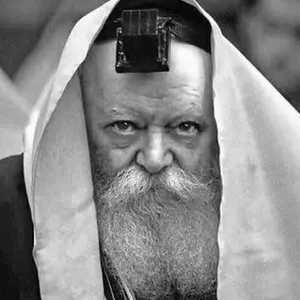

The minhag of wearing the kittel
[1] (halacha 664)
Question: Why do we wear a kittel on Yom Kippur?
Answer: We find in the words of the Rishonim that it has been the custom of Israel since the time of the Beis HaMikdash to wear white garments on Yom Kippur, as the Meiri wrote¹1: 'for he spoke of the common case, that it is the custom of elders and men of distinction that their garments be white on Yom Kippur'.
And the Mordechai² wrote2: 'When Yom Kippur arrives all of Israel fast, the men and the women, and they wear white like the ministering angels and stand barefoot like the ministering angels, and the Holy One, blessed be He, is filled with mercy upon them and atones for them for all their sins and accepts their repentance, as it is stated, "For on this day He shall atone for you etc."'.
And in addition we find in the Rishonim that they were accustomed to wear a garment of the dead on Yamim Tovim to prevent haughtiness, as the Hagahos Maimuniyos wrote³3: 'and the language of the copyist who heard it from the Maharam: and therefore they were accustomed to wear a "sargenit" on Yom Tov, for the reason that also on Yom Tov one must change [his garments], and also for the reason that on Yom Tov the world is joyous, so they wear a "sargenit," which is a garment of the dead, and they will remember the day of death and one's heart will not become haughty over him, end of quote'.
[Furthermore we find regarding Rosh Hashana that they wore fine garments — white — to show that they trust in the Holy One, blessed be He, as it states in the Talmud Yerushalmi⁴4: 'Rabbi Simon said, it is written⁵5 "And what great nation is there that has statutes and righteous ordinances etc." Rabbi Chama son of Rabbi Chanina and Rabbi Hoshaya — one said: Which nation is like this nation? In the way of the world, a person who knows he has a judgment [in court] wears black and wraps himself in black and grows his beard, for he does not know how his judgment will come out; but Israel is not so — rather they wear white and wrap themselves in white and trim their beards and eat and drink and rejoice, for they know that the Holy One, blessed be He, performs miracles for them'.
And the Maharshal explained that specifically the garments are white in color, because of the aforementioned reason — that one should remember the day of death — or that it represents forgiveness, as his student the Prisha wrote⁶6: '"they wear white etc." The language of my teacher (the Maharshal in his commentary on the Tur): some raise a difficulty — according to this let him wear embroidered garments and colors of purple; and one may answer that if so there would be no proof that he trusts in Hashem, for perhaps he does not fear at all the Day of Judgment and is not concerned; but now that he wears white as a remembrance of the day of death, he shows that he remembers the Day of Judgment — thus he trusts in Hashem. Alternatively, it represents forgiveness, along the lines of⁷7 "Though your sins be as scarlet, they shall be white as snow," end of quote'].
And the Rema wrote in Darkei Moshe⁸8: 'And in the Mordechai of Yoma: and they honor [the day] with clean clothing so that they should be clean like the ministering angels, end of quote. And it appears that for this reason they were accustomed to wear linen garments⁹9 — clean white, as it is stated¹⁰10 "one man clothed in linen". And in the Hagahos Maimuniyos, chapter 30 of Shabbos, he wrote that the Maharam was accustomed to wear a "sargenit" on Yom Tov when he had no [other garment] to change into on Yom Tov, and the same applies on Shabbos; and also for the reason that on Yom Tov people are joyous, therefore they wear a "sargenit," which is a garment of the dead, and they will remember the day of death and not become haughty, end of quote. And it is possible that for this reason they wear it on Yom Kippur, so that one's heart should be submissive and trembling before the Day of Judgment'.
And in practice the Rema wrote in the Shulchan Aruch¹¹11: 'Some have written that they were accustomed to wear clean white garments on Yom Kippur, in the likeness of the ministering angels; and so too it is the custom to wear the kittel, which is white and clean, and it too is a garment of the dead, and through this a person's heart is submissive and broken'.
And the Taz wrote¹²12: '"It too is a garment of the dead." There is a practical difference between these two reasons with regard to a mourner: for according to the first reason it is forbidden to wear the kittel, but according to the second reason it is permitted; and it appears that one who relies on the second reason and wears it has not lost'.
And these are the words of the Alter Rebbe¹³13: 'Some are accustomed to wear clean white garments on Yom Kippur so as to be in the likeness of the ministering angels, and so too it is the custom in these lands to wear the kittel, which is a white and clean garment; and there is an additional reason in the wearing of the kittel — because it is a garment of the dead, and through this a person's heart is submissive to do complete teshuvah, and therefore even one who is a mourner is permitted to wear the kittel¹⁴14.
And in practice, according to our custom we wear the kittel only on Yom Kippur, as it is written in Sefer HaMinhagim¹⁵15: 'One wears the kittel only on Yom Kippur'.
[And even the chazan on Rosh Hashana does not wear a kittel, as is explained in the words of the Rebbe in a talk of the second night of Rosh Hashana 5727¹⁶16: 'His Holiness our master, may he live, remarked concerning the matter of wearing a kittel, that according to what the Alter Rebbe wrote — that the reason for wearing the kittel is "so as to be in the likeness of the ministering angels" — this is relevant only to Yom Kippur, and not to Rosh Hashana, and therefore it is not our custom to wear a kittel for the sounding of the shofar. If so, why does the chazan wear a kittel? And this follows a fortiori from the sounding of the shofar, where "the mitzvah of the day is with the shofar," for if the one who sounds does not wear a kittel, all the more so the chazan need not wear a kittel (and just as regarding the tefillah for rain and dew, that even though there are some who are accustomed to wear a kittel, we are not accustomed thus, since this is relevant only to Yom Kippur). One of those present said that Reb Yechiel, the chazan in Lubavitch, wore a kittel, and His Holiness Admur the Rashab, of blessed memory, did not remark on this. And His Holiness our master, may he live, said: My father-in-law His Holiness the Rebbe told me that his father His Holiness Admur the Rashab, of blessed memory, would not involve himself in the "balebos-keit" matters of the shul, even in matters that were not to his liking'].
--------------
Notes:
1 יומא סח, ב ↩
2 יומא רמז תשכג ↩
3 הל' שבת פ"ל ה"ג אות ב ↩
4 ר"ה פ"א ה"ג ↩
5 דברים ד, ח ↩
6 או"ח סו"ס תקפא (הובא גם בב"ח שם) ↩
7 ישעיה א יח ↩
8 או"ח סי' תרי אות ה ↩
9 כתב בקצה המטה אות טו: 'ומטעם זה נהגו ללבוש בגדי פשתן לבן נקיים וכמ"ש הדרכי משה והגר"א ז"ל נקיים כמלאכים, וכתיב [יחזקאל ט, ב] איש אחד לבוש הבדים והוא לבן כו', ועיין שבת (כה, ב) בסדינין וכו' ודומה למלאך כו', ופרש"י בגד פשתן כו', ועיין בירושלמי יומא פרק בא לו [פ"ז ה"ב] ולמה בבגדי לבן כו' כשירות של מעלה כך שירות של מטה עי"ש, ועיין בכור שור שבת [קמה, ב] בטעם שהצדיקים לובשים לבנים בשבת, אולי שייך טעם זה ליום הכפורים שכולו דבקים בשכינה ביום זה עי"ש ודו"ק. ועייג"כ בפנים מאירות ח"ב סי' קנב'. ולגבי לבישת הפשתן על בגדי צמר ראה שו"ת חלקת יעקב יו"ד סי' קעב, שו"ת מנחת יצחק ח"ה סי' סד, שו"ת שבט הלוי ח"ט סי' רכו ↩
10 דניאל י, ה ↩
11 או"ח סי' תרי ס"ד בהג"ה ↩
12 שם ס"ק ג ↩
13 שו"ע סי' תרי ס"ט ↩
14 וכ"כ אדמו"ר הזקן בסי' תעב ס"ד לגבי אבל: 'ומ"מ יכול ללבוש הקיטל שלובשין בשעת עשיית הסדר שבגד זה הוא בגד מתים ולובשין אותו להכניע הלב שלא תזוח דעתו מחמת השמחה והחירות שעושין בליל זה' ↩
15 ע' 56 ↩
16 תו"מ חמ"ח ע' 18 ↩
[2] (halacha 665)
Question: Do women need to wear a kittel?
Answer: We learned in the previous halacha that one of the reasons for wearing the kittel — which is a white and clean garment — on Yom Kippur is in order to resemble the ministering angels, and the Magen Avraham wrote¹1: 'And according to this, women do not wear white, since they cannot be like angels, for "a city of warriors" is written²2, as the Mateh Moshe wrote³3 regarding immersion; and nevertheless they may wear the kittel so that their heart should be submissive'.
And the Machatzis HaShekel explained: 'His intent is that it is stated in Yalkut Mishlei 21⁴4 on the verse "a city of warriors [ir gevarim] went up [and a wise man scaled it]," and these are its words: Rabbi Yehoshua in the name of Rabbi Acha — "gevarim" is written (that is to say, "gevarim" is written defectively, without a vav between the beis and the reish), that they are all males and there are no females among them. "A wise man scaled it" — this is Moshe, as it is stated⁵5 "And Moshe went up to God etc.," end of quote'.
But the Mateh Efraim wrote⁶6: 'It is the custom to wear clean white garments on Yom Kippur in the likeness of the ministering angels, and so too the women are accustomed to wear white in honor of the day⁷7 ..'. And the Elef HaMagen explained⁸8: 'And in the Midrash they said that they wear white on account of the verse "Let your garments be white at all times." And it is possible that for this reason the women too wear white'⁹9.
But the Alter Rebbe wrote¹⁰10 in accordance with the words of the Magen Avraham: 'And so too women may wear the kittel in order to make their heart submissive, but other white garments they should not wear, in order to be in the likeness of the ministering angels, for they cannot be like angels, as it is stated "a city of warriors [ir giborim] went up, a wise man etc." — "gevarim" is written'.
[This principle, that women cannot be like angels, is also brought regarding standing on Yom Kippur, for the Tur wrote¹¹11: 'And moreover the men of deeds in Ashkenaz were accustomed to stand on their feet the entire night and the entire day, based on the Midrash that I wrote, and they have no joints, like the ministering angels'. And the Mechaber wrote likewise¹²12: 'There are those who stand on their feet the entire day and the entire night'.
But the Mateh Moshe wrote¹³13, brought by the Magen Avraham¹⁴14: 'And regarding women, it appears to me that there is no benefit in their standing, for they cannot be like angels, and it is an error in their hands and they thought there is a benefit in this; and would that it not cause harm, for they distress themselves in something that the Torah did not command, and there is neither basis nor custom for it'.
And the Alter Rebbe wrote likewise¹⁵15: 'Some are accustomed to stand on their feet the entire day and the entire night — that is, for the whole time they are awake at night they do not sit .. Women should not stand the entire Yom Kippur, since there is no benefit in their standing, for the main reason for the standing is in order to be in the likeness of the angels who are called "standing ones," and this is not applicable to women, as is written in siman 610'].
Some have raised a difficulty against this from the words of the Mordechai brought in the previous halacha, who wrote: 'When Yom Kippur arrives all of Israel fast, the men and the women, and they wear white like the ministering angels and stand barefoot like the ministering angels, and the Holy One, blessed be He, is filled with mercy upon them and atones for them for all their sins and accepts their repentance, as it is stated, "For on this day He shall atone for you etc."'. From his words one could seemingly understand that all of Israel fast, and that the men and women wear white like the ministering angels, and if so this contradicts the words of the Magen Avraham and the Alter Rebbe who wrote that women are not included in wearing white.
But the Minchas Elazar wrote¹⁶16 that this difficulty stems from an error in reading the Mordechai: 'And as for what he raised as a difficulty against the Magen Avraham .. from what the Mordechai wrote .. it is no difficulty at all, for the language of the Mordechai and its explanation are simple: "When Yom Kippur arrives all of Israel fast, the men and the women and the children" (that is, as it is reckoned in the Midrash Rabba, that on Erev Rosh Hashana only the great ones fast, and during the Ten Days [of Repentance] only the intermediate ones, and on Yom Kippur then all fast) — meaning that even the children they train [to fast] for [certain] hours, as is explained in the poskim; afterwards he wrote "and they wear white like the ministering angels and stand barefoot like the ministering angels" — that is, the men, for whom it is applicable to resemble the ministering angels (as it is written in the Midrash, "a city of warriors [ir gevarim]" is written, as mentioned). For otherwise, if we wished to explain, as he [the questioner] wrote, that "the women and the children" refers also to "wearing white," a great difficulty would arise. (a) That we have never heard that the young ones and children are dressed in white garments on Yom Kippur. (b) And also it is not applicable to say that the children should stand for the entire day barefoot — this is not applicable to children and we have never heard of it. (c) And also, through this a contradiction between the Midrashim would be created, for why should the women stand in white garments, since they cannot resemble the ministering angels, for only "a city of warriors [ir gevarim]" is written, as stated in Midrash Mishlei as mentioned. Rather, certainly the explanation is simple and clear in the Mordechai in the name of the Midrash, that this "men and women and children" refers only to fasting; and so too in the Midrash of Emor and in Koheles Rabba on the verse "Go, eat your bread with joy," this [statement about] men and women and children [is written] only regarding fasting, and there is no mention at all of the matter of wearing white'.
Nevertheless, in practice women did not have the custom of wearing a kittel, and they do not need to wear white to resemble the angels; rather [they wear] dignified garments befitting Shabbos and Yom Tov.
--------------
Notes:
1 או"ח סי' תרי ס"ק ה ↩
2 משלי כא, כב ↩
3 עמוד העבודה עשי"ת סי' תתמ: 'ואמר מהר"ר יודל ומהר"ש, דאין להם לנשים לטבול בערב יו"כ, כי אין יכולין להיות כמלאכים, וטעות הוא בידם כי לא שייכת הך טבילה גבייהו' ↩
4 רמז תתקנט. וכ"ה בויק"ר אמור לא, ה ↩
5 שמות יט, ג ↩
6 סי' תרט-תרי ס"ט ↩
7 שו"ת מנחת אלעזר ח"ב סי' סד: 'ואשר הקשה מע"ל על המטה אפרים בסי' תרט ס"ט שסותר א"ע למ"ש בסי' תרי"ט סכ"א ע"ש. לק"מ שבסי' תר"ה כ' שהנשים לובשים לבנים לכבוד היום. היינו שהביא המנהג כמו שהוא באמת גם עתה בזמנינו דהא גם המג"א שכ' שם שאין נשים לובשים לבנים דל"ש להתדמות למלאכים מ"מ כ' שיוכלו הנשים ללבוש הקיטעל כיון שהיא רק לשבר הלב וע"כ בזמנינו שאין לובשות הקיטעל מ"מ לובשות מבגדים אחרים של לבן כדי לעורר הלב לפחד קדושת היום סליחה שחטאינו כשלג ילבינו. ושם בסי' תריט כ' שאין לנשים לעמוד כל היום דל"ש בנשים להתדמות למלאכים רק לעורר כנז' והא ראי' שכ' במט"א בסי' תקפ"א סנ"ה שהנשים לובשים לבנים בר"ה אף שבר"ה ל"ש דוגמת מלאכים כיון דאיכא אכילה ושתי' ובע"כ רק כדי לעורר כנזכר'. ולהעיר ג"כ ממ"ש בילקוט אברהם או"ח סי' תרי לענין לבישת נשים בגדים לבנים ↩
8 ס"ק יג ↩
9 ועוד העירו הפוסקים (ראה הגהות הרש"ש, ומהרי"ש נתנזון על השו"ע. שו"ת מנח"א שם) מהגמרא בסוף סוטה שבנות ישראל יוצאות וחולות בכרמים בבגדי לבן. ואכמ"ל ↩
10 שו"ע סי' תרי ס"ט ↩
11 או"ח סי' תריט ↩
12 או"ח סי' תריט ס"ה ↩
13 עמוד העבודה יו"כ סי' תתסט ↩
14 סי' תריט ס"ק י ↩
15 שו"ע או"ח סי' תריט סעיפים טו - יז ↩
16 נסמן בהערה 7 ↩
[3] (halacha 666)
Question: Is it permitted to enter the bathroom while wearing the kittel?
Answer: The Mechaber wrote¹1: 'It is permitted to enter the bathroom while wearing tzitzis'.
And the Taz wrote²2: 'It appears this is specifically regarding a garment made to be worn and which has four corners, which becomes obligated in tzitzis, but with our tallesim of mitzvah, which are made only to daven in them, it is not proper for one to enter the bathroom [with them], as an analogy to the matter: "and he removed his garments and put on other garments" — from which we derive [in the words of Chazal]: the garments in which one cooks a pot for his master, let him not [use to] mix the cup [for his master]; and all the more so this matter, which is designated specifically for a matter of holiness. And is it not that even in the paragraph preceding this one he gave a stringency to a tallis of mitzvah that is worn out more than to tzitzis that have become spoiled, according to the words of the Shulchan Aruch, paragraph 1; and for this reason the Tur wrote in siman 8 regarding a tallis that one removes in order to enter the bathroom with it, even though the Beis Yosef wrote there that it is not because of a prohibition that our master [the Tur] said so, but rather he speaks of [a case] where he cannot relieve himself unless he removes the tallis — it appears to me that the approach I have written is more correct; and although there is no proof for a prohibition, nevertheless it is no less than that [matter of] "derech eretz" that we mentioned. But nevertheless, the tallis katan that one wears under the garment, which is our custom, in this it is certainly permitted to enter to relieve oneself, since it is covered³3. And furthermore it appears to me that likewise those who go from the shul to the bathroom to relieve themselves while wearing the kittel must remove the kittel, since this garment is designated for davening in it, as above'.
And we already find this practice in the Leket Yosher⁴4: 'And when he went from the shul to the bathroom he would remove his tallis, but not the arba kanfos'.
And the Alter Rebbe wrote likewise⁵5: 'It is permitted to enter the bathroom with a fringed tallis, since this is not so much a disgrace to the mitzvah. To what does this apply? To a garment made to be worn and which is not designated for davening in it; but with our tallesim of mitzvah, which are designated only to daven in them, it is not proper for one to enter the bathroom with them. And likewise one who goes to relieve himself on Yom Kippur must remove the kittel, since it is designated only for davening'.
And the Mateh Efraim wrote⁶6: 'And as for the fact that some are accustomed to embroider on the belt of the kittel the verse "For on this day He shall atone etc." — this should be abolished, firstly because it is permitted to urinate in the kittel .. and furthermore because it is forbidden to write a verse where there is no need at all, as the poskim wrote'.
★ ★ ★
Question: Is there a difference regarding entering the bathroom between relieving oneself for a bowel movement versus urination?
Answer: Several of the Acharonim wrote that one should distinguish between a bowel movement and urination, as the Mateh Efraim wrote⁷7: 'But if one does not need [to relieve himself for] a bowel movement, only to urinate alone, it appears that it is permitted; and even if he enters a fixed bathroom to urinate while seated, he need not remove it'.
But the responsum Ginas Veradim already wrote⁸8: 'Nevertheless in these times of ours we see that all of Israel have adopted a heightened refinement and special esteem for the tallis designated for the mitzvah of tzitzis, and when they remove it they fold it and store it away with great honor, and there is none who would treat it disrespectfully, God forbid. And when a person wishes to pass water in the middle of his tefillah, he removes the tallis from himself and places it on the bench in an honorable manner and goes and passes water, and when he returns he puts it on and wraps himself in it with special affection'.
And seemingly so it appears⁹9 as well from the unqualified language of the Taz and the Alter Rebbe, that one should not enter a fixed bathroom at all, even not for the need of urination.
And also in the view of the Mishnah Berurah¹⁰10, who wrote: 'One should not enter the bathroom in the kittel, which is designated for tefillah, but to urinate in it is permitted' — although the Kaf HaChaim¹¹11 understood that he held like the Mateh Efraim, yet it seemingly appears from the language of the Mishnah Berurah¹²12 that what he permitted for urination is specifically outside the bathroom.
And the Aruch HaShulchan wrote likewise¹³13: 'And there is one who wrote that all this is with a tallis katan, but with a tallis gadol which is made only to daven in it, one should not enter the bathroom with it [Taz s"k 3]; and certainly so it is, for since it is no trouble to remove it, therefore it is considered a disgrace when one goes with it to the bathroom or to the bathhouse. And it is proper to be careful to remove the tallis also at the time one goes out for urination, and so is our custom, and all for the reason we have explained'.
★ ★ ★
Question: Is it permitted to enter the bathroom with a gartel?
Answer: In Nitei Gavriel¹⁴14 he wrote in the name of the Rebbe that one should not enter the bathroom with the gartel¹⁵15.
Thus, in practice one should not enter the bathroom at all with a garment of mitzvah such as a tallis, kittel, or gartel, even not for urination.
Notes:
1 שו"ע או"ח סי' כא ס"ג ↩
2 שם ס"ק ג ↩
3 עפי"ז כתב החיי"א כלל יא סל"ז והמט"א באלף המגן סי' תרט-י אות יח: 'טליתות של מצוה המיוחדין להתפלל בהם, וכן הקיטיל, אעפ"י דמדינא מותר לכנוס בהן לבית הכסא, נכון להחמיר. *אבל אם לובשו תחת בגדיו, מותר'*. אך צ"ע אם יש להקל בזה בדעת אדמו"ר הזקן, שהרי השמיט פרט זה של הט"ז ↩
4 ח"א או"ח עמוד ו ענין ב ↩
5 שו"ע או"ח סי' כא ס"ג ↩
6 אלף המגן סי' תרט-י ס"ק יז ↩
7 שם סי"ב ↩
8 או"ח כלל ב סי' כה ↩
9 וראה ג"כ זה השלחן (דבילצקי) סי' כא. נטעי גבריאל יום כיפור פכ"ו הערה יד. הלכה ברורה שעה"צ אות לב ↩
10 סי' תרי ס"ק יח ↩
11 סי' תרי אות לז ↩
12 וכ"כ בזה השלחן שם, ובתפלה כהלכה פכ"ג הערה קפז* ודלא כפסקי תשובות סי' תרי הערה 20 ↩
13 או"ח סי' כא ס"ו ↩
14 הל' יו"כ פכ"ו הערה יח. וכן שמענו שהרבי הורה כך לא' מאנ"ש ↩
15 וראה בלקט ציונים והערות לשוע"ר (ביסטריצקי) ע' 194, וכ"כ בספר זה השלחן שם, ציצית הלכה למעשה (גורארי') פט"ו ה"ט. שו"ע המבואר (אלאשוילי) הערה כ ↩
[4] (halacha 918)
(Continuation from halacha number 666)
Question: Why do young men and grooms in the first year not wear a kittel on Yom Kippur?
Answer: The Maharam Schick wrote¹1: 'And as for what you further asked, what reason there is for the custom that in the first year after the wedding one does not wear the kittel on Rosh Hashana and Yom Kippur .. behold, it is true that I have not seen nor heard any reason for this, and I have not found any source for this custom. Nevertheless, every custom of Israel is Torah and has a reason. And I have suggested that perhaps it is because until [the age of] twenty the Heavenly court does not punish²2, and the reason is because he does not have clear understanding like a twenty-year-old, and we hold³3 that to sell his father's property he must be twenty years old. And we say⁴4 "eighteen for the chuppah." And therefore, before he is twenty, it is not applicable to him that he resembles the ministering angels. And it is possible that also according to the second reason explained in the Shulchan Aruch OC siman 610⁵5 — so that his heart should be submissive — they were not particular regarding a young man who is under twenty; and in order to establish and publicize that there is a mitzvah to marry before twenty, the generations before us instituted that even in the year after the wedding, when he is still before becoming twenty years old and is not liable to punishment, he need not wear a kittel and make his heart submissive to that extent. However, since this custom is not explained in the Shulchan Aruch, one does not rebuke one who wishes to wear it⁶6, as is explained in the Magen Avraham siman 690 s"k 22, that a custom found in any posek should not be changed'.
Also in Darkei Chaim VeShalom⁷7 he wrote: regarding the wearing of the kittel, he instructed that also in the first year after the marriage one should wear it'.
In the Ketzei HaMateh⁸8 at first he brought their words and wrote: 'And thus I saw in practice from my teachers and so I was accustomed, and the essential thing is to daven in it with a pure and clean heart, and Hashem searches all hearts'. But afterwards⁹9 he wrote: 'And now my brother-in-law the Rav Maharash, may his light shine, remarked to me in the name of the Gaon Av Beis Din of Lapush, may his light shine, that he was in the first year in the house of his grandfather, the great Eshel, our master the author of the Divrei Chaim of Tzanz, may the memory of the righteous be a blessing, and he too did not wear it. And it is simple that this depends only on the custom, and "each river follows its own course"'.
And in the Shulchan HaEzer¹⁰10 he wrote: 'Indeed, in my humble opinion, from another angle there is [reason] to strengthen the custom, since according to one reason the wearing [of the kittel] is [as] the [garment] of the dead and rouses him toward his day of death; and if so, in the first year, when he is obligated to gladden her and not be sad with her, then it is fitting that he does not wear it¹¹11, for the joy is on her account; and even though in OC siman 472 in the Magen Avraham and the Taz there [it is stated] that they wear it also at a place of joy so that his mind should not become haughty etc. — there [it is] because the joy is his own, so the custom is fitting, "in the place of rejoicing there shall be trembling"; but here, where the joy is hers, therefore on her account he is not permitted to wear it, and it is possible that they even rebuke him; and according to this, at any rate her forgiveness [waiver] certainly helps'.
The Divrei Yatziv¹²12 wrote: 'And it appears in my humble opinion to say regarding the reason for the custom not to wear it¹³13 .. And it is further possible to say, according to the reason that the wearing of the kittel is in the likeness of the ministering angels, as the Tur wrote at the end of siman 606 in the name of the Midrash Pirkei DeRabbi Eliezer chapter 46, "clean like the ministering angels," see there — and this alludes to the forgiveness of sins. And for a groom on his wedding day his sins are forgiven, like Yom Kippur¹⁴14 .. and regarding this he has already worn the kittel, as is written in the Mateh Moshe part 3 in Hachnasas Kallah chapter 1 os 2 regarding the reason for wearing the kittel at the time of the chuppah; and through this they should be awakened not to delay the marriage and not to be lenient, God forbid, in this .. And therefore in the first year he does not wear a kittel, to demonstrate the greatness of faith in the Sages, that his sins have already been forgiven. And through this there will also be an awakening that, God forbid, they should not delay the marriage .. And one may further say according to what is stated in Kiddushin 29b, "a millstone on his neck and he engages in Torah etc." — this for us, this for them, see there in Rashi and Tosafos; and the matter of wearing the kittel in the likeness of the ministering angels, as above, is like the matter of the "chaluka derabbanan" which also alludes to an angel, as is written in the "leshem yichud" before wearing the tallis, "so may I merit the chaluka derabbanan in the World to Come in Gan Eden" .. And therefore for an avreich in the first year, when there is concern that the millstone on his neck may sever him from the study of the holy Torah, God forbid, they hint to him that he does not wear the kittel, which is in the likeness of the chaluka derabbanan, for there is great danger that he will not have the chaluka derabbanan, God forbid, if he submits to the millstone on his neck; and they instruct him that he should strive to add exertion in the study of the holy Torah with greater strength and might. And according to this one may also say the reason for the fact that a young [unmarried] man does not wear a kittel, since one who has not fulfilled [the mitzvah of] "be fruitful and multiply" causes the Shechinah to depart from Israel, as is stated in Yevamos 64a; and they hint to him that he does not wear a kittel, that he does not have the chaluka derabbanan which alludes as above, that he is not brought into the domain of the Holy One, blessed be He. And therefore also a young man does not wear a tallis gadol ..'.
Chabad custom:
The chassid Reb Yisrael Feigin¹⁵15, the secretary of the Rebbe the Rayatz, wrote to Reb Yaakov Landa: 'Regarding the wearing of the kittel — that he heard that in the first year one does not wear it — His Holiness the Rebbe [the Rayatz], may he live, answered me that indeed the custom was not to wear it'.
And the Rebbe wrote likewise¹⁶16: 'Regarding the specific directive for him, he surely knows that one wears a kittel under the chuppah, except that one wears it under the outer garment so that it should be without a bulge (and on Yom Kippur of the year of the wedding one does not wear the kittel, since it was already worn on his own Yom Kippur of this year, which is his wedding day)'.
And in an additional letter¹⁷17: 'Regarding his question: the outer garment worn at the time of the chuppah, whether one wears it on the first Yom Kippur — this pertains only to the kittel alone, and the point in this is not the same kittel that he wore at the time of the chuppah, but rather, since he already wore a kittel at the time of the chuppah, one should not wear a kittel (even a different one) on the Yom Kippur within this year'.
And in Sefer HaMinhagim¹⁸18 it is written: 'Our custom is that the groom under the chuppah is dressed in a kittel, and for this reason on the Yom Kippur following his wedding he does not wear a kittel, and he begins in the following year'.
Thus we have seen several reasons why a bachelor does not wear a kittel [a. that before the age of twenty they were not accustomed (because he does not resemble the ministering angels / they were not particular). b. since he has not fulfilled "be fruitful and multiply"]. And likewise a groom in the first year does not wear a kittel [a. before the age of twenty; b. he must gladden his wife; c. that his sins were already forgiven at the chuppah and he wore a kittel at the chuppah], and such is the Chabad custom.
Notes:
1 או"ח סי' כח ↩
2 שבת פט, ב ↩
3 גיטין סה, א ↩
4 אבות ה, כא ↩
5 ס"ד ↩
6 בשו"ת יד יצחק (ח"ג סי' רב) הביא את דבריו שאין גוערין במי שלובש, וכתב: 'וכן עלה לענ"ד בפרט בזמן הזה, שרוב נושאי אשה הם יותר מבן כ' כנודע' ↩
7 אות תשמח ↩
8 סי' תרי ס"ק יז ↩
9 סי' תריט ס"ק יא ↩
10 סי' יב, דין י אות ח ↩
11 וראה דברי יציב חאו"ח סי' רנט ↩
12 שם ↩
13 וראה שם עוד טעמים למנהג זה ↩
14 ירושלמי בכורים פ"ג ה"ג ↩
15 קובץ יגדיל תורה נ.י. נ ע' יא ↩
16 אג"ק ח"ה ע' פז ↩
17 אג"ק ח"ו ע' קעב ↩
18 ע' 76 ↩
[5] (halacha 919)
Question: Is there a restriction on wearing garments such as a tallis or kittel adorned with ornaments on Yom Kippur? (1)
Answer: With respect to the view of the Sages who disqualified the horn of a bull for the sounding of the shofar, it is explained in the Gemara¹1: 'Ulla said: This is the reason of the Rabbanan, in accordance with Rav Chisda. For Rav Chisda said: Why does the Kohen Gadol not enter the innermost [chamber] in golden garments to perform the service? Because a prosecutor cannot become a defender. But is there not? Behold there is the blood of the bull! Since it has been transformed, it has been transformed. But is there not the Aron and the Kapores and the Keruv! [We say] "a sinner shall not bring an offering" [and this is an offering]. But is there not the spoon and the fire-pan! [We say] "a sinner shall not adorn himself." But is there not golden garments outside! [We are speaking] of the inside. The shofar too is outside! Since it is for remembrance, it is considered like inside'.
And the Ritva wrote there: '.. we are only concerned that a sinner should not adorn himself with that with which he sinned, and the spoon and the fire-pan are not for adornment, but golden garments are for adornment, and the shofar too comes for adornment and to appease his Master; and even though outside we are not concerned for this, for he serves in golden garments on the outer altar and even on the altar in the Heichal which is outside .. and a fringed tallis that is gilded is permitted to be worn on Yom Kippur, for it is certainly considered like [the] outside'.
That is to say, it is explained in the Ritva that since the whole problem of "a prosecutor cannot become a defender" is only regarding the services that the Kohen Gadol performs in the innermost [chamber], and not regarding the services on the outside, therefore there is no problem wearing a garment with gold, since this is like the outside services.
However, in practice the practice spread not to wear garments with gold ornaments, as is written in the Minhagei Tirna in the Hagahos HaMinhagim²2: 'And one should not wear gold ornaments on Yom Kippur, because a prosecutor cannot become a defender; and there is [room] to question this, for behold the Kohen Gadol was not forbidden them except on the inside and not on the outside'.
That is to say, the Minhagei Tirna mentioned such a custom but questioned it based on the reasoning brought in the Ritva.
The Mekor Chaim (Bacharach)³3 brought his words and wrote: 'And those who daven in a congregation should be careful, and so I saw from a chazan'.
The Pri Megadim in his work Teivas Gome⁴4 also brought the practice not to go with gold in the shul, and wrote: 'It seems that nowadays on Yom Kippur, when it is not the custom to wear gold in the shul, for Levites it may be possibly permitted, and all the more so women in their [own] shul; see the responsum Shav Yaakov part 1, Yoreh Deah⁵5, [regarding] a girl who was buried with gold earrings, [where] he wrote that one should not open it [the grave] for several reasons, and also with a woman the [issue of] "prosecutor" is not applicable, for they did not [contribute gold] to the [Golden] Calf — the same applies to Levites⁶6; but nevertheless, so as not to bring about quarrel, and [since] a woman is sustained by the hand of her husband the [issue of] prosecution is applicable, therefore the custom is not to wear gold at all on Yom Kippur'.
Thus the Pri Megadim wrote that since Levites and women did not sin with the [Golden] Calf, there is seemingly no problem for them to go with gold, but he concluded that in practice the custom is that women do not wear gold at all⁷7.
And the Mateh Efraim wrote likewise⁸8: 'And likewise the women who wear white on this holy day do not adorn them with gold, and the custom of Israel is Torah'.
And in the Elef LaMateh⁹9 he explained the custom at length: From ancient days the wealthy of the people were accustomed to make the neck-opening of the kittel a crown [ornament] plated with silver in honor of the day, and the reason is because they said in Shabbos daf 105 "and the holy of Hashem honored" — honor it with clean clothing; and therefore they honor and adorn it with greater esteem, and also because they wear it on the nights of Pesach, when it is customary to wear dignified festive garments; and even according to the reason for wearing the kittel — because it is a garment of the dead and one will remember his end and submit his heart to return in complete teshuvah — they do this as a remembrance, [thinking] "though a man grow rich, behold, take the silver and grasp it in his garment," the garment prepared to clothe him after his death, for he cannot deliver his soul from the hand of Sheol and wealth will not avail on the day of wrath, and through this his heart will be all the more submissive. Nevertheless, they were not accustomed to make them of gold, as we say in Rosh Hashana that the Kohen Gadol does not enter the innermost [chamber] in golden garments because a prosecutor cannot become a defender — that is to say, because it recalls a sin, namely the sin of the [Golden] Calf, which was of gold, and this is a sin preserved for the generations, as it is written "and on the day I make My accounting etc.," and we say in Sanhedrin that there is no [Divine] visitation that does not contain some of [the punishment] for the [Golden] Calf. And therefore the women too do not wear garments plated with gold; and even though Rav Chisda wrote in the name of Pirkei DeRabbi Eliezer that the women were not in this sin, nevertheless one should not distinguish in this matter, for the entire congregation is intermingled and reckoned as one; and so I found in the sefer Teivas Gome authored by the Gaon the author of the Pri Megadim, in Parshas Acharei Mos, see there; and see in Tosafos of Bava Basra daf 14 "s.v. shebahen," where it appears to Rabbeinu Tam that as a sign of the standing of Israel he stood them up¹⁰10, and therefore they were not made of gold, so as not to recall the sin of the [Golden] Calf; and even though we say in Rosh Hashana that the Aron was of gold, [since] we say [it was] "that which atones" — nevertheless, since they are a sign of the standing of Israel it is also considered like "that which atones," and this is what the paytan composed, "he made the pattern of the letter [in the shape of] Yosef, its pillars he made of silver," see there. And according to this, according to the reason that their heart should be submissive, one need not be particular in this, for it is not "that which atones," and it is well [permitted] to make [an ornament] of gold on the kittel. But it appears that since they make it white, on the theme of "they shall be white as snow" — for which reason they choose white [fowl] for kapparos, as the Magen Avraham wrote — and if so it too is [treated] like "that which atones," and also since silver is white ..'.
Thus the Mateh Efraim discussed the custom of making a crown [ornament] on the kittel, but wrote that it should be of silver and not of gold¹¹11, and he also wrote that the women are included in this practice since they are part of the congregation.
Thus we have seen a custom [that even those who adorn the kittel with a crown ornament] that there should not be on the kittel a crown ornament or decorations of gold, and there are those who were particular about this only in a congregation/shul, and this custom was practiced also by women regarding their white garments.
In the next halacha we will discuss going about in general with jewelry for women, or a gold watch for men, on Yom Kippur.
--------------
Notes:
1 ר"ה כו, א ↩
2 יום כיפור אות קנט ↩
3 שו"ע או"ח סי' תרי ↩
4 אחרי מות אות ד ↩
5 סי' סד ↩
6 וראה שו"ת קנין תורה ח"ו סי' לו ↩
7 בהגהות רעק"א או"ח שם כתב: 'יש מקומות דנוהגים שלא ללבוש בזהב מטעם לא יבא קטיגור ובנשים לא שייך דהא לא נתנו זהב לעגל וכן לוים. תיבת גומא פ' אחרי'. אך צ"ע (וראה גם הלכות חג בחג פכ"א הערה 192. פסק"ת סי' תרי אות ה) שהרי בתיבת גמא סיים שלמעשה המנהג לא ללבוש ↩
8 סי' תרט -י סי"א ↩
9 שם ס"ק ז ↩
10 עמודי כסף שעשה שלמה והיו מונחים בתוך הארון ↩
11 אך ראה בברכת הפסח סי' יד פתחא זוטא ס"ק א שכתב ליישב מנהג לערב יחד כסף וזהב בעטרה של הקיטל ↩
[6] (halacha 921)
Gold ornaments
In the previous halacha we saw that the custom was not to adorn the kittel or the white garments in honor of Yom Kippur with gold.
Question: Is there any general restriction on the jewelry that one wears on Yom Kippur?
Answer: In the responsum Nishal David by Reb David Oppenheim¹1 he was asked with respect to the custom of the community of the holy congregation of Prague, who were particular on Yom Kippur not to use the ornaments of the Sefer Torah [made] of gold or of gilded silver, except that there were some of the members of the community who protested against the custom, and he wrote: 'Leave Israel be etc.; in that which they have already been accustomed, it is certainly a custom of the early ones. Truly, to the law there is an answer, and one does not instruct thus a priori, for behold there is an explicit Gemara in Maseches Rosh Hashana²2 .. from all these it is implied that specifically "a sinner shall not bring an offering," "a sinner shall not adorn himself," but with a plate of gold, which is neither an adornment for a person nor for an offering, nor for the inside, nor for remembrance, but only to fulfill "This is my God and I will glorify Him" — to beautify before Him with mitzvos, to cover the Torah with silks and beautiful vessels, and especially on the day of the great fast, the day on which the second Tablets were given to Israel, [when] Scripture urges [us] "toward the holy of Hashem honored" to honor Him with clean clothing — it is certainly fitting that the table of one's Master be adorned with every manner of adornment; and Rabbi Yochanan already said in the Yerushalmi³3 "honor Hashem from your wealth" — from all that Hashem has graced you with; and that gold — "good is that good in the house," the house of Hashem, "to walk in emotion." And so I found in a manuscript responsum, an old, ancient collection, and these are its words: A question — whether to make a plate of gold to attach to the mantle for beauty for the Sefer Torah, and would a defender not become a prosecutor? Behold we find in the chapter "Taraf BeKalpi"⁴4: every day he would rake the coals with a fire-pan of silver, and on Yom Kippur it was of gold; and likewise Yehoshua ben Gamla prepared lots of gold on Yom Kippur; and likewise King Munbaz made all the handles of the vessels of gold, and not as in the rest of the days of the year, and they are mentioned for praise⁵5 ... end of quote .. But the first proof is strong as a firm and cast mirror, upon which there is no rebuttal .. for the essence of his proof is regarding Yehoshua ben Gamla and King Munbaz who made [them] of gold of their own accord, and not only did the Sages not protest against them, but they even mention them for praise, to teach us that it is reckoned as merit and charity for those who fear Hashem and think upon His Name; and everyone who does so for the honor of Hashem, may He be blessed, and for the honor of the Torah — "the law of the burnt-offering — it is that which ascends upon my spirit"'.
Thus we have seen that there were communities that refrained from using gold vessels of the Sefer Torah, but Reb David Oppenheim wrote that it is proven from the Beis HaMikdash that they used gold vessels, and on the contrary this is the honor of Hashem.
However, with respect to the jewelry that women wear, the Mateh Efraim wrote⁶6: 'And nevertheless they should not adorn themselves with the jewelry with which they adorn themselves on Shabbos and Yom Tov, because of the awe of the [Day of] Judgment'.
But the Minchas Elazar⁷7 disputed his words: 'But that which the Mateh Efraim wrote there, that nevertheless they should not adorn themselves with the jewelry with which they adorn themselves on Shabbos and Yom Tov because of the awe of the [Day of] Judgment — this is difficult in my eyes, for it is against the words of Tosafos in Megillah⁸8 s.v. "BeMincha Korin," that at the Mincha of Yom Kippur they read [the portion of] forbidden relations because the women are adorned in honor of the day, and therefore one must remind them so that they should not stumble through them, end of quote. Behold it is explicit that they went about adorned on Yom Kippur, and on the contrary it appears from this that they went about on Yom Kippur with more adornments than on other Yom Tov (which is in honor of the day of forgiveness. And perhaps this arose from that [statement] at the end of Taanis, "there were no festive days for Israel like Yom Kippur and the fifteenth of Av," on which the daughters of Israel would go out etc., and we say in the Gemara: granted Yom Kippur, which has forgiveness and pardon and is the day on which the last Tablets were given ..) therefore they needed to warn them then specifically. And it is forced to say that because it is a day of forgiveness and teshuvah, therefore they warned then about going about adorned on other Yom Tov — this is not applicable to say. And in any case it appears from the words of Tosafos that they went about adorned as on other Yom Tov, certainly, or more'⁹9.
But in practice we find that the Mishnah Berurah¹⁰10 and other poskim ruled in accordance with the words of the Mateh Efraim that one should not go about with special jewelry of Shabbos and Yom Tov because of the awe of the [Day of] Judgment.
And there are those who explained that not all gold is forbidden out of concern that a prosecutor may become a defender, since this was said only regarding things that symbolize atonement, such as the kittel and white garments, and not regarding ordinary jewelry, as is written in the responsum Betzel HaChochma¹¹11: 'That which was obvious to him that one may not wear eyeglasses and a watch of gold, and only regarding gold-plated ones it was doubtful to him — in my humble opinion it is obvious to me the opposite, for even eyeglasses in a gold frame and a watch of gold are permitted to wear. And so is the practice of the people¹²12 .. and see in the Elef LaMateh there (os 7), who also brings the words of Teivas Gome, Parshas Acharei, mentioned above, and writes that although they were accustomed to make for the kittel a neck-opening plated with silver in honor of Yom Kippur, since we derive "toward the holy of Hashem honored — honor it with clean clothing" — nevertheless they were not accustomed to make it of gold, for we say that the Kohen Gadol does not enter the innermost [chamber] in golden garments because a prosecutor cannot become a defender. And even though we say in the Gemara that specifically "that which atones" is what should not be of gold, and if so, according to the reason that they wear the kittel on Yom Kippur so that his heart should be submissive in wearing garments of the dead, one need not be particular not to make gold on it, for it is not "that which atones" — but it appears that since they make it white, on the theme of "they shall be white as snow," it too is [treated] like "that which atones," see there. And it is proven that anything which is not like "that which atones," there is no particularity to make it of gold; on the contrary, it is explained in the Mishnah [that certain vessels] were of boxwood and Ben Gamla made them of gold, and they would mention him for praise; King Munbaz would make all the handles of the vessels of Yom Kippur of gold, end of quote. Behold, that anything which has no aspect of atonement, there is an advantage in [making it] of gold in honor of the day. Therefore eyeglasses and a watch and anything of the like which have no aspect or allusion of atonement, there is no particularity not to wear them when they are of gold. And even so, one who does not wear a gold watch and the like except on Shabbosos and Yamim Tovim, it is proper for him not to wear them on Yom Kippur because of the awe of the [Day of] Judgment, as in the Mateh Efraim there; but one who wears a gold watch and the like also on weekdays, there is no reason not to wear it on Yom Kippur'.
And several Acharonim agreed with him, as is explained in the responsum Revavos Efraim¹³13 and the responsum Kinyan Torah¹⁴14 and Piskei Teshuvos¹⁵15.
Thus in practice the particularity not to wear gold on Yom Kippur applies only to the kittel or white garments [worn] in honor of Yom Kippur, and several of the Acharonim wrote that one should not specifically put on jewelry that one is not accustomed to go about with on a regular basis, or special jewelry of Shabbos and Yom Tov.
Notes:
1 סי' טז ↩
2 כו, א ↩
3 קידושין פ"א ה"ז ↩
4 יומא מג, ב ↩
5 שם לז, א ↩
6 סי' תר"י ס"ט ↩
7 שו"ת ח"ב סי' סד ↩
8 לא, א ↩
9 אך להעיר שהמטה אפרים כתב באלף למטה ס"ק ו: 'וכן נראה שלפי הטעם שכתבו מה שקורין בפ' עריות לפי שהנשים מקשטות עצמם לכבוד היום משמע שהיה דרכן ללבוש בגדים מכובדים לכבוד היום'. כלומר לא נתעלם ממנו דברי התוס', אלא שלהבנתו היינו שהלכו בבגדים מכובדים, ולא מדובר על תכשיטים ↩
10 ס"ק טז ↩
11 ח"ו סי' ג ↩
12 ובהלכות חג בחג (קארפ) פכ"א הערה 191 כתב: 'ובשעון ומשקפי זהב נראה דלכו"ע אין קפידא למי שרגיל ללובשו תמיד' ↩
13 ח"ו סי' שכו ↩
14 ח"ו סי' לו ↩
15 סי' תרי אות ה ↩
From the 'Shoneh Halacha' project — a daily halacha with reasons and sources
Link to the group (silent): 'Shoneh Halacha — Chabad Customs'
Join the WhatsApp group