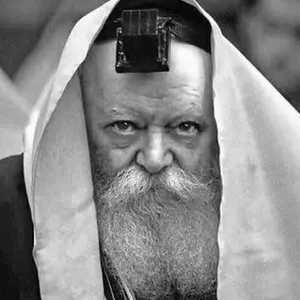

Bar Mitzvah
[1] (Halacha 607)
The source for bar mitzvah at thirteen
Question: What is the source for the obligation in mitzvos at the age of thirteen?
Answer: The Mishnah in Maseches Avos says: 'At thirteen years - for the mitzvos'.
And so we find in the Midrash1: 'ויגדלו הנערים ("And the lads grew up") - Rabbi Levi said: a parable to a myrtle and a thorn-bush that were growing one alongside the other, and when they grew and blossomed, this one gives forth its fragrance and this one its thorn. So too, all thirteen years both of them go to school and both of them come from school, after thirteen years this one would go to the batei midrashos and this one would go to the houses of avodah zarah. R' Elazar said: a person must occupy himself with his son until thirteen years2 from here onward he must say "Boruch shepetarani me'onsho shel zeh"'.
And regarding the basis of the law obligating at the age of thirteen, the Mefaresh on Nazir wrote3: 'He is a man from thirteen years old and not less, for we have not found in the entire Torah that one is called a man at less than thirteen years old; but at thirteen years old we find that the verse called him a man4 as it is written "ויקחו שני בני יעקב שמעון ולוי איש חרבו" ("And the two sons of Yaakov, Shimon and Levi, each took his sword"), and we have a tradition that Shimon and Levi at that time were thirteen years old5 and whoever wishes to calculate, let him go out and calculate6'. And so Rashi wrote on the Mishnah in Avos, in the first explanation: 'For it is written "איש או אשה אשר יעשו מכל חטאות האדם" ("a man or a woman who commits any of the sins of man") etc., and one is not called a man until he is thirteen years old; and as we find there "ויקחו שני בני יעקב שמעון ולוי אחי דינה" ("And the two sons of Yaakov, Shimon and Levi, the brothers of Dinah, took"), and Levi was then thirteen years old, when you calculate the two years that Yaakov spent in Beis El'.
However the Mahari"l7 asked: 'And as for what you brought from Levi - still, from where do we know that at less than thirteen he is not a man? Moreover, the earlier generations gave birth at eight, as is proven in perek Ben Sorer from Betzalel and Bas Sheva'8.
A further explanation Rashi wrote on the Mishnah in Avos there: 'Another version: "At thirteen years - for the mitzvos", for one who has brought two hairs enters the category of the mitzvos of the Torah, for it is a halacha l'Moshe miSinai, and the Chachomim estimated the bringing of two hairs at thirteen years therefore they bring him in to fulfil mitzvos, and from that time onward we presumptively establish him as having two hairs, as is the law with the majority of children'.
And so the Rosh wrote9: 'And as for what you asked - from where do we have it that one of thirteen years and one day is subject to punishment but less than that is not - know that it is a halacha l'Moshe miSinai, and it is included among the shiurim, chatzitzin and mechitzin which are halacha l'Moshe miSinai, for the measure and the limit for every matter was given to Moshe orally .. all of these are halacha l'Moshe miSinai'.
And so the Rashbatz wrote10: 'And in the Midrash: "עם זו יצרתי לי תהלתי יספרו" ("This people I formed for Myself, they shall relate My praise") - "זו" in gematria is thirteen years, and then "they shall relate My praise". Furthermore, because at this time he is fit to father children and is called a man, as is mentioned in perek Ben Sorer u'Moreh [Sanhedrin 68b]. And this is a halacha l'Moshe miSinai, for the periods of a boy and a girl are halacha l'Moshe miSinai, as is mentioned in Niddah, in perek Yotzei Dofen'. And so the Mahari"l wrote there.
If so, we have seen two explanations for the obligation in mitzvos from the age of thirteen: a) that the term "man", which indicates adulthood, is stated in the Torah only from the age of thirteen. b) that it is a halacha l'Moshe miSinai that at this age the obligation in mitzvos takes effect.
The Rebbe discussed several times11 this dispute and explained the nafka minah between the two views, and these are his holy words12: 'And one may say that the nafka minah between the two views is with regard to the law of a ben Noach: for according to the first view, with a ben Noach too, thirteen years is [the age] for the mitzvos that pertain to him, which is not so according to the second view, as is understood (and see Rambam Hil' Melachim ch. 9 halacha 10, ch. 10 halacha 2; Shu"t Chasam Sofer, Yoreh Deah siman 31713). That is, according to the second view this is a law of the Torah14, but according to the first view, so it is by nature - for the most part - that one of thirteen years becomes an adult in intellect and understanding. And one may allude, by way of mussar, that this is why, with the proof for the obligation in mitzvos from the verse "ויקחו וגו' איש" - a proof whose basis is that according to reason and intellect it must be so - they wrote its refutation alongside it, so that one should not say that a conduct according to reason and understanding is enough and sufficient for the fulfilment of Torah and mitzvos. Therefore they point out to him with a finger: see and contemplate what the sons of Yaakov did: "ויקחו איש חרבו" - immediately upon their obligation in mitzvos, they began specifically with an avodah of mesiras nefesh. And the deeds of the fathers are a sign for the sons, for every bar mitzvah in every generation, that this alone is the way to the fulfilment of the mitzvos: not a conduct measured out according to the intellect, but first of all he should accept upon himself ol malchus shomayim, and afterwards he should accept upon himself ol mitzvos'.
With regard to the Mishnah "At thirteen years - for the mitzvos", the Rebbe asked several times15: why is this law of "at thirteen years - for the mitzvos" written in Pirkei Avos, which is milei d'chassidusa16, and moreover in the manner of "he used to say", that is, that this was habitual on the tongue of Yehudah ben Teima17, that is to say, what midas chassidus does he teach us with this?
And he explained that there is here a 'midas chassidus', that the Tanna teaches a novelty: that although the obligation in mitzvos is only from the age of thirteen years and on condition that he has brought two hairs18, therefore the Tanna says that from the standpoint of midas chassidus he is obligated in the fulfilment of the mitzvos immediately at the age of thirteen even though he has not brought two hairs. However, at the farbrengen of Shabbos parshas Bechukosai 574619 the Rebbe noted that this explanation is not sufficient, for usually the majority do have two hairs at the age of thirteen years (which is why we do not find that every boy at the age of thirteen is examined as to whether he has brought two hairs), and if so, according to this the Tanna spoke to the minority, contrary to the rule that the Torah speaks of the majority? Rather one may say that the Tanna's intent is to emphasise that even a thirteen-year-old, although he becomes obligated only in that which is according to the letter of the law, nevertheless must know that from the standpoint of milei d'chassidusa he must conduct himself in a manner of lifnim mishuras hadin - 'midas chassidus'.
Notes:
1 ch. 5 mishnah 21 ↩
2 Bereishis Rabbah, Toldos, parsha 63 siman 10 ↩
3 The Rebbe (Reshimos booklet 21) noted: 'To note from "ויגדלו הנערים" (Toldos 25:27), and Rashi's commentary: "when they became thirteen years old" etc. And as for what is written afterwards in Rashi's commentary, that Avraham died then, even though they were then fifteen years old - and all the commentators raised a difficulty with this - one may say that adulthood depends specifically on the bringing of two hairs, and they brought them only when they were fifteen years old; whereas a person begins to be exacting from thirteen years, since presumably we say that he has brought two hairs. And Rashi's commentary is thereby settled, both in the first verse and in the verse that follows it, for they do not contradict one another' ↩
4 (mistakenly attributed to Rashi - see Shem HaGedolim of the Chida, os shin) Nazir 29b ↩
5 And the Rebbe explained in Igros Kodesh vol. 5 p. 326: 'And the intent in this is that the term "man" indicates adulthood, as it is stated "מי שמך לאיש" ("Who appointed you as a man") (see there in Rashi's commentary and in Rabbeinu Bachye, and this is unlike what is written in Shemos Rabbah there), and "וחזקת והיית לאיש" ("and you shall be strong and become a man"), and more' ↩
6 But note from Rabbeinu Bachye, Vayishlach ch. 34 v. 25: 'It emerges that Shimon was thirteen years and four months old, and Levi twelve years and nine months old, and the verse called them 'a man', as it is written: "ויקחו שמעון ולוי איש חרבו" ("And Shimon and Levi took, each his sword") etc. ↩
7 See the Tosfos Yom Tov on the Mishnah in Avos. And see what the Rebbe wrote to explain in Reshimos booklet 21. Printed in the appendices ↩
8 Shu"t siman 51 ↩
9 And see Tosfos, Sanhedrin 69a, d.h. 'biyadua' ↩
10 Shu"t klal 16 siman 1 ↩
11 Magen Avos on the Mishnah there ↩
12 Likkutei Sichos vol. 10 p. 70. Likkutei Sichos vol. 15 p. 291 ↩
13 Igros Kodesh vol. 5 p. 326 ↩
14 And so he wrote there in siman 187. And so he wrote in his chiddushim to Shabbos 139a, d.h. 'v'lisen'. And in Shu"t vol. 6 siman 8, and siman 24. And see Shu"t Yehudah Ya'aleh (Assad) vol. 1, Yoreh Deah siman 1 ↩
15 And the Chasam Sofer explained in Shu"t vol. 2, Yoreh Deah siman 317: 'And indeed a ben Noach, to whom shiurim were not given - whenever his intellect is properly complete, and similar to Bava Basra 155b, that they explain it to him and he understands, he is an adult, and less than this he is a katan. And regarding this the Rambam wrote that he is not punished for enticement, for he is an anus; and this is clearly true in my humble opinion' ↩
16 Biurim l'Pirkei Avos p. 314 note 534 ↩
17 Bava Kamma 30a ↩
18 As explained in the sicha of Shabbos parshas Balak 5741, os 48 onward ↩
19 Niddah 46a. Rambam Hil' Ishus ch. 2 halacha 10 and 11. Encyclopedia Talmudis vol. 5, entry 'gadol', p. 140 onward ↩
20 Toras Menachem vol. 3 p. 391 - 398 ↩
[2] (Halacha 608)
The inner meaning of the youth becoming a man
Question: What is the inner meaning of the youth becoming a man at the age of thirteen?
Answer: It is brought in Chazal that the age of bar mitzvah is the day on which the nefesh ho'elokis completes its dwelling in the body in full, as follows:
It is stated in Koheles1: 'עִיר קְטַנָּה וַאֲנָשִׁים בָּהּ מְעָט וּבָא אֵלֶיהָ מֶלֶךְ גָּדוֹל וְסָבַב אֹתָהּ וּבָנָה עָלֶיהָ מְצוֹדִים גְּדֹלִים. וּמָצָא בָהּ אִישׁ מִסְכֵּן חָכָם וּמִלַּט הוּא אֶת הָעִיר בְּחָכְמָתוֹ וְאָדָם לֹא זָכַר אֶת הָאִישׁ הַמִּסְכֵּן הַהוּא' ("A small city with few men in it; and a great king came against it and surrounded it, and built great siege-works over it. And there was found in it a poor wise man, and he saved the city through his wisdom; yet no man remembered that poor man").
And Chazal said in Koheles Rabbah2: 'Another explanation: 'עיר קטנה' - this is the body; 'ואנשים בה מעט' - these are its limbs; 'ובא אליה מלך גדול' - this is the yetzer hora, and why does he call the yetzer hora 'great'? Because he is greater than the yetzer tov by thirteen years; 'וסבב אותה ובנה עליה מצודים גדולים' - כמנון ועקמון; 'ומצא בה איש מסכן וחכם' - this is the yetzer tov. Why does he call him 'מסכן' (poor)? Because he is not found in all creatures, and most creatures do not listen to him. 'ומלט הוא את העיר בחכמתו' - for whoever listens to the yetzer tov is saved..'.
And the matter is explained in Avos d'Rabbi Nosson3: 'The yetzer hora - how so? They said: by thirteen years the yetzer hora is greater than the yetzer tov. From a person's mother's womb it grows and comes along with him. He began to desecrate Shabbosos - there is none to protest against him; he kills souls - there is none to protest against him; he goes to a matter of transgression - there is none to protest against him. After thirteen years the yetzer tov is born. Once he desecrates Shabbosos it says to him: empty one, behold it says 'מחלליה מות יומת' ("those who desecrate it shall surely be put to death") (Shemos 31:14). He kills souls - it says to him: empty one, behold it says 'שופך דם האדם באדם דמו ישפך' ("one who spills the blood of man, by man shall his blood be spilled") (Bereishis 9:6)'.
And so the matter is explained in the Zohar4: 'Now it is to be said who it is that is called a son to the Holy One Blessed be He. Come and see: everyone who merits from thirteen years and onward is called a son to Knesses Yisroel, and everyone who is from twenty years and above and has merited in them is certainly called a son to the Holy One Blessed be He - (Devarim 14) בנים אתם ליי' אלהיכם ("You are sons to Hashem your G-d"). When Dovid reached thirteen years and merited on that day on which he entered his fourteenth, then it is written (Tehillim 2) יי' אמר אלי בני אתה אני היום ילדתיך ("Hashem said to me: you are My son, this day I have begotten you"). What is the reason? For before this he did not have a son to Him, and the supernal neshamah did not rest upon him, for he was in the years of orlah; and therefore (Tehillim 128:2) אני היום ילדתיך - this day I have certainly begotten you; I and not the sitra achra as it was until now - I alone .. 'ואם לבנו ייעדנה' - from thirteen years and onward, for he has gone out from the domain of the sitra achra that had been made ready for him. What is written? 'כמשפט הבנות יעשה לה'. What is 'כמשפט הבנות'? We have learned: every single day the Holy One Blessed be He sees that child who stands in the domain of the orlah, and he goes out from it and is drawn to the beis sefer and breaks it, and goes to the beis knesses and breaks it. What does the Holy One Blessed be He do with that neshamah? He brings it into His chamber and gives it many gifts and presents, and adorns it with supernal adornments, until the time that He brings it into the chuppah, within that one who is from thirteen years and above'5.
And so the Arizal wrote6: 'And we shall explain what the matter of the yetzer tov and the yetzer hora is, for it is a great depth. And it appears to me, in my humble opinion, the true matter:
For it is known that all the worlds are good and evil. And behold, in Olam HaAsiyah the evil is the four elements, which are the dregs of the Ofanim, and these enter into a person - 'לפתח חטאת רובץ' ("sin crouches at the door") - the matter, which is the body, and the form, which is the matter of the nefashos of the elements as above. And their entry is not completed in full until thirteen years, for so the body goes and grows, and the nefesh too goes and grows. For first there enters the nefesh of the inanimate and of the vegetative, which is the nourishing one; and afterwards the living nefesh in its completion, until he walks on his feet and moves about as he wills; and afterwards there enters into him the nefesh of the practical intellect, which is from the time of childhood onward; and afterwards the speculative intellect, to know the wisdoms of the crafts and of commerce. And thus the four parts of the nefesh and the matter of the four elements are completed at the completion of thirteen years. And this is called the body of a person and the nefesh of the four elements, which is called in general the nefesh habehamis, for its whole desire is to sustain the body, like an animal; and this nefesh is from the side of the evil and the dregs of Asiyah.
There is a further nefesh habehamis from the side of the Ofanim of Asiyah, and it is from the side of the good. And this is what is said at the beginning of Mishpatim: 'כד אתייליד יהבין ליה נפשא דבעירא דכיא מאופני הקודש' ("when he is born they give him the nefesh of a pure animal from the holy Ofanim"), for the Ofanim of Asiyah are called holiness and purity and right; and their four elements [enter] until the completion of thirteen years, first through milah and krias haTorah and the chinuch of the mitzvos of the Rabbonon; and at the completion of thirteen years the entry of the nefesh of the impure animal, which is the four elements, and of the nefesh of the pure animal, which is from the holy Ofanim, is completed - and then he is obligated in the mitzvos from the Torah. And behold, concerning the nefesh of the elements they said that the yetzer hora enters into a person from when he is born, for the person himself is the nefesh of the holy Ofanim of Asiyah. And after the thirteen years there enter the good and the evil that are in the ruach of Yetzirah, which is called the world of the angels; therefore the yetzer tov and the yetzer hora are called literally angels, for they are a good ruach and an evil ruach, as it is written 'עושה מלאכיו רוחות' ("He makes His angels ruchos"). For the person himself is the good nefesh from the aforementioned Ofanim, which rests upon the body of earth of the four elements; therefore he is called 'adam', from the expression 'adamah'. But the ruach is called the yetzer tov, which is from the world of Yetzirah, from the good in them, which are the firmaments of Yetzirah; and the evil ruach of the yetzer hora is from the dregs of Yetzirah. It emerges that the person is the nefesh of the Ofanim, and the beginning of the yetzer hora that enters when he is born is the nefesh of the elements; and the yetzer tov, which is the good ruach of Yetzirah, enters after thirteen years, and then the ruach of the yetzer hora also enters, as above'.
And so it is written in Seder HaYom7: 'And the chachmei ho'emes said that the nefesh comes to a person on the day on which he merits to have the flesh of his orlah circumcised, and he is called by the name Yisroel; and after he reaches thirteen years and one day he merits the ruach, which is the yetzer tov that we mentioned. And although the nefesh too is from the power of the good, for it is the seat and the dwelling of the ruach, and this without that cannot be, and both of them together are good - even so it is not a yetzer tov in completeness, for it is nullified as a minority relative to the yetzer hora that rules over him from his mother's womb, from the moment he came out into the air of the world; and because of it he forgets everything that he saw and knew. But when the ruach hakodesh of this level comes to rest upon it, the two of them together are able to turn him from the evil way to the good way. The choice is in his hand, and it is in his hand to choose the good and to despise the evil; and if he does not do so, he is subject to punishment. Therefore they punish him from thirteen years and above. After he has merited nefesh and ruach and has succeeded in them, he merits the neshamah, and that is from twenty years and above; and once he has a neshamah he is presumed not to sin, and if he does sin his punishment is great, and they punish him both from above and from below - and the understanding one will understand'.
And so the Alter Rebbe wrote8: 'Because the completion and the essence of the entry of the holy nefesh into a person is at thirteen years and one day for a male and twelve for a female, which is why they became obligated then in the mitzvos from the Torah and became subject to punishment'.
Notes:
1 ch. 9 verses 14 - 15 ↩
2 ch. 9, 8 ↩
3 ch. 16 mishnah 2 ↩
4 vol. 2, Mishpatim 98a. And see there 108a ↩
5 Translation: Now it is to be said and explained who it is that is called a son to the Holy One Blessed be He [of whom it is said 'and if he designates her for his son']. Come and see: everyone who merits [the level of nefesh] from thirteen years onward is called a son to Knesses Yisroel; and everyone who is from twenty years and above and has merited in them [the level of ruach] - and concerning this it is said 'בנים אתם לה' אלוקיכם' ("You are sons to Hashem your G-d"). When Dovid reached thirteen years and merited on that day [the nefesh of Atzilus], concerning this it is written in Tehillim by Dovid: 'ה' אמר אלי בני אתה אני היום ילדתיך' ("Hashem said to me: you are My son, this day I have begotten you"). What is the reason? For before that he was not called a son to the Shechinah, and the supernal neshamah did not rest upon him, since he was in the years of the orlah; and therefore it is written 'אני היום ילדתיך' - this day I have certainly begotten you [that is, that you have received the new neshamah], I and not the sitra achra as it was until now, but I alone .. 'And if he designates her for his son' - one who is from thirteen years and onward, for then he goes out of the domain of the sitra achra that was made ready for him in his childhood and ruled over him until now. What is written of him? 'כמשפט הבנות יעשה לה' ("he shall do for her according to the manner of daughters"). What is 'according to the manner of daughters'? We have learned that every single day the Holy One Blessed be He sees this child who is in the domain of the orlah - the yetzer hora - but he goes out from it [he does not listen to it] and is drawn to the beis sefer and breaks the yetzer hora [through the study of Torah], and goes to the beis knesses and breaks the yetzer hora [through tefillah]. What does the Holy One Blessed be He do with that neshamah which is to be given to him at the bar mitzvah? The Holy One Blessed be He brings it into His place of study in the yeshiva shel maalah, and gives him many gifts and presents, and adorns him with supernal adornments, until the time that they bring him into the chuppah, within that son from thirteen years onward' ↩
6 Eitz Chaim shaar 50 ch. 9 ↩
7 Commentary on the Mishnah 'ben chomesh shonim' ↩
8 Mahadura Tinyana, Shulchan Aruch OC siman 4 se'if 2 ↩
[3] (Halacha 609)
The bar mitzvah celebration [1]
Question: What is the source for a bar mitzvah celebration?
Answer: It is stated in parshas Vayeira1: 'וַיִּגְדַּל הַיֶּלֶד וַיִּגָּמַל וַיַּעַשׂ אַבְרָהָם מִשְׁתֶּה גָדוֹל בְּיוֹם הִגָּמֵל אֶת יִצְחָק' ("And the child grew and was weaned, and Avraham made a great feast on the day that Yitzchok was weaned").
And it is explained in the Midrash Rabbah2: 'ויגדל הילד ויגמל - R' Hoshaya Rabbah said: he was weaned from the yetzer hora'.
And the commentators on the Midrash explained that the reference is to a bar mitzvah seudah, as is written in the Nezer HaKodesh: '"נגמל מיצר הרע" - the explanation is that he became thirteen years old, for then the youth is weaned from the yetzer hora, which is the power of material desire, and the power of the yetzer tov enters into him, and therefore from then on he is one who is commanded and performs; and for this rejoicing Avraham made a feast'. And in the Yefeh To'ar he wrote: '"נגמל מיצר הרע" - the explanation is that he was thirteen years old, for then the yetzer tov begins in the youth, and it becomes evident whether he chooses the good'.
And so we find in the Zohar several times3 that it extolled the virtue and the importance of the celebration on the day of the bar mitzvah, as follows:
It is written in the Zohar Chadash4: 'R' Elazar said: until thirteen years, a person's engagement is with that nefesh chayasa. From thirteen years and above, if he wishes to be meritorious, they give him that holy supernal neshamah, which is hewn from the Throne of Glory of the King. R' Yehudah said: this is the reason for what we learned regarding the thirteen middos of rachamim, in the beraisa of Rabbi Elazar. Rashbi invited the masters of the beraisa to eat at a great seudah that he made for them5, and he covered the whole house with precious garments, and seated the Rabbonon on this side and he on that side, and he was exceedingly joyous. They said to him: what is my master's rejoicing on this day more than on other days? He said to them: because on this day a holy supernal neshamah descends, on the four wings of the chayah, for Rabbi Elazar my son; and at this celebration I shall have complete rejoicing. He seated R' Elazar his son beside him and said: sit, my son, sit, for today you are holy and in the lot of the holy ones. R' Shimon said one word, and a fire encircled the house. The Rabbonon went out and saw smoke that was rising from the house all that day. Rabbi Yosei the son of R' Shimon ben Lakunya came and found the Rabbonon standing in the marketplace, astonished. He said to them: what is this? They said to him: see this smoke from the fire of above. This is because today they are crowning Rabbi Elazar with a holy crown. And the Rabbonon saw four wings of an eagle that descended in fire, which encircled him and Rabbi Shimon his father. Rabbi Yosei sat there until the fire departed. He came in before him and said to him: through the crown and the concealment, loftiness above all - may this celebration be complete ..'6.
And it is further written there7: '"ביום חתונתו" - this wedding, from whom is it? R' Pinchos said: from that אום; the wedding of that אום of his. What is his wedding? The day on which they are fit to perform the mitzvos of the Torah, which is the rejoicing of the tzaddikim. And when are they fit? R' Yitzchok said: from thirteen years and above, for on that day it is an obligation upon the tzaddikim to make a rejoicing of the heart, like the day on which he goes up to the chuppah'.
The Maharsha"l wrote8: 'And the bar mitzvah seudah that the Ashkenazim make - seemingly you have no seudas mitzvah greater than this, and its name testifies about it. And they make a rejoicing and give praise and thanks to the Omnipresent that the youth has merited to be bar mitzvah, and that one who is commanded and performs is greater; and the father has merited that he raised him until now, to bring him into the covenant of the Torah in its entirety. And there is explicit proof at the end of the first perek of Kiddushin (31a), where Rav Yosef said at the end: now that R' Chanina has said that one who is commanded and performs is greater etc. - whoever tells me that the halacha is not like R' Yehudah, who said that a blind man is exempt from the mitzvos, I will make a festive day for the Rabbonon. And this is even though he was already obligated; rather, over the good tidings that had not been known to him until now, he wished to make a Yom Tov. All the more so over the arrival of the time and the season, that it is fitting to make a Yom Tov'9.
And the Magen Avraham wrote10: 'It is written in the Yalkut Chadash, in the Likkutim siman 29, that it is a mitzvah upon a person to make a seudah on the day his son becomes bar mitzvah, like the day on which he enters the chuppah and it implies that this is on the day he enters his fourteenth year'.
And in the Eshel Avraham (Butchatch)11 he wrote: 'I have heard that there are those who say that on the day one becomes bar mitzvah he should fast, and it seems that they did not conduct themselves so at all. For with a wedding (which is comparable to the adulthood of bar mitzvah, in the aspect of 'שבענו בבוקר', as is written elsewhere) it is applicable, since it is something like the Aseres Yemei Teshuvah, for they are forgiven etc.; whereas entering into the mitzvos must be with the rejoicing of a mitzvah, and they make a proper seudah'.
And the Ben Ish Chai wrote12: 'And he should endeavour to make a seudah for those who love him and for his friends, and invite talmidei chachomim to it, and increase in seudah and rejoicing according to the good hand of Hashem upon him; for from this seudah there will be a great advocacy for Yisroel, for the advocates of righteousness will say before the Holy One Blessed be He: Ribono shel Olam, see Your children, how joyful they are over entering into the yoke of Your mitzvos'.
And these are the holy words of the Rebbe13: 'In reply to his letter of Motzoei Shabbos Kodesh, in which he asks how to make their son's bar mitzvah .. whether privately or publicly, but he does not write the reasons for one way or the other. And seemingly, when a Jewish person enters the age of mitzvos, it is not understood why this should be done privately - even in earlier times, and particularly in this wretched generation of ours, in which every matter of Torah and mitzvos is to be strengthened and engraved in the memory of all those to whom it pertains, to the fullest extent and possibility. It is understood that my intention in the above is not the squandering of money, but that it should be a Torah-oriented, chassidic gathering, and that the participants should wish their son that he grow up to be a yerei shomayim, a chossid and a lamdan. And the saying of Rabboseinu HaKedoshim is already well known: וואס א חסידישער פארבריינגען קען אויפטאן קען מלאך מיכאל ניט אויפטאן ("what a chassidishe farbrengen can accomplish, the angel Michoel cannot accomplish") - printed in the kuntres Kovetz Tehillim -. And he should also look in Zohar Chadash, Bereishis (10:3; 15:4) regarding the matter of the rejoicing of a bar mitzvah'.
Notes:
1 The Rebbe writes: 'And according to this one may say that the novelty in the Zohar's account of the conduct of Rashbi is only with regard to the particulars concerning this celebration ('a great seudah .. he covered the whole house with precious garments .. and he was exceedingly joyous .. complete rejoicing .. a fire encircled the house .. they saw smoke that was rising from the house, etc.'), but the general matter of rejoicing on the day of the bar mitzvah was a usual thing among everyone'. 6Translation: R' Elazar said: until thirteen years a person's occupation in the world is with that nefesh chayah [the nefesh habehamis]; from thirteen years onward, if he wishes to be meritorious and a tzaddik, they give him that holy supernal neshamah, which was hewn from the Throne of Glory of the King. R' Yehudah said: this is the reason for what we learned in the beraisa that Rabbi Elazar composed on the matter of the thirteen middos of rachamim, where it is related that Rashbi invited the Tanna'im to eat at a great seudah that he made for them, and he covered his whole house with precious garments, and seated the Chachomim on one side of the table while he sat on the other side, and he rejoiced with a great rejoicing. They said to him: why does our master rejoice today more than on the other days? He said to them: because on this day a holy supernal neshamah descends, by way of the four wings of the holy chayos, for my son R' Elazar; and at this seudah I shall have complete rejoicing. He seated Rabbi Elazar beside him and said: sit, my son, sit, for today you are holy and you enter into the lot of the holy ones of Yisroel. Rashbi mentioned a certain Name, and a fire encircled the house; therefore the Chachomim went out of the house, and they saw smoke rising from the house all day from the fire of above. Rabbi Yosei son of R' Shimon ben Lakunya arrived and found the Chachomim standing in the marketplace and wondering. He said to them: why are you here? They answered him: see the smoke from the fire of above, for today they are crowning Rabbi Elazar with a holy crown. And the Chachomim saw something like four wings of an eagle that descended and entered into the fire that encircled R' Elazar and Rashbi. Rabbi Yosei sat there until the fire departed, and then he entered, and said to Rashbi: the crowning of the neshamah in concealment for R' Elazar is greater than all; and he wished that the rejoicing should be complete. 7Bereishis 15:4. 8Yam Shel Shlomo, Bava Kamma ch. 7 siman 37. 9Shu"t Levushei Mordechai, OC, Mahadura Kama siman 37: 'And one may say that we find a Yom Tov and thanksgiving only over the past, as Rabbeinu Tam wrote at the end of perek R' Eliezer d'Milah [Shabbos 137b, in Tosfos d.h. 'avi'] regarding the bracha of thanksgiving, but over the future thanksgiving is not applicable. And if so, R' Yosef, who held at the outset that all the mitzvos he had performed were as one who is not commanded and performs, and its reward is not like that of one who is commanded and performs - therefore, whoever would tell him that it is not like R' Yehudah but on the contrary he is obligated in the mitzvos, then if all the mitzvos were as one who is commanded and performs his reward was doubled from the outset; therefore he made a seudah and a Yom Tov over the past, which is not so with a bar mitzvah. And it is possible that for this reason the mitzvah is upon the father to educate him, which is a mitzvah from divrei kabbalah [Mishlei 22:6] 'חנוך לנער על פי דרכו' ("Educate the youth according to his way"), and this is the purpose - 'גם כי יזקין' ("even when he grows old") etc.; and since he merited and reached this time, it emerges that his chinuch was for the desired purpose, and he was one who was commanded and performed in educating him'. 10OC siman 225 s"k 4. 11Siman 225. 12Shanah Alef, Re'eh, halacha 17. 13Igros Kodesh vol. 10 p. 376 ↩
[4] (Halacha 610)
The bar mitzvah celebration [2]
Question: Does the bar mitzvah seudah have the status of a seudas mitzvah?
Answer: The Maharsha"l wrote1: 'And the bar mitzvah seudah that the Ashkenazim make - seemingly you have no seudas mitzvah greater than this, and its name testifies about it. And they make a rejoicing and give praise and thanks to the Omnipresent that the youth has merited to be bar mitzvah, and that one who is commanded and performs is greater; and the father has merited that he raised him until now, to bring him into the covenant of the Torah in its entirety. And there is explicit proof at the end of the first perek of Kiddushin (31a), where Rav Yosef said at the end: now that R' Chanina has said that one who is commanded and performs is greater etc. - whoever tells me that the halacha is not like R' Yehudah, who said that a blind man is exempt from the mitzvos, I will make a festive day for the Rabbonon. And this is even though he was already obligated; rather, over the good tidings that had not been known to him until now, he wished to make a Yom Tov. All the more so over the arrival of the time and the season, that it is fitting to make a Yom Tov'2.
Harav Sh. Kluger3 wrote: 'At a bar mitzvah seudah, in which there is simcha, for from this seudah there grows that which is like the day of Matan Torah, as Chazal said that all agree that on Atzeres we require also lachem etc. - and if so it is proven that on the day of Matan Torah there is simcha, and according to all opinions we require lachem. And this is so even though mitzvos lav lehanos nitnu - that is [only] if they have already accepted the Torah; then Rashi's explanation applies, in the reason for mitzvos lav lehanos nitnu, that they were given as a yoke upon their necks, and therefore the actual fulfillment of the mitzvah is not a pleasure but only a yoke. But the time of the acceptance of the Torah, for their entry into the category of obligation, to be as those who are commanded and perform - this is certainly an actual simcha, and according to all opinions we require lachem. And therefore likewise pidyon haben and all the mitzvos: since they were not given for enjoyment, there is no simcha in them; but a bar mitzvah seudah, which is the day of his entry into the category of one who is commanded and performs - therefore this day is like the day of Matan Torah, regarding which all agree that we require lachem. Therefore this is a seudah in which there is simcha; and even though one does not recite shehasimcha bim'ono, nevertheless at a milah too one does not recite shehasimcha bim'ono, and nevertheless he forbids it. And even the Nimukei Yosef said [otherwise] only by force of the pain of the infant, but otherwise he would concede. And therefore, at a bar mitzvah seudah it appears that it is a seudah in which there is simcha - his entry into the category of one who is commanded and performs - and it is like the day of Matan Torah, in which there is simcha; and therefore it is forbidden for an avel to enter there4. And it is not comparable to a siyum, for the completion of the learning is not a simcha; therefore even according to the opinion of הר"מ it is forbidden, and according to us it is in any case forbidden in every respect. So it appears correct in my humble opinion'.
Question: What is the status of the seudah when it is not made at the time that the youth enters into the obligation of mitzvos?
Answer: The Maharsha"l wrote there: 'However, the bar mitzvah itself [when they do not make it at its proper time] is not right in my eyes, for most of them do not have two hairs. And if so, how will they fulfill the obligation of others in tefillah and in birchas hamazon5? And if we say that as a matter of course we establish him upon the chazakah that he has brought two hairs, particularly in a matter of the Rabbonon - and even though birchas hamazon is d'Oraisa, nevertheless from the Torah he would fulfill his obligation with the bracha of a minor, only that the Rabbonon said that he does not fulfill the obligation of an adult - if so, immediately when he reaches thirteen years and one day they should make the seudah, and educate him to recite birchas hamazon and to daven occasionally. And since it was not made at its proper time, and now too its time is not known, why should it be called a seudas mitzvah? And it is not comparable to the seudah of a milah or of pidyon haben, [where] even if its first time has passed, nevertheless all their days they are subject to the obligation, [so] it is their time - only that one should not delay the mitzvah. Which is not so in this case, where perhaps its time has not yet arrived, and it is by force of our establishing him upon the chazakah. He should have educated him immediately and made a seudah. And nevertheless it appears that where they educate the youth to expound at the seudah on a matter pertaining to the occasion, it is not inferior to the seudah of chinuch habayis ..'.
So we have seen in the words of the Maharsha"l that when the bar mitzvah celebration is at the time of his obligation in mitzvos, its definition is certainly a 'seudas mitzvah'; but when it is not at the time of the obligation in mitzvos, then it can be considered a seudas mitzvah if the youth expounds there.
And the Chavos Yair wrote6: 'And in my humble opinion this is the rule: that in the language of people the word seudah does not include [anything] except when guests are invited there and it is not called a seudas mitzvah unless the assembly of the people is for the sake of the mitzvah, or by the license of the derasha that has already gone forth from the mouths of the early ones - because the derasha comes on account of the seudah, and all those seated, the participants of the seudah, listen to the voice of the one expounding, for so it ought to be, unlike the corrupted minhag of the masses. Which is not so with regard to the fact that there are a few talmidei chachomim there among whom there are divrei Torah - that is not sufficient, as written above. And there is further proof from the seudah of the intercalation of the month, for without doubt only adults and talmidei chachomim enter, and even so, were the seudah itself not one of a mitzvah, it would not have borne the name seudas mitzvah'.
And the Magen Avraham wrote7: 'It is written in the Yalkut Chadash, in the Likkutim siman 29, that it is a mitzvah upon a person to make a seudah on the day his son becomes bar mitzvah, like the day on which he enters the chuppah, and it implies that this is on the day he enters his fourteenth year; and in the Yam Shel Shlomo ch. 7 of Bava Kamma he wrote that if the youth expounds it is a seudas mitzvah even if it is not on that same day'.
And so the Rebbe writes8: 'Regarding what was written concerning a bar mitzvah celebration that falls on Chag HaPesach - in accordance with what is written in Zohar Chadash, Bereishis, [regarding] the greatness of the simcha on this day - it is understood that there must be some gathering of simcha on this day itself. And it is understood that he may hold a further gathering on the days following, at a suitable time and in a suitable manner, provided that divrei Torah and Chassidus are said at it'.
And in practice the accepted conduct is that even at a celebration at its proper time the youth expounds in divrei Torah and recites a maamar of dach, and as the Ben Ish Chai wrote9: 'And this seudah is called a seudas mitzvah .. and those seated should bless the son that he merit Torah and yiras shomayim and the fulfillment of the mitzvos; and the greatest among the guests should place their hands upon his head and bless him with birchas kohanim. And if the son knows how to expound in divrei Torah, let him expound - דבר בעתו מה טוב ("a word in its season, how good"); and if not, let the father expound; and if not, let one talmid chochom among the guests expound'.
And so the Rebbe writes10: 'And in general my opinion is well known, that on the day of the bar mitzvah one must make a matter of simcha (connected, of course, with the matter of אורה זו תורה - that is, that the bar mitzvah boy should recite dach etc., and also some from among those assembled), and as is understood from the greatness of the simcha of this day, as explained in Zohar Chadash, parshas Bereishis.'.
A fine minhag we have found in a number of poskim: that there are those who have the practice of honoring the youth with the zimun, as is brought in the minhogim of the holy community of Vermaiza11: 'And the minhag is that the bar mitzvah youth recites birchas hamazon with a zimun over that seudah'.
And so the Aruch HaShulchan wrote12: '.. And although in a matter d'Oraisa we do not establish a minor of thirteen years upon the chazakah that he has brought two hairs, and an examination is required - nevertheless, to include him in a zimun there is no concern; however, for him to fulfill the obligation of others an examination is specifically required [there]. But if they all recite the bracha separately and he says only the bracha of the zimun, there is no concern [there] and so is the plain minhag, that one who becomes bar mitzvah, and they make a seudah, recites the bracha'.
And in Shu"t Mahara"m Brisk13: 'And there would be room to say that on the first night of the entry into the fourteenth year, when the minhag is that the youth recites the bracha of zimun among ten - and it is a beloved mitzvah that the youth performs'.
1In the Yam Shel Shlomo, Bava Kamma ch. 7 siman 37. 2See the Machatzis HaShekel on the Magen Avraham siman 225 s"k 4. 3Shu"t Tov Taam VaDaas, Mahadura Telisai vol. 2 siman 86. 4See Madrich - Kitzur Dinei Semachos (Garelik) ch. 54 siman 9 p. 243. And the sources cited there.
5Eliyah Rabbah siman 225 s"k 4. 6Shu"t siman 70. 7OC siman 225 s"k 4. 8Igros Kodesh vol. 19 p. 218. 9Shanah Alef, Re'eh, halacha 17. 10Igros Kodesh vol. 19 p. 271, and see further letters and instructions on this matter in the next halacha. 11Os 289. 12OC siman 199 se'if 4. 13Vol. 2, end of siman 68.
[5] (Halacha 611)
The bar mitzvah celebration [3]
We saw that the bar mitzvah seudah at the time of its obligation is called a seudas mitzvah, but even not at its time, to the extent that he expounds in divrei Torah, this is considered a seudas mitzvah.
Question: How important is it that the bar mitzvah celebration be specifically on the day of the bar mitzvah itself?
Answer: We saw that one of the sources for the celebration is derived from the pasuk in parshas Vayeira1, and there the Torah mentions that this was on the day of the weaning, as it is written: 'וַיִּגְדַּל הַיֶּלֶד וַיִּגָּמַל וַיַּעַשׂ אַבְרָהָם מִשְׁתֶּה גָדוֹל בְּיוֹם הִגָּמֵל אֶת יִצְחָק' ("And the child grew and was weaned, and Avraham made a great feast on the day that Yitzchok was weaned").
And in Shu"t Mahara"m Brisk2 he discusses at length the importance of the celebration specifically on the day of the bar mitzvah and not to postpone it, and the essential point of his words is that: 'the obligation to make the seudah immediately when he enters his fourteenth year .. if so, they are two separate matters: at the arrival of the time that he becomes bar mitzvah it is a seudas mitzvah by force of the fact that one who is commanded and performs is greater, and so the Eliyah Rabbah and the Pri Megadim copied; and when he expounds it is a seudas mitzvah for another reason, as with chinuch habayis, and the one does not come near the other. And if so, if he delayed and did not make a seudah when the youth reached his fourteenth year, it is something distorted that cannot be repaired, as appears from the aforementioned Maharsha"l z"l'.
And so we find in the Rebbe's letters, many times, an emphasis that one must be particular to make the bar mitzvah on its day3, and at the very least a farbrengen with ten men on the day of the bar mitzvah itself, as follows: A4. 'His letter of 6 Cheshvan was received, in which he writes about the bar mitzvah of their son שי' that falls on Friday, Erev Shabbos Kodesh, and asks when they should celebrate the bar mitzvah. And what is relevant in the case at hand is, that on the day he completes thirteen years they should make a farbrengen with at least ten of Yisroel, and the bar mitzvah boy should speak divrei Torah, nigleh and Chassidus, since concerning this day it is said, היום ילדתיך ("this day I have begotten you") (Zohar vol. 2 98a; and see also Zohar Chadash, parshas Bereishis [10]:3; 15b); and it is understood that in addition to the above he must go up to the Torah on the nearest day of krias haTorah, which in his case is on the Shabbos Kodesh following; and as for the other farbrengens - this depends on how they wish to arrange it in accordance with the times of the city and the place'.
B5: 'And as for my not having replied with regard to the bar mitzvah seudah .. but the main point is that, since Chazal extolled the greatness of the day of reaching the age of mitzvos, and expounded upon it (Zohar vol. 2 101a) what is written, אני היום ילידתיך, and see also Zohar Chadash, parshas Bereishis (10:3; 15, end of column 4) - it is most exceedingly proper that, whatever their decision may be, on this day on which he becomes thirteen years old the bar mitzvah boy should speak divrei Torah and words of arousal, at a gathering of at least ten adults, and afterwards there should be a lagimah, concerning which Chazal said that great is a lagimah, for it brings near etc.; and they should bless him with what he needs materially and spiritually.
And in practice our minhag is as the Rebbe Rayatz wrote6, brought in Sefer HaMinhagim7: 'The minhogim of Lubavitch - [on the day of the bar mitzvah] after tefillas Shacharis they gather together, the parents of the bar mitzvah boy say a few words in honor of the simcha, after which the bar mitzvah boy recites a maamar of Chassidus, and they serve those assembled with בלעקאך [=mezonos] and mashke, and in the evening they make a seudah'.
So we have seen the importance of the simcha on the day of the bar mitzvah itself, at a gathering of at least ten at which the bar mitzvah boy will speak divrei Torah; and our minhag is that after Shacharis they say words of bracha and the youth recites a maamar of Chassidus, they serve kinds of mezonos and mashke, and in the evening they make a seudah.
And when it is impossible to make the seudah in the evening at the conclusion of the bar mitzvah day, one should make it earlier, on the night of the bar mitzvah, and as the Rebbe wrote concerning a bar mitzvah that fell on 8 Menachem Av8: 'And as for what you wrote about the seudas mitzvah, one should ascertain whether there is a minhag in the place in such a case; and if not, then one should make it at its proper time, that is, the night of 8 Menachem Av; and if this is impossible for whatever reason, on the Shabbos following'.
And to the extent that he cannot make a festive seudah with a multitude of people on the night of, and likewise at the conclusion of, the bar mitzvah day, he can do so on the days afterward. And as the Rebbe wrote9: 'Regarding what was written concerning a bar mitzvah celebration that falls on Chag HaPesach - in accordance with what is written in Zohar Chadash, Bereishis, [regarding] the greatness of the simcha on this day - it is understood that there must be some gathering of simcha on this day itself. And it is understood that he may hold a further gathering on the days following, at a suitable time and in a suitable manner, provided that divrei Torah and Chassidus are said at it'.
And likewise10: 'In reply to what he wrote about a bar mitzvah farbrengen - in accordance with what is written in Zohar Chadash (Bereishis 15:4), it is understood that it is worthwhile to make a farbrengen on that day [at least with ten, a complete eidah], and it is understood that one may make another afterwards with a greater multitude of people'.
So we have seen that in addition to the farbrengen of simcha on the morning of the bar mitzvah itself, to the extent that he cannot make a festive seudah with a multitude of people at the conclusion of the bar mitzvah day, he can do so on the night of the bar mitzvah, or at least on the days afterward, provided that divrei Torah are said at this seudah11.
Question: Is it possible to hold the bar mitzvah celebration earlier?
Answer: The Rebbe writes12: 'The essence of a bar mitzvah celebration (and this is also its 'remiza b'Oraysa') is that he is redeemed from the yetzer hora. And with further elucidation in Zohar Chadash, Bereishis: the day on which they are fit to perform the mitzvos of the Torah .. from thirteen years and above, for on that day it is an obligation .. to make a rejoicing of the heart, like the day on which he goes up to the chuppah - on the basis of which it is obvious that there is no room at all for a celebration together with the yetzer hora, before he has been weaned; which is not so from thirteen years and above'.
[But nevertheless, if this is the possibility of making a gathering by whose merit there will be an increase in the study of the Torah, in addition to the celebration on the day of the bar mitzvah, the Rebbe wrote13: 'In reply to his letter regarding the bar mitzvah celebration of their son שי'. He should look in Zohar Chadash, Bereishis 15:4, [regarding] the reason for this celebration, from which it is obvious when its time is; and if someone wishes to make some celebration prior to this, for whatever reason, then why not - if through this there will be an increase in the study of the Torah and the fulfillment of the mitzvos; and why should this path for the strengthening of Yiddishkeit be inferior to other paths'].
Notes:
1 8Igros Kodesh vol. 15 p. 257. 9Igros Kodesh vol. 19 p. 218. 10Igros Kodesh vol. 19 p. 406. 11And see also halacha no. ↩
2 Igros Kodesh vol. 19 p. 196. 4Igros Kodesh vol. 22 p. 22. 5Igros Kodesh vol. 23 p. 34. 6Likkutei Dibburim vol. 2 p. 268. 7P. ↩
3 And see also Shu"t Divrei Malkiel vol. 1 siman 3. 12Shulchan Menachem vol. 3 p. 342. 13Igros Kodesh vol. 16 p. 150 ↩
[6] (Halacha 612)
The minhogim of the bar mitzvah celebrations
Question: We have seen that the poskim write that at the bar mitzvah celebration one must deliver a derasha of divrei Torah; what is our minhag in this?
Answer: It is brought in the Rebbe's letters many times regarding the matter of reciting nigleh and Chassidus at a bar mitzvah. 1) Regarding Chassidus the Rebbe writes1: 'He must prepare .. a maamar of Chassidus, and also say it.' And in a further letter2: 'It is proper that the bar mitzvah boy recite the maamar beginning Isa B'Midrash Tehillim, and it is easy to learn it by heart.' And likewise in a letter in Likkutei Sichos3: 'And it is the practice among many of Anash שי' to say (to recite) at the bar mitzvah seudah a maamar of Chassidus that begins with, and explains, the aforementioned teaching of ר"א.'
2) With regard to nigleh, the Rebbe writes in the name of the Rebbe Rayatz4, who related concerning his own bar mitzvah: 'lomdus in nigleh I learned by heart, but I did not say it.' And in a letter the Rebbe writes5: 'Regarding what you wrote about a derasha in nigleh for the day of the bar mitzvah — in my opinion it is clear that one must prepare not only a maamar of Chassidus and also say it, but a matter in nigleh as well. And as to whether to deliver the matter in nigleh as well, in this the minhogim are divided.'.
But afterwards the Rebbe instructed that the matter in nigleh should also be said, as is brought in Yalkut Bar Mitzvah6 — that this was an instruction from the Rebbe in yechidus to Rabbi Yisroel Leibov, in order that it be publicized. And afterwards the Rebbe spoke about it publicly7 in the sicha of the night of the fourth day of Chag HaSukkos 5750: 'And as is the minhag of Yisroel, that the saying of a matter of Torah by the bar mitzvah boy is with pilpula d'Oraisa .. and since this order and minhag is spreading throughout the dispersions of Yisroel, this is a proof that it is a good minhag — and even to the ruling of the Rambam that 'minhogos' that have spread throughout the dispersions of Yisroel receive the force of a positive mitzvah and a negative mitzvah.'.
Question: According to our minhag, must one interrupt the bar mitzvah boy in the middle of the derasha, as is customary in a number of communities?
Answer: The Rebbe writes8: 'Regarding what you wrote about the minhag to interrupt the chosson and the like during the saying of chiddushei Torah and a maamar (and one could say that its origin was — so as not to embarrass one who has none): the answer of my father-in-law, the Rebbe, in such a case is well known — that after he says the entire maamar he should begin again, and then they should interrupt him.'
And in Igros Kodesh9: 'And although I rely on the chazakah that surely in the case at hand this was a chazara of Chassidus, and also the bechein that comes from it, nevertheless there is a flaw in this chazakah because of the minhag that they interrupt in the middle etc. — and, to my astonishment, there are also some of Anash who conduct themselves so! And even if you were to say 'when you go to a city, follow its customs', in such a case there is the instruction of my father-in-law, the Rebbe, who directed that one complete it and afterwards begin a second time and be interrupted.
And it is also worth noting from Shu"t Divrei Yatziv10, who wrote: 'And not like the minhag of ignorance, that even a bar mitzvah boy is interrupted by the amei ha'aretz, Rachmana litzlan, out of their fear that they will be embarrassed. And I have not the strength to protest, but my heart aches over the desecration of the honor of the Torah and of those who study it, from the Erev Rav who rise up against the souls of Yisroel — for they are kisla l'ugya to soul and to body; our soul is bowed down to the dust in spiritual matters, and cleaves to the earth, Rachmana litzlan, in physical matters. For the dangers from the accusers and the prosecutors, Rachmana litzlan, are great, such as have almost not been since Yehuda became a nation. And only the Good Name, the merciful Father, who redeems and saves souls and bodies, shall have pity and mercy upon His vineyard and His city and His inheritance, and gather in our dispersed from the four corners of the earth with a spirit of judgment and of His righteousness.'.
Question: Is there a matter of simcha at this seudah?11
Answer: The Levush wrote12: 'Every mitzvah in which simcha is written, one recites shehasimcha bim'ono — for example the brochos of chassanim, in which is written 'קול ששון'; and likewise a siyum of a masechta, or a bar mitzvah for a child, one should recite shehasimcha bim'ono, for it is written 'פיקודי ה' ישרים משמחי לב' — except that the practice is not so.'.
And the Chasam Sofer in Derashos13 wrote: 'In Yalkut Chadash it is written to make a seudah, and I said that it is the first mitzvah that the boy fulfills immediately upon entering his fourteenth year at tzeis hakochavim — that he rejoices and is glad that he merits to accept the yoke of the mitzvos of Hashem his God. And the simcha is a positive mitzvah min haTorah, to serve Him with joy and with a glad heart out of the abundance of everything. And I said that it is not made explicit in the Torah to rejoice on the day of the holy Mattan Torah; rather it made the Yom Tov and the simcha depend upon the day of the bikkurim and the wheat harvest — for it is not possible that He should command us with a positive mitzvah that we be obligated to rejoice at the acceptance of a yoke upon our necks; if so, this simcha itself is a yoke upon our necks. Rather, the Holy One, blessed be He, did not command, and we rejoice of our own accord that we have merited to accept the yoke of our Torah upon us — and so too on the day of the bar mitzvah, end of his words.'
The Rebbe, in the sicha of Shabbos Parshas Vayakhel-Pekudei14, said: 'On the pasuk 'ויאמר אלקים יהי מאורות גו'', it is brought in the Zohar: 'R' Pinchas began with this verse: צאינה וראינה בנות ציון במלך שלמה בעטרה שעטרה לו אמו . . ביום חתונתו . . What is 'his wedding day'? The day on which they become fit to perform the mitzvos of the Torah, which is the joy of the tzaddikim. And when do they become fit? R' Yitzchak said: from thirteen years and above — for on that day it is an obligation upon the tzaddikim to make a rejoicing of the heart, like the day on which he goes up to the chuppah.' That is, on the day of the bar mitzvah there must be simcha ('חדוותא') just as on the wedding day. I do not know why this matter is not brought in the Shulchan Aruch. And also in Shaar HaKollel, in which a matter from the Zohar concerning bar mitzvah is brought, what is written in the Zohar several pages earlier is brought — that Rashbi made a great simcha on the day his son became bar mitzvah; but apart from this there is the aforementioned Zohar (several pages later), in which it speaks (not only of Rashbi's son, but) of each and every one of Yisroel, that on the day of the bar mitzvah they must have simcha just as on the day of the chuppah, as above. And just as at the simcha of a wedding all are obligated to gladden the chosson and to be b'simcha, so it is at the simcha of a bar mitzvah. The bar mitzvah chosson himself is presumably preoccupied with the preparations for saying the 'derasha'... but the entire congregation must be b'simcha. And the reason for the simcha is that another Jew is joining the world who will in the future fulfill Torah u'mitzvos. And this matter adds simcha also from the standpoint of a reckoning in physical terms: since 'all Yisroel are responsible for one another', when an additional worker joins, the work of all the rest becomes easier — and therefore they must be b'simcha at the joining of an additional worker who will assist in their avodah.'
Shabbos clothes on the day of the bar mitzvah
The minhogim of the holy community of Vermaiza15: 'The father dresses his son for the bar mitzvah in new and fine garments; he dresses him in them for the first time at the onset of Shabbos'16.
Notes:
1 7Toras Menachem vol. 1 p. ↩
2 8Igros Kodesh vol. 16 p. 94. 9Vol. 16 p. 3 (and there p. 232). 10Orach Chaim siman 14. And see also Shu"t Az Nidberu vol. 3 siman 73. 11See also the poskim brought in the halacha.. concerning the definition of this seudas mitzvah, and see also Shu"t Tov Taam VaDaas, Mahadura Telisai 2, siman 86. 12Minhagim at the end of Orach Chaim, siman 35. 13Parshas Vayechi, s.v. Vayar Yosef, there, in the middle of the passage. 14Parshas HaChodesh, Shabbos Mevorchim Nissan, 5715 (Toras Menachem vol. 13 p. ↩
3 Unedited. 15Os 289. 16And to note from what the Ben Ish Chai wrote, Year One, Parshas Re'eh, halacha 17, regarding bas mitzvah: And also the girl, on the day she enters into the obligation of mitzvos — even though the practice is not to make a seudah for her, nevertheless she should be joyful on that day and wear Shabbos clothes, and if she is able she should wear a new garment and recite Shehecheyanu, and she should have in mind also her entering into the yoke of mitzvos'. And see Reshimas HaYoman p. 189 ↩
4 4Toras Menachem Reshimas HaYoman p. 27. 5Igros Kodesh vol. 17 p. 230. 6P. 7 note ↩
[7] (Halacha 613)
The bracha of Boruch Shepetarani [1]
Question: What is the source of the bracha of Boruch Shepetarani?
Answer: The Midrash in Bereishis Rabbah1: ''ויגדלו הנערים' — R' Levi said: a parable of a myrtle and a thorn-bush that were growing one alongside the other; and when they grew and blossomed, this one gave forth its fragrance and this one its thorn. So too: for all thirteen years both of them go to school and both of them come from school; after thirteen years this one would go to the batei midrashos and this one would go to the houses of idol worship. R' Elazar said: a man must occupy himself with his son until thirteen years; from then onward he must say Boruch shepetarani me'onsho shel zeh.'
From this Midrash they learned that the father must recite this bracha when his son becomes bar mitzvah.
[And to note from what is brought in the Derashos of Mahar"i Shu'eib, Parshas Vayeishev, that there were those who recited this bracha when the son reached the age of twenty: 'And the verse related how greatly Yaakov mourned for him; and they ask, how was it that Yaakov grieved over his dead more than is fitting? And there are those who explain that he was less than twenty years old, and he thought that he died because of his own sin — as our Sages of blessed memory said concerning that sage, when his son reached the age of twenty, and he recited Boruch shepetarani me'onsho shel zeh'2
And to note also from the words of the Sifsei Kohen on the Torah3 on the pasuk מבית אביך: 'And 'from your father's house' is after thirteen years, when the son recites Boruch shepetarani me'onsho shel abba'.
And Berach Es Avraham4 wondered at this: 'And in my humble opinion these words of the רש"ך are hard to hear, in what he wrote that the son recites Boruch shepetarani me'onsho shel abba — for after המח"ר, this is not so, for the son does not recite it; rather the father is the one who recites it, as is written explicitly in Bereishis Rabbah .. So you have it explicitly, that the son does not recite it, but rather specifically the father is the one who recites it .. and we have not found any dispute in this at all ..'5].
Question: What is the meaning of the bracha?
Answer: The Levush wrote6: 'There are those who say that one whose son becomes bar mitzvah should recite 'Boruch Atah Hashem Elokeinu Melech HaOlam shepetarani me'onsho shel zeh'; but this is not clear, for if they hold fast to the deeds of their fathers, he is not exempted for several generations, as it is written7 'פוקד עון אבות' etc. ..'.
But the author of the Tosfos Yom Tov wrote8: 'According to his words, the meaning of the bracha 'shepetarani me'onsho shel zeh' is that the son shall no longer be punished on his account — that from now on, since he has become an adult, he is not punished on account of his father; and the 'shepetarani' that he says is because certainly, if the son were to be punished on account of the father, the Holy One, blessed be He, executes judgment and punishes him too. But all this is a forced explanation, and far from the matter and from the wording of the bracha9. Rather, the intent in this bracha is that he recites it over the fact that until now it was an obligation incumbent upon the father to educate him in mitzvos and to raise him in Torah — so that if he were remiss in all this, he would be punished for it; and from now, when he himself has become bar mitzvah, the obligation is upon the son himself, and thus he is exempt from punishment on his account'10.
The Magen Avraham11 brought these two explanations, and the Eliyah Rabbah12 explained the two explanations somewhat: 'The explanation is that he holds that the meaning is not that the father is exempted from the punishment of the son — for the son is still a minor and is not subject to punishment — but rather that the father recites a bracha that the son has been separated from him, in that he is not punished on his account; and to this the wording 'me'onsho' appears to be aimed, as Tosafos wrote in Bava Basra 22 [a, s.v. Ana], that each one was distressed lest he be punished on his account, see there13. And to this the Levush raised a difficulty: he has not yet been exempted. However, in Lechem Chamudos he wrote that the meaning of the bracha is that until now he was obligated to educate him in mitzvos and to raise him in Torah, and thus the father is exempt [from punishment on his account any longer]. And so it is likewise found explained [in the Midrash Rabbah], Parshas Toldos: R' Akiva said, a man must occupy himself with his son until thirteen years; from then onward he must say Boruch shepetarani etc.'.
And in the Chiddushei HaRadal on the Midrash there he wrote: 'Rather, the essential intent is upon the obligation to teach Torah to his son'.
And in Levushei Mordechai14: 'And since I have merited the affection of my master, I have undertaken to speak further words concerning the matter of the bracha Boruch shepetaranu etc. It is from the Midrash on Parshas Toldos, on the verse 'ויגדלו הנערים'; and there it is without Shem u'Malchus. And the reason, it appears in my humble opinion: for the Bach and the Levush differ in the explanation of 'shepetaranu' — according to the view of the Bach, which the Magen Avraham brought in siman 225 [s"k 5], the father is punished because he did not educate him; and the Levush [there, se'if 2] explained the opposite, see there. And in my humble opinion the matter is explicit in the aforementioned Midrash like the view of the Bach. But as to the explanation of 'מענישו', it appears to be explained according to the wording of the Midrash, which reads thus: ר"א said, a man must occupy himself with his son until thirteen years; from then onward he must say Boruch shepetaranu me'onsho shel zeh. And it appears to me that the term 'occupy himself' refers to the good, and to the trouble of what he must rebuke him for, and even with afflictions of love, and 'וחשך שבטו' etc. [Mishlei 13, 24]. And to this it says specifically until thirteen years; from then onward there is no need for rebukes, for with a grown son he is not permitted, as is written in the Gemara [Moed Katan 17a] regarding a grown son, in connection with the maidservant of Rebbi's household. Therefore he must leave him to his own good will; and if the rebuke has availed until this time, how good — from then onward it is only his own will. And this is what the Midrash says at the outset on 'ויגדלו הנערים': so too, for all thirteen years they go to school and both of them come from school; after thirteen, this one went to the batei midrashos and this one went, etc. And its intent is clear: that until thirteen years Esav too went to school out of fear of his father's punishment; but after thirteen years the Midrash concluded that he does not occupy himself with his punishment, and will not lay aside the rod of wickedness and the lot of the tzaddikim — they no longer need it, for in any case by his own will he will go out of love, as his precious forebears directed and educated him. And this is the explanation of this bracha, Boruch shepetaranu me'onsho shel zeh — that is to say, that there is no obligation or need upon me to punish him with rebukes; only the will of his Father in Heaven shall lead him in the paths of righteousness. However, in the Gemara Kiddushin, daf 30 [a], it is implied that one must occupy himself until sixteen, and according to one opinion until twenty-two; and since in the Gemara this bracha is not mentioned, to do likewise at that time, but only in the Midrash — and in the Midrash it is explained at thirteen years — so that it should not be against the aforementioned Gemara, therefore he recites it without Shem u'Malchus'.
Thus we have seen the explanations of the Acharonim in the meaning of the bracha; and in the coming halacha we shall see whether one recites it at a bas mitzvah according to these reasons
Notes:
1 6Orach Chaim siman 225 se'if 2. 7Devarim 5, 9. 8Divrei Chamudos, Berachos ch. 9 siman 9 os 30, and so too he wrote in Malbushei Yom Tov siman 225 os 2. 9And see also Likkutei Ben Chaver p. 32: 'One student raised a difficulty: if so, the son who becomes bar mitzvah should also recite Boruch shepetarani; and it appears that the son is not permitted to regard his father as a sinner'. 10And Shu"t Halachos Ketanos vol. 1 siman 222 noted: 'And further, it is difficult according to the first reason — who exempted him from rebuking him? And if you say that he cannot strike him, because of 'one who strikes his grown son', that is not so, for 'grown' with regard to here means one who is twenty-two years old (see Yoreh Deah siman 240 se'if 20); and the ben sorer u'moreh proves it, for thirteen years had passed over him and they chastised him by law every three months. 11Siman 225 s"k 5. 12Siman 225 s"k 4. 13And in the Machatzis HaShekel on the Magen Avraham there he wrote: 'And according to this one must explain the wording 'shepetarani me'onsho shel zeh' according to what we say [Shabbos 149, b], that anyone on whose account his fellow is punished is not brought within the precinct of the Holy One, blessed be He; and likewise [Sanhedrin 95, a], the Holy One, blessed be He, said to David etc., through me Doeg was banished etc.'. And see Even HaShoham u'Meiras Einayim' (by R' Elyakum Getz) siman 26 (Rabbi Akiva Eiger cited it). 14Shu"t Orach Chaim, Mahadura Kama, siman 37 ↩
[10] (Halacha 616)
The bracha of Boruch Shepetarani [4]
Question: What is the view of Rabboseinu Nesi'einu, and the Chabad minhag, regarding this bracha?
Answer: In the Alter Rebbe's siddur the bracha of Boruch Shepetarani is not brought at all; only after his histalkus was the bracha entered — and with Shem u'Malchus — into the Chabad siddurim, by his brother the Mahari"l, as Rabbi Lavut wrote in Shaar HaKollel1: 'In the first siddurim of this nusach this bracha is not found; also in Birkas HaNehenin the Alter Rebbe did not bring it. And afterwards, in the siddur that was printed in the year 5582 with the approbation of the Alter Rebbe's brother, the author of She'eris Yehuda z"l, this bracha was added with Shem u'Malchus2, in these words: one whose son has reached the age of mitzvos says Boruch Atah Hashem Elokeinu Melech HaOlam shepetarani me'onesh halazeh'.
And indeed the minhag of Rabboseinu Nesi'einu was to recite this bracha with Shem u'Malchus, and as related in Likkutei Dibburim3 the conduct of the Alter Rebbe at the bar mitzvah of his son, the Mitteler Rebbe.
But as an instruction for the public, Rabboseinu Nesi'einu directed to recite it without Shem u'Malchus4, as is written in the luach Hayom Yom5 and in Sefer HaMinhagim6: 'The bracha of shepetarani is recited without Shem u'Malchus, and it is recited also on Monday and Thursday and on Rosh Chodesh, and not specifically on Shabbos'. And therefore in the Rostov siddur, which was printed by the Rebbe Rashab, the bracha was printed without Shem u'Malchus7.
And as the Rebbe writes8: 'Concerning the bracha shepetarani me'onesh halazeh, whether to recite it with Shem u'Malchus — it seems that it has already been printed*, to recite it without Shem u'Malchus, and therefore it was printed so in the siddur Tehillas Hashem, Rostov, the exact one. And as for the fact that the Nesi'im recited it with Shem u'Malchus, as is brought in a sicha of my father-in-law, the Rebbe — this is not an instruction for the public. So I heard from my father-in-law, the Rebbe'.
And so too at the yechidus of Rabbi Shmuel Zalmanov and his son Yisroel Yosef on the occasion of the bar mitzvah, R' Sh. Z. asked9: the bracha of Boruch Shepetarani — does one recite it with Shem u'Malchus or without Shem u'Malchus? The Rebbe answered: this question should be directed to him [= to the bar mitzvah boy]; he is surely well versed in the Hayom Yom. But it seems to me that it is explicit there that one says it without Shem u'Malchus. Once they asked my father-in-law, the Rebbe, about this instruction, from what is said in the sicha — that they [the Nesi'im of Chabad] said it with Shem u'Malchus; and he answered concerning this that in the event spoken of in the sicha it was a private matter, but in public they should do it without Shem u'Malchus'.
Thus Rabboseinu Nesi'einu recited it with Shem u'Malchus10, but in practice they directed that it be recited without Shem u'Malchus.
For the sake of the preciousness of the matter, we shall bring below the development of the ruling in this sugya11:
On 25 Adar 5701 the Rebbe Rayatz wrote to Agudas Chassidei Chabad12: 'And first and foremost one must print siddurei tefillah in an exact nusach, like the siddur Tehillas Hashem of Rostov'. This task was assigned to the Rebbe, who went over the Rostov siddur and prepared a list of matters to clarify with the Rebbe Rayatz; and so the Rebbe wrote13 with regard to the bracha of Boruch Shepetarani: 'To clarify whether it should be with Shem u'Malchus [see Shaar HaKollel]'.
After some time the plan was changed, and instead of printing the Rostov siddur it was decided to print the Torah Or siddur; and there the Rebbe wrote in the list of corrections14: 'The bracha of shepetarani, whether with Shem u'Malchus — do not change'. That is to say, not to change it in the printing, but rather to leave the bracha as it is, with Shem u'Malchus. [However, in the following edition — the 5748 edition — there was added with an asterisk: 'Our minhag is to say it without Shem u'Malchus'.]
And in addition the Rebbe wrote slips of minhogim for clarification, and there he writes15: shepetarani, with Shem u'Malchus or without Shem u'Malchus — without Shem u'Malchus. That is to say, that the conclusion was that one recites it without Shem u'Malchus. And in a further slip the Rebbe writes how he arrived at the conclusion16: 'Boruch shepetarani, conclusion: R' Yochanan Gordon, in the summer of 5677 in Slavyansk, at the time of the bar mitzvah of Yisroel Dovber son of R' Menachem Mendel [= the brother of the Rebbe Rashab] — I heard explicitly from the mouth of the Rebbe [Maharasha"b] נבג"מ זי"ע, who told R' M. M. that he should recite the bracha of Shepetarani without Shem u'Malchus. An instruction [= of the Rebbe Rayatz] to Rabbi Simpson: without Shem u'Malchus'.
In addition, in the year 5702 the Rebbe began to prepare a kuntres — a list of minhogim gathered from the writings of the Rebbe Rayatz [except that this was not carried out, and in its place came out the luach Hayom Yom, into which the Rebbe entered the Chabad minhogim] — and in this kuntres the Rebbe wrote17: the bracha of shepetarani. It is recited without Shem u'Malchus. Whether specifically on Shabbos? To clarify18.
Thus we have seen that the Rebbe, on the one hand, left the nusach with Shem u'Malchus, but wrote in a note that the minhag in practice is to recite it without Shem u'Malchus. And on this basis the minhag was printed in Sefer HaYom Yom.
Afterwards the siddur Tehillas Hashem was also printed, and there is a list of corrections that the Rebbe wrote in order to correct in the next edition (which was to be printed in the year 5716); and there the Rebbe writes19: 'A note in the margin to the bracha of shepetarani: *there are those who say it without Shem u'Malchus.
Also in the year 5738, when they again printed the siddur Tehillas Hashem, the publishers asked the Rebbe20: the bracha of Boruch shepetaranu — our minhag is to recite it without Shem u'Malchus; should Shem u'Malchus be omitted in the body of the siddur (as is printed in all the siddurim with Chassidus)? And the Rebbe answered: 'No — but rather in a note in the margin'.
1Ch. 24, 1. 2And to note from what Harav Ch. Naeh wrote in Ketzos HaShulchan siman 65, in Badei HaShulchan os 13: 'And behold, one cannot say that the printer entered the bracha into the siddur of his own accord, for the nusach in the Shulchan Aruch is shepetarani me'onsho shel zeh, and so it is in the Midrash Rabbah, Toldos, and in Chayei Adam he wrote asher petarani etc.; and why was it printed in the Alter Rebbe's siddur in a new nusach, shepetarani me'onesh halazeh? Reason gives that it was the Alter Rebbe's brother z"l who emended the nusach, and certainly according to what he heard from the Alter Rebbe z"l; and nevertheless I have not seen among Anash anyone who recites it with Shem u'Malchus, therefore I wrote in the body of the text both opinions'. 3Likkutei Dibburim vol. 2 p. 351 in the Lashon HaKodesh edition. 4See below note 16. 5Yud-Beis Kislev. 6P. 15. 7In Kuntres HaSiddur of Harav Ch. Naeh, his son R' B. Naeh wrote in note 3: 'The later ruling of the Rebbe שליט"א is to recite it with Shem u'Malchus; see the siddur Tehillas Hashem, last edition. (In a note at the bottom there, that there are those who say it without Shem u'Malchus.) And see also Sefer HaMinhagim p. 15'. But R' Y. M., in the journal Yagdil Torah, Yerushalayim, issue 5, p. 85, took issue with his words — for as stated above it is explicit in the Hayom Yom and in Sefer HaMinhagim that one recites it without Shem u'Malchus; and likewise in the Rebbe's minyan the gabbaim always gave it to be recited from the Rostov siddur, where the bracha is printed without Shem u'Malchus. 8In Igros Kodesh vol. 7 p. 228 os 5. And in a note the Rebbe referred to: 'Hayom Yom' Yud-Beis Kislev. And so it is written in the name of: Shu"t Yad Yitzchak vol. 3 siman 303. Yaavetz. The Maharsha"m of Brezhan, and that so is the practice (thus the Shaarei Efraim). 9Michtevei Pe'er p. 143. 10And to note from what the Chasan Sofer wrote in Shu"t siman 96: 'And behold, all this is that there is room to incline that one may enter into the inclination to recite it with Shem u'Malchus in the earlier generations, or even now, for one who estimates in his soul that he has fulfilled the mitzvah of chinuch in its completeness — to educate his son in the Torah and in the mitzvos of Hashem, to guide him in an upright path, and that he will keep the ways of the righteous'. 11What follows below is based on the kuntres 'Hagahos L'Siddur Rabbeinu HaZaken', Kehos, 5767. 12Igros Kodesh vol. 13 p. 326. 13Hagahos there p. 11 in os 81. 14Hagahos there p. 21 os 53. 15The second slip, Hagahos there p. 25 os 16. 16The fifth slip, Hagahos there p. 32. 17In Hagahos there p. 63 os 10. 18The publishers explained that the question was whether it is necessary to note our minhag, that one does not recite it with Shem u'Malchus, also at the krias haTorah of Shabbos, or whether the note at the krias haTorah of a weekday suffices. 19Hagahos there p. 58. 20Siddur Rabbeinu HaZaken im Tziyunim v'He'aros (Raskin) p. 302, in the footnote. In the journal HaTomim, Nissan-Iyar 5770.
Bar mitzvah [9] {615}
The bracha of Boruch Shepetarani [3]
Question: Does one recite it with Shem u'Malchus?
Answer: As to the nusach of the bracha of Boruch Shepetarani, whether one recites it with Shem u'Malchus, our early Rabbonim were divided, as follows:
The Baal HaIttur wrote1: 'And there are places where, when he reaches thirteen, he recites with the Name, shepetarani me'onsho shel zeh; and in Bereishis Rabbah you will find its root'.
And in Piskei Rabbeinu Yechiel of Paris2 he wrote: 'One who has a son and he has reached thirteen years, the first time that he stands before the congregation to read in the Torah, the father must recite 'Boruch Atah Hashem asher pedaani me'onsho shel zeh'.
The Tashbetz Katan3 also wrote: 'One must say Boruch Atah Hashem Elokeinu Melech HaOlam shepetarani me'onsho shel zeh'.
And so it is written in Minhagei HaMahari"l4: 'Mahar"i Sega"l, at the time that his son became bar mitzvah and read in the Torah, would recite over him Boruch Atah Hashem Elokeinu Melech HaOlam asher petarani me'onsho shel zeh. And so it is in the Mordechai HaGadol, this bracha with Shem u'Malchus'.
And so wrote Rabbeinu Asher of Muntshein5: 'One who has a son and has raised him until thirteen years recites Boruch Atah Hashem Elokeinu Melech HaOlam shehitzilani me'onsho shel zeh, as we say in Bereishis Rabbah .. from then onward he must say Boruch Atah Hashem Elokeinu Melech HaOlam shehitzilani etc.'.
But there are those who wrote to recite it without Shem u'Malchus, as is written in Leket Yosher6: 'When his son read for the first time in the sefer Torah, when he began Borchu7, he says Brich Rachamana Malka d'Ar'a shepotrani me'onesh zeh8. And likewise he said all the brochos without Malchus, since Malchus is not mentioned explicitly in the Talmud [and I remember that he said that 'Hashem Elokeinu Melech HaOlam' is not mentioned explicitly. And so I found in א"ח in siman 219, and these are his words: for example, that he said Brich Rachamana Malka etc., but the special Name was not mentioned, א"ח]'.
And the Rama wrote9: 'It is written in the Mahari"l in the name of the Mordechai that a man whose son becomes bar mitzvah is obligated to recite Boruch Atah Hashem Elokeinu Melech HaOlam asher petarani me'onsho shel zeh, and so the Mahari"l conducted himself. But I have not found this bracha in the Gemara, and it is difficult for me that they should recite a bracha that is not mentioned in the Gemara and in the poskim; and in Bereishis Rabbah, at the beginning of Toldos Yitzchak, this law is mentioned in the name of R' Eliezer, and it is good to recite it without Shem u'Malchus'.
And so the Rama ruled in his gloss on the Shulchan Aruch10: 'There are those who say that one whose son becomes bar mitzvah should recite: Boruch Atah Hashem Elokeinu Melech HaOlam shepetarani me'onsho shel zeh, and it is good to recite it without Shem u'Malchus'.
But the Megaleh Amukos11 took issue with the Rama, and wrote: 'For our Sages of blessed memory said in the Midrash Rabbah .. and from here they learned to say 'Boruch Atah Hashem shepetarani me'onsho shel zeh'. Even though the Rama, in Orach Chaim in a gloss, writes not to say it with Shem u'Malchus, I do not concede to him in this ruling, since we find in the Midrash Aggadas אר"י a support for this bracha, and it is worthy to rely upon it — for they relied, on the basis of the Yerushalmi, to recite Boruch Atah Hashem mekadesh shimcha barabim. And the Tur wrote: this too is Midrash Rabbah, Aggadas א"י .. And I rule in this place to recite it with Shem u'Malchus, and if the A-lmighty grants me the merit, then He shall establish it'. And so it is written in Nohag KaTzon Yosef12.
And see also in Shulchan HaTahor13: 'One whose son becomes bar mitzvah — on the day that he enters into his fourteenth year, his father should recite with Shem u'Malchus, in public, Boruch Atah Hashem Elokeinu Melech HaOlam shepetarani me'onsho shel zeh. And every bracha that has no Shem u'Malchus has no substance in it, and it is like a bird chirping in the air with words of vanity. And this bracha is not optional but a complete obligation, like all the brochos, and with Shem u'Malchus — not like Maran and Mor"m; and so the Rishonim and the Acharonim agreed'14.
And the Mishnah Berurah wrote15: ''And it is good to recite it without etc.' — because this bracha is not mentioned in the Gemara, and so did Derech HaChaim copy. However, the view of the Gra in his Biur is that since this bracha is mentioned in the Midrash, and the Mahari"l acted so in practice, one should recite it with Shem u'Malchus. And see in Chayei Adam, who likewise wrote that one who recites it has not lost'.
On the other hand, most of the Acharonim wrote like the Rama, that one should not recite it with Shem u'Malchus, as is written in the Levush16, Emek HaBracha17, Malbushei Yom Tov18, the Chida19. Mahar"i Algazi20. Beirach Es Avraham21, Siddur Yaavetz. Derech Chaim. Ben Ish Chai22.
And in Kaf HaChaim he wrote23: 'However, we are concerned for safek brochos, as is written above siman 18 os 7; and therefore one should not recite it except without Shem u'Malchus, like the ruling of Mor"m z"l'.
And there are those who explained that the matter depends on the time of the bracha, as is written in Shu"t Levushei Mordechai24: 'And in my humble opinion the proof from the words of the Mahari"l, which the Gra brought there, speaks according to the ancient minhag, that when he became thirteen he read his own portion in the Torah — as the Mahari"l is precise, 'and read in the Torah': that by this they held him to be an adult who discharges the obligation of the many, and the bracha is fittingly applicable upon the completion of this matter. And so too I saw further, at the time when I was a child, that the bar mitzvah boy — who was among the youths who succeeded in their studies — himself read his own portion in the Torah, and was among the seven called up, and not maftir. But in any case there is no proof at all of the completion of his adulthood, for by the law of the Gemara [Megillah 23a] a minor may be counted among the seven called up; particularly in most places in these times, when they call him up for maftir, this bracha is not applicable, since there is no act demonstrating his adulthood, and it would be like a mitzvah without an act. And they have already laid down a rule that upon a mitzvah that has no act in it, only shev v'al ta'aseh, one does not recite a bracha; and the practice of the world is rightly upon its base'.
Thus we have seen that the Rishonim were divided in this, and the Rama ruled to recite it without Shem u'Malchus25, and there are Acharonim who wrote to recite it with Shem u'Malchus. In the coming halacha we shall see the view of Rabboseinu Nesi'einu in this.
Notes:
1 Shaar 3, Hilchos Milah 53, 1 ↩
2 In the Hora'os of the Rabbonim of France siman 23 ↩
3 Siman 390 ↩
4 Hilchos Krias HaTorah ↩
5 Sefer HaPardes shaar 8 ch. 5 p. 81 ↩
6 Vol. 1, Orach Chaim, p. 40, inyan 5 ↩
7 It appears from his words that he recited it after Borchu and before the brochos of the Torah, and not like the minhag today, that one recites it afterwards ↩
8 And see in the Peirush HaBrachos v'HaTefillos of Rabbi Yehuda b'Rabbi Yakar vol. 2 p. 72, who wrote: 'One who has a son and has raised him until thirteen years says Boruch HaMakom shehitzilanu me'onsho shel zeh ..'; and so wrote Rabbeinu Yehonasan of Lunel, and the Chizkuni, Toldos 25, 27 ↩
9 Darkei Moshe, Orach Chaim siman 225 os 1 ↩
10 Orach Chaim siman 225 se'if 2 ↩
11 On the Torah, Parshas Chayei Sarah ↩
12 Bar Mitzvah os 4. And so it is written in Kitzur Shulchan Aruch 61, 8. And Magen Gibborim siman 225, Elef HaMagen 7 ↩
13 Komarno, siman 225 s"k 4 ↩
14 And he wrote in the notes there: 'And the Pri Megadim wrote in Mishbetzos Zahav in the name of his teacher, that he would deride the saying of a bracha without Shem u'Malchus — for what benefit is there in reciting a bracha when it is impossible to recite it with the Name of Heaven' ↩
15 Orach Chaim siman 225 s"k 8 ↩
16 Orach Chaim siman 225 se'if 2 ↩
17 Birkas HaNehenin klal 13 os 1 ↩
18 Siman 225 os 2 ↩
19 L'David Emes siman 6 os 79 ↩
20 Emes L'Yaakov, the laws of the brochos for those called up to the sefer Torah, os 80 ↩
21 Siman 65 os 4 ↩
22 Parshas Re'eh, Year One, os 17 ↩
23 Siman 225 s"k 16 ↩
24 Orach Chaim Mahadura Kama siman 37 ↩
25 And see Teshuvos v'Hanhagos vol. 2 siman 142: 'And in my humble opinion it appears that if the father does not recite Boruch shepetarani with Shem u'Malchus, as is our minhag, it is a good thing that the son, when he recites the bracha of the Torah — where the obligation applies to the reader and to the congregation according to many poskim — should have in mind to discharge his father's obligation, and the father should have in mind to be discharged through him; and he adds to the bracha that the Holy One, blessed be He, gave the Torah, and it is He who has exempted him from the punishment of this one. And it is comparable to a bracha that adjoins another, which does not open with 'Boruch' and nevertheless has the status of a bracha. And he should say the bracha of Boruch shepetarani immediately after his son concludes the bracha that follows it, without interruption. But this matter is a novelty, and it is not explained thus in the poskim' ↩
[11] (Halacha 617)
The bracha of Boruch Shepetarani [5]
Question: When is the time for the bracha?
Answer: It is written in Piskei Rabbeinu Yechiel of Paris1: 'One who has a son and he has reached thirteen years, the first time that he stands before the congregation to read in the Torah, the father must recite 'Boruch Atah Hashem asher pedaani me'onsho shel zeh; and the Gaon Rabbi Yehuda b'Rabbi Baruch rose to his feet in the beis haknesses and recited this bracha when his son stood and read in the Torah for the first time; and this bracha is an obligation'.
And so we find this practice, to recite [it] at the time of krias haTorah, among others of our early Rabbonim, as brought in Orchos Chaim2: 'And there are those who say it the first time that the son goes up to read in the Torah. And the Gaon R' Yehudai z"l rose to his feet in the beis haknesses and recited this bracha the first time that his son read in the Torah'.
And so it is written in Leket Yosher3 concerning the conduct of his teacher, the author of Terumas HaDeshen: 'When his son read for the first time in the sefer Torah, when he began Borchu4, he says Brich Rachamana Malka d'Ar'a shepotrani me'onesh zeh .. And even though before that his son had recited the bracha of zimun, and had davened on Friday night in the beis haknesses, nevertheless he waited with the bracha [Brich Rachamana] until krias haTorah. And I asked him: when my son יחי' came to me, having already been bar mitzvah, must I recite it or not? And he said: you need not recite it'.
And in Peirushim u'Psakim of Rabbeinu Avigdor5 he wrote: 'And he stands and reads in the Torah, and he must stand over his son to place his hand upon his head, and he recites this bracha as explained'. And so did the French conduct themselves.
However, the Tosfos Yom Tov wrote in Divrei Chamudos6: 'And what is written in the Mahari"l, that when he read in the Torah he would recite it, is because then it becomes known to the many that he is bar mitzvah — for before that he could not read in the Torah, since he was not yet an adult. And therefore it appears to me that if before that he davened to discharge the obligation of the congregation, he should recite it on that occasion'.
And so wrote the Magen Avraham7: ''Bar mitzvah' — that is, when he becomes thirteen years and one day; and now they have the practice to recite it at the time when the boy davens or reads on the first Shabbos, for then it becomes known to the many that he is bar mitzvah (Lechem Chamudos)'.
And the Mishnah Berurah explained8: 'And even though it is explained below in siman 282 that a minor may be counted among the seven called up, nevertheless he cannot serve as the reader [Eliyah Rabbah]. And behold, according to what is explained there in the Acharonim — that our minhag today is that a minor does not go up to the Torah at all — it follows that when he goes up it becomes known to all that he has become bar mitzvah'.
A different minhag we find with regard to the Alter Rebbe, as the Rebbe Rayatz related9, that the Alter Rebbe recited it when he himself went up to the Torah, even though the bar mitzvah chosson did not go up to the Torah then.
And at the yechidus of Rabbi Shmuel Zalmanov and his son Yisroel Yosef on the occasion of the bar mitzvah10, R' Sh. Z. asked: when must one recite this bracha — when I go up, or when the son goes up to the Torah? The Rebbe: when he goes up to the Torah'.
However, there are those who wrote to recite it at the bar mitzvah seudah, as the Ben Ish Chai11 wrote: 'The male becomes obligated in mitzvos at thirteen years and one day; therefore, on the first day of his fourteenth year the father should take his son by the hand and say Boruch shepetarani me'onsho shel zeh, and he should think Shem u'Malchus in his heart, and he should endeavor to make a seudah for friends and companions .. the aforementioned bracha without Shem u'Malchus, and the father should say it during the seudah'.
And Shu"t Divrei Malkiel wrote12: 'And as for the bracha Boruch shepetarani when his son becomes bar mitzvah, which is explained in the Shulchan Aruch siman 225 that one recites it at the time of krias haTorah — and so it is in the Mordechai, that he recites it the first time that his son reads in the Torah — it requires examination, the reason that it was limited to the time of krias haTorah; for since he became bar mitzvah beforehand, he should recite it immediately when he becomes bar mitzvah. And I saw in the Shaarei Efraim, who wrote the reason: because the mitzvah of going up to the Torah he now performs for the first time, and through this it becomes publicized then that he has become an adult. And I wonder, for many minors go up to the Torah for maftir. And also, what difference does the publicity make — for one must recite it at the time when the benefit comes to him? And it appears that the reason is that it is compared to a bracha of thanksgiving, which requires ten, and two of them Rabbonim; and for this they fixed HaGomel at krias haTorah, for then there are certainly ten — and the same applies here. And according to this it appears clear that in a place where they make a seudah for a bar mitzvah on the day he becomes bar mitzvah, and there are there ten with two Rabbonim, he is obligated to recite it then. And on the contrary, then is the essential mitzvah of the bracha. And how is it possible that at the time of the essential simcha he should not recite it, and afterwards he should recite it? And something similar the Chasam Sofer wrote in Orach Chaim siman 51 — that one must recite the bracha of HaGomel even at night, if he makes a celebration when he comes up from the sea, see there'.
But see Shu"t Mahara"m Brisk13, who wrote: 'And there would be room to say that on the first night of the entry into the fourteenth year, when the minhag is that the boy recites the bracha of zimun among ten — and it is a beloved mitzvah that the boy performs — if so, the father can recite then the bracha of Boruch shepetarani, for there is no difference between this mitzvah and the mitzvah of krias haTorah, or the boy's davening before the teivah; only that since it has already been established to recite this bracha after the boy goes up to the Torah, one should not change'.
Thus we have seen that the widespread minhag is to recite it after the aliyah to the Torah.
Question: Until when may he recite it?
Answer: Harav Ch. Naeh wrote14: 'And it appears that this bracha has no fixed time, and if he delayed in reciting it he may recite it whenever he wishes, like the bracha of HaGomel .. And likewise from the wording of the aforementioned Midrash Rabbah, 'from then onward' he must say etc., it is implied that it has no fixed time'15.
On the other hand, there are those who wrote that the time of the bracha is limited, as is written in Shu"t B'Tzel HaChochma16: 'Therefore it appears that at all events within thirty days he may properly recite it — similar to what is explained regarding the bracha of HaGomel, that if there are not ten here to recite it in their presence he should wait until thirty days, perhaps ten will present themselves to him so that he can fulfill the mitzvah as is fitting, and longer he should not wait, ... for even the Terumas HaDeshen himself did not recite it immediately when his son became bar mitzvah, as is explicit in Leket Yosher there: 'And even though before that his son had recited the bracha of zimun, and had davened on Friday night in the beis haknesses, nevertheless he waited with the bracha until krias haTorah'. And if so, what is it to me to wait until Shabbos or a little longer, and it is unavoidable, as written. Therefore it appears that anything within thirty days he may properly recite, as written'.
And there are those who wrote that he cannot recite it after the time has passed, as is written in Shu"t Mishneh Halachos17: 'And regarding his question about one who did not recite Boruch shepetarani at the time that he went up to the Torah — until when can he recite this bracha, or, since he did not recite it, he should no longer recite it. And in my humble opinion it is like all the mitzvos of the brochos, that a bracha has only its place and its time; and since he did not recite it at the time of the aliyah to the Torah, he should no longer recite it'.
But in practice we have seen that our minhag is to recite it without Shem u'Malchus, and therefore even if he did not recite it, there is no concern in reciting it after the time, as is written in Shu"t Shevet HaLevi18: 'Concerning the matter of one who has not yet recited the bracha of Boruch shepetarani — in my humble opinion, according to us, who in any case do not recite it with the Name, it is possible to recite it comfortably even some time afterwards'.
Notes:
1 And see also Shu"t Tzitz Eliezer vol. 7 siman 23, 9, s.v. Al pi hana"l. 17Vol. 11 siman 184. 18Vol. 11 siman 71, 4 ↩
2 11Year One, Re'eh, halacha 17. 12Vol. 1 Orach Chaim siman 4. 13Vol. 2 siman 68. 14In Ketzos HaShulchan siman 65 se'if 14. 15Shu"t B'Tzel HaChochma vol. 5 siman 132: 'And in truth so it is proven also from the words of the Chasan Sofer which I copied above (os 3), in the case where the father did not recite it on the day of the reading, and he ruled to recite it afterwards'. 16There, according to the aforementioned Leket Yosher, note ↩
3 10Michtevei Pe'er p. ↩
[12] (Halacha 618)
Saying Tachanun on the day of the bar mitzvah [1]
Question: Does one say Tachanun on the day of the bar mitzvah?
Answer: From the words of the poskim it appears that the minhag was to say Tachanun on the day of the bar mitzvah, and new ones came lately and changed the minhag, not to say Tachanun on the day of the bar mitzvah, as Harav Ch. Naeh wrote1: 'And the Sephardim in the cities of Egypt have the practice that when there is a bar mitzvah in the beis haknesses, they do not say Tachanun'2.
And the Rishon LeTzion R' Ben Zion Chai Uziel3 wrote: 'This matter has no basis in the words of the early and later poskim, and I say that in the later generations they instituted such a thing, because of 'עת לעשות לה'' — to endear the mitzvah of tefillin, and thereby to save the Bnei Yisroel from the category of karkafta d'lo manchei tefillei altogether. (See Rosh Hashanah 17a.) And in any such case, where their intent is for the sake of Heaven, it is a mitzvah to heed the words of the chachomim. But these words are said only concerning the beis haknesses in which the bar mitzvah boy and his parents and his relatives daven, and specifically at Shacharis, and no more'.
But Shu"t Tzitz Eliezer4 took issue with this explanation: 'In my view there is not in this enough to set the mind at ease, for we have never heard that not saying Tachanun saved a bar mitzvah boy from being among the karkafta d'lo manach tefillin; and concerning such a thing one may apply what is common in the mouths of the multitude to say: either it is not needed, or it does not help — and this is enough for the understanding. And therefore it is more of a mitzvah, in my view, to fulfill in this 'אל תטוש תורת אמך', and not to change from what was the practice in this until the later generations. And incidentally, even in the later generations there is no minhag in this that has spread not to say it; and on the contrary, as is recorded in my memory, they always said Tachanun on the day of a bar mitzvah — and among the Perushim in particular — and this did not detract in the least from the simcha or from its impression. (b) And as for what is said in the name of the sefer Nehar Mitzrayim, who writes that the minhag of the holy city of Yerushalayim ת"ו is that they do not fall on their faces on a day on which there is a bar mitzvah — in my view one cannot say concerning such a thing that the minhag of Yisroel is Torah; for besides that it is clear that his intent is only regarding the communities of our Sephardic brethren, his testimony is also not exact, and at all events it does not testify to an accepted minhag. For I have indeed seen in the sefer Siach Yitzchak (on the conduct of studies and tefillos), from the Rav HaGaon, the mekubal, R' Yitzchak Alfiya z"l of Yerushalayim ת"ו, concerning the matter of bar mitzvah, that on the contrary he relates an actual case from long ago, some forty or fifty years and more, and as the one to whom it happened related to him — the החה"ש כש"ת R' Naftali Baruch — that when he put on tefillin, and on that day he became bar mitzvah, and he davened together with the Rav, the Raavad, my grandfather Nissim Baruch זלה"ה, in Yeshivas Chessed L'Avraham, in the presence of עט"ר the ראש"ל כקש"ת Yaakov Shaul Elyashar זלה"ה, and in the presence of several Rabbonim and elders — they all said the Viduy and nefilas apayim without any change whatever, and he himself also said the Viduy; end of quote. And therefore the author of Siach Yitzchak laments that it is not so now in this time of ours, when they have begun to be lenient in this matter and to set aside the Viduy without any decisive cause; and 'ולשמחה מה זו עושה', to change the minhag? .. (d) And as against what has been said .. the Siach Yitzchak himself writes there to prove that there is no basis according to nigleh not to do nefilas apayim; and he brings back the battle to the gate against those among the Rabbonim who wished to state a reasoning of their own, to judge it by a kal vachomer from milah — which is one mitzvah, all the more so a bar mitzvah, who has become obligated in all the mitzvos. And he writes that it is nothing, and that it is a kal vachomer that has a refutation; for granted, the mitzvah of milah — apart from the reason that they received it with simcha, one may further say that since at the time of the milah, with the revelation of Eliyahu z"l, the sins of Yisroel are forgiven, therefore all take part in the simcha. This is not so with a bar mitzvah: although he has become obligated in all the mitzvos, that is when they come to his hand for him to fulfill them, and today he did not become obligated and did not perform anything but the mitzvah of tefillin; and even according to the one who says that it is weighed against all the mitzvos, what is its strength over the mitzvah of tzitzis, which is likewise weighed against all the mitzvos, etc. And on the contrary, he goes on to write, one may state a reason for those who say the Viduy — and it is the very thing itself: since all Yisroel are responsible for one another, and when this bar mitzvah boy is added, becoming obligated min haTorah, and if he should not fulfill it, chas v'shalom, and become guilty, then harm would reach all Yisroel through this as well, in his tipping the scale toward guilt, chas v'shalom. And even though through his fulfillment of the mitzvos all Yisroel have a tipping of the scale toward merit, nevertheless, since 'יצר לב האדם רע מנעוריו' and he is close to loss, therefore the loss of a mitzvah is reckoned against its reward, and we establish the matter in its chazakah, and they say the Viduy and the tachanunim and nefilas apayim without any diminution, as is the practice and as is usual; end of quote. And how correct is this reasoning, to our sorrow, in our generation, this lowly generation — and a hint suffices. (e) Also the previous reasoning — because it is not yet clear how far he will reach in the level of fulfilling the mitzvos — may be established and given an added explanation, namely: granted, a simcha and a good day and a seudah his father makes for him, in order to give thanks to Hashem that he has merited this time, to be one who is commanded and performs, and to be counted among the congregation of Yisroel for every matter of holiness; but to go further and not to say Tachanun as well on that account is beyond that, since it is still hidden which path he will choose for himself, and whether he will be able to stand and overcome his yetzer and to establish himself upon a good path. And therefore it is still impossible not to say Tachanun; and on the contrary, he is in need from now on of abundant tachanunim, that he should not fall into the net of life spread at his feet by the yetzer hora, which grows stronger and renews itself every day against the one who is commanded to perform and fulfill the mitzvos of the Torah, in order to cause him to stumble; and that the Holy One, blessed be He, should send him His help from the Sanctuary and save him for the sake of His kindness. (h) Therefore it appears in my humble opinion that one should not institute new practices, not to say Tachanun at a bar mitzvah, in places where they have had the practice to say it until now; and a person should also not abandon the minhag of his fathers in this. But one should not come to this except with pleasant words; and one should also not protest if he happens to come to a place where for some reason they do not fall on their faces, since the essence of nefilas apayim is optional, as is stated in the Tur Orach Chaim siman 231, and since such a minhag is indeed mentioned in the sefarim ..'.
And in practice it has been accepted among our brethren the Bnei Yisroel of the Sephardim not to say Tachanun on the day of the bar mitzvah, as the Gaon R' Ovadia Yosef wrote5: 'I was asked concerning the practice not to say Tachanun and nefilas apayim when there is a bar mitzvah in the beis haknesses, whether it is a minhag of vasikin .. And now it may well be said that the bar mitzvah boy, on the day of the completion of his thirteen years and one day, exempts the congregation from saying Tachanun and nefilas apayim. And so I saw in the Rav HaGaon Mahar"a Ben Shimon, in the sefer Nehar Mitzrayim (daf 6a), who wrote that the minhag of the holy city of Yerushalayim ת"ו and of Egypt יע"א is that they do not fall on their faces on a day on which there is a bar mitzvah. And so they conduct themselves likewise in many cities in chutz la'aretz. And the minhag of Yisroel is Torah. And a support for the matter, because it is similar to a chosson, of whom it is written 'כחתן יכהן פאר'; and tefillin are called 'pe'er', as it is written 'פארך חבוש לראשך /עליך/' — and behold he is like a chosson, etc. See there. And although the Rav, the chassid, Mahar"i Alfiya z"l, in the sefer Siach Yitzchak vol. 1 (daf 41b) brought testimony from oral report that they did not conduct themselves so in the time of the Gaon, the Rishon LeTzion, Yisa Bracha z"l — nevertheless he too brought that there are those who have the practice not to say Viduy and nefilas apayim, and he wrote that they have upon what to rely, and he brought the words of the aforementioned Zohar Chadash, and he concluded: and therefore it is certainly fitting to take part in the simcha of the added illumination and holiness at the entry of the youth into the mitzvos, and for this one should not say Tachanun and nefilas apayim. Thus far the substance of his words .. And so it is written in Shu"t Mayim Chaim Mashash (Orach Chaim siman 22), that the minhag has spread in all places not to say Tachanun in honor of a bar mitzvah, just as in honor of a chosson and a baal bris. See there. And therefore, leave Yisroel be — for if they are not prophets, they are the sons of prophets'.
Thus we have seen that there are differing minhogim regarding the saying of Tachanun on the day of the bar mitzvah, and many of the Sephardic communities have had the practice in the later generations not to say Tachanun; but the prevalent minhag among the Ashkenazic communities is that they say Tachanun6. And in the coming halacha we shall see what our minhag is, and the Rebbe's explanations regarding this*.
Notes:
1 Ketzos HaShulchan siman 65, Badei HaShulchan os 15 ↩
2 To note that there are those who had the practice not to say Tachanun on the day that the youth begins to put on tefillin; see Darkei Chaim v'Shalom os 192, and see also Shu"t Tzitz Eliezer vol. 11 siman 17 ↩
3 Mishpetei Uziel, Shu"t vol. 3, Orach Chaim siman 11, 3 ↩
4 Vol. 11 siman 17 ↩
5 Shu"t Yabia Omer vol. 4 Orach Chaim siman 14 ↩
6 And see what is gathered in Kuntres Bar Mitzvah (Stein) ↩
[13] (Halacha 619)
Saying Tachanun on the day of the bar mitzvah [2]
Question: What is the Chabad minhag regarding saying Tachanun on the day of the bar mitzvah, and why?
Answer: In the Rebbe's words we find several explanations of why one says Tachanun on the day of the bar mitzvah, despite the great simcha of this day, as follows:
a) The Rebbe first addressed this in a letter of 28 Elul 56891, and these are his holy words: 'Seemingly, the day of the bar mitzvah — when a Jewish youth becomes obligated in mitzvos as an adult, and is from then on considered a man — this day should have been exempt from saying 'Tachanun', forbidden in the performance of work and the like, like one of the Yomim Tovim. For then the yetzer tov enters him, and the youth enters into the community of Yisroel. And behold, it is not so! They say 'Tachanun', they study as on every day, etc., etc. The cause of this phenomenon is that each and every one of us was created not for a festival and Yom Tov, but for avodah and work — 'אדם לעמל יולד'. The world is not a wedding feast; man is not a guest clothed in Shabbos garments who has come to a banquet; and the days of his life are not Yomim Tovim and Shabbosos. This world is a world of action and avodah: 'היום לעשותם', the work is abundant, and man was created only to serve, to guard and to work, and he is not free to desist from this. And when he becomes obligated in the yoke of Torah u'mitzvos, he shall not make it a Yom Tov, but rather a day of action and of avodah in actual deed.*
This explanation the Rebbe mentioned also in a letter in the years afterwards2: 'And with this it is likewise understood that despite the great simcha — and to the extent that our Sages of blessed memory related that Avraham Avinu, the first Ivri, made a great banquet on the day of the bar mitzvah of Yitzchak Avinu3 — the minhag of Yisroel is to say Tachanun then and so forth; for, as stated, the day of the bar mitzvah is not a matter of ceasing from work etc., but on the contrary, of an increase in work — the work of Heaven, the Torah and its mitzvos.
b) A further explanation the Rebbe said in the sicha of 11 Nissan 57224: 'And who is greater for us than the birthday of thirteen years: with regard to the birthday of thirteen years, it is stated in the Zohar that concerning it is said 'אני היום ילידתיך', since then the holy soul enters; and to the extent that we find in the Zohar Chadash that this is a matter of exceedingly great simcha, like the simcha of a chuppah, as is related there that 'חמו קיטורא דהוה סליק מביתא כו''; and to the extent that they compare it to Mattan Torah, and as is understood also in nigleh, since he becomes obligated in the Torah and its mitzvos. And even though this is a great simcha, nevertheless the order is that one is not exempted from saying Tachanun. And similar to this, Rabbeinu Nesi'einu once related, in answer to a question about the conduct of Chabad chassidim with regard to the days of the hilula of the Rebbeim — that this is not connected with omitting the saying of Tachanun — that the Tzemach Tzedek said: since the day of the hilula is an 'eis ratzon', there is no better time to say Tachanun and to accomplish what the saying of Tachanun is meant to accomplish! And similar to this, and of this nature, is every birthday: that even though 'his mazal is dominant', nevertheless the essence of its matter is to rectify the things that require rectification, and for this one must make use of the strengthening of the mazal'.
And similarly in a letter5: 'On this occasion I shall express a thought that pertains in an essential way to every bar mitzvah, and it is in connection with the question why one says Tachanun on the day of the bar mitzvah — for one does not say Tachanun on Yomim Tovim, and you have no Yom Tov or simcha greater than this, to attain the level of a man of Yisroel, a full member of the chosen people, with all the rights and the responsibility that are in this. And the explanation is that the Torah and its mitzvos are without limit and end, inasmuch as their source is in Hashem, who is Ein Sof; therefore there is no limit to the measure of advancement and ascent in all matters of goodness and holiness in daily life, in accordance with the will of the Creator. And even if you were to say that the situation in this on the previous day was all that was required in proportion, the situation today must be higher, and tomorrow higher still. And this is the reason that one says Tachanun on every weekday: a request for forgiveness from Hashem, who is abundant in forgiveness, for the fact that today (and yesterday) the fulfillment of the will of the Creator was not in a higher manner. And this is likewise the reason that the bar mitzvah says Tachanun. And it goes without saying if, for some reason, the present (and the past) is not entirely as it should be — for then the yetzer comes and endeavors to introduce confusion and a falling of spirit, saying: 'Have you not stumbled in the past, and your deeds are not desirable before the Holy One, blessed be He, and therefore continue as before' etc. And the answer to this is the saying of Tachanun with even greater kavanah, and with complete bitachon that He who is abundant in forgiving removes the guilt of the past; for there is nothing that stands in the way of teshuvah, and on the contrary, one who does teshuvah in truth becomes more precious and beloved to the Omnipresent, blessed be He. And the hope is that the aforementioned thought with regard to saying Tachanun on the day of the bar mitzvah — when a Jew enters upon a new course of life as a complete and grown Jew — shall be a lamp to your feet, to go from strength to strength in the study of the Torah and the fulfillment of its mitzvos with joy and with a glad heart'.
And likewise in a letter of 10 Kislev 57406: 'Seemingly the matter is puzzling: that the day of the bar mitzvah, whose importance is so great that according to the words of the sefer HaZohar, for the youth entering into the mitzvos this day is like the day of Mattan Torah, on which the people of Yisroel received the Torah and the mitzvos for the first time. Yet in everything pertaining to saying Tachanun — which is not said even on יומי דפגרא of any kind, when they do not fall on Shabbos or on a Yom Tov (or on any other day on which one does not say Tachanun) — the bar mitzvah youth says the Tachanun on that day like on any other of the weekdays. One of the explanations for this is as follows: when one takes into account that human capacity in general is limited, and in particular the capacities of a youth entering the beginning of his fourteenth year, and with all this he is obligated to take upon himself all the mitzvos and obligations and the full responsibility of a complete Jew — and moreover, he is obligated to fulfill them with simcha, in accordance with the command 'עבדו את ה' בשמחה' — then of itself the question arises: how will he be able to carry out all that is expected of him? And in particular, being a son of a small people set among the nations of the world; and even in this country, where to each and every one all the possibilities are given to fulfill all the mitzvos of the faith, most people's occupation and attention are given more to the material side of life.
The answer to this question is that the Torah and its mitzvos were given by the Holy One, blessed be He, the Creator of the world and the Creator of man; and He, blessed be He, knows all the hindrances and impediments that are liable to stand as an obstacle before the Jew. It is clear, therefore, that the Creator granted to each one of Yisroel the powers he needs in order to be able to overcome every single obstacle that would prevent him from living in accordance with the will of Hashem — for the Holy One, blessed be He, does not ask of a man anything that is beyond his strength and ability. And if nevertheless a state of weakness should come, and the fulfillment of the will of Hashem should not be in complete perfection, then the Holy One, blessed be He, in His unlimited kindness, makes it possible 'to say Tachanun' — to return in teshuvah. And so indeed the Alter Rebbe explains, that the essence of returning in teshuvah is over the lack of perfection in the avodah of Hashem. Therefore, on the first day of his being a complete Jew, and after he has fulfilled the first mitzvah of 'Krias Shema', in which the Jew declares that he takes upon himself the yoke of the Kingdom of Heaven and the yoke of mitzvos, the youth who has entered into the mitzvos says 'the Tachanun' in the morning and in the afternoon (if it is not a Shabbos or a moed) — since the essence of the Tachanun is teshuvah, and we are assured that 'there is nothing that stands in the way of teshuvah' ..'.
Thus we have seen that our minhag is to say Tachanun at a bar mitzvah, and the Rebbe's explanations of the reason for the minhag
Notes:
1 5Igros Kodesh vol. 28, letter 10,682. 6Printed in Heichal Menachem vol. 1 p. 45 onward ↩
[14] (Halacha 620)
Saying Shehecheyanu at a bar mitzvah
Question: Does one recite Shehecheyanu at a bar mitzvah?1
Answer: The Pri To'ar2 wrote in the third distinction: 'A mitzvah into whose performance he has been initiated — meaning, that he was not fit to perform it before this time, and the time has arrived when the one who performs it has become qualified to perform the mitzvah; meaning, that the impediment was not on the side of the mitzvah but on the side of those who perform it — that is, when he has reached the chinuch of the mitzvah and has donned tefillin, he recites Shehecheyanu over the mitzvah .. And he does not recite Shehecheyanu the first time over the tefillin, but rather over the fact that Hashem has brought him to this boundary, the state in which he is fit to fulfill the mitzvos..'.
The Chasam Sofer3 brought his words and wrote: 'And since regarding the bracha of Shehecheyanu the differing views are very many, their own reasonings, which have nothing upon which to rely in Shas, and we have already written that in every case where one cannot say that his view is nullified, and he derives benefit, it is a mitzvah to recite a bracha — it appears to me that the ruling of the sefer Pri To'ar siman 28 [s"k 4] is correct, that whoever is first initiated into the obligation of a mitzvah should recite a bracha; not as the Rokeach wrote, that over every mitzvah one recites a bracha at its chinuch, but rather the one who enters into the obligation of mitzvos. And therefore every bar mitzvah should recite a bracha at the first donning of tefillin over all the mitzvos that he is destined to perform all his days, even though those which have a fixed time — one recites at the arrival of each, reciting Shehecheyanu. And so Rashi explained with regard to a kohen who is initiated into the avodah, that even though they did not permit him to perform the avodah until he would be twenty years old [as in Chullin 24b], and by then he had already entered into the mitzvos from the age of thirteen, nevertheless he is then initiated into the mitzvos of kehunah, and he recites a bracha over all the avodah he is destined to perform all his days. And accordingly it may be said that the minhag of the women in his city, who recite Shehecheyanu upon the first tevilah, a man ruled for them over the chinuch of all the mitzvos that women are accustomed to, and these are, in particular, tevilah, challah and hadlokah; and she presumably encounters first the tevilah of the mitzvah, and a woman is not subject to the donning of tefillin, therefore she recites Shehecheyanu upon the first tevilah, when she enters into the chinuch of the mitzvos of women. Thus one may find merit for them, that it should not be a minhag of the unlearned arising from error; and where the practice is not [followed], it is not [followed], and where it is practiced, it is practiced and it is proper; and there is no concern of a bracha levatalah, in my humble opinion, as I wrote above'.
On the other hand, we find many who wrote that we do not find that one recites a bracha at a bar mitzvah, as the Teshuvah Me'ahavah4 wrote: 'And has one ever heard that a youth of thirteen years and one day, who becomes obligated in all the mitzvos, recited Shehecheyanu?'.
And see the Asher L'Avraham5, who wrote: 'It is not fitting to recite the bracha of zman, for on that day he enters into the category of punishments in the beis din below .. and where there is punishment it is not fitting to recite a bracha to the Holy One, blessed be He. And a proof: for behold, his father recites כ"כ 'Boruch Shepetarani me'onsho shel zeh', and his son, who now enters into the category of punishments — how shall he recite a bracha?..'.
The Rebbe, in the sicha of Acharon shel Pesach 57486, explained why one does not recite Shehecheyanu despite the simcha at a bar mitzvah: 'And perforce one must say that the simcha on the day of the bar mitzvah is founded upon the principle in halacha that all of Yisroel are presumed to be proper, that is, that he will certainly fulfill all the laws of the Torah and its mitzvos [and in the language of the Rambam, 'since he is of Yisroel .. he wishes to perform all the mitzvos and to distance himself from transgressions', up to the level of the 'beinoni', who 'has never in his life committed a transgression and never will', of whom 'the measure of the beinoni is the measure of every man, and after him every man is drawn']; and therefore he rejoices on the day that he has merited the obligation in mitzvos. And the reason that one does not recite Shehecheyanu over this simcha is (not because there is a doubt lest he not fulfill the mitzvos, chas v'shalom, but rather) because the bracha of Shehecheyanu is only over the gladness of the heart in a matter that exists actually and revealed in the present, and not over a matter that will be in the future, as in our case at hand — the fulfillment of Torah u'mitzvos over the course of the entire year and over the course of all the days of his life. And to note that even according to the view of the Chasam Sofer (in Shu"t OC siman 55), that one who 'enters into the obligation of mitzvos' must recite Shehecheyanu, 'and therefore every bar mitzvah should recite a bracha at the first donning of tefillin over all the mitzvos that he is destined to perform all his days' — he emphasizes that this bracha must be 'at the first donning of tefillin', that is, a mitzvah that he fulfills in actual deed immediately (except that he has in mind also all the mitzvos that he is destined to perform all his days)'.
And there are those who wrote that on the day of the bar mitzvah he should recite Shehecheyanu over a garment or a new fruit, as the Ben Ish Chai7 wrote: 'And it is good that the son wear a new garment and recite Shehecheyanu, and have in mind also his entering on that day into the yoke of mitzvos; and if it is not within his means, he should recite the bracha over a new fruit. And also the daughter, on the day that she enters into the obligation of mitzvos, even though they were not accustomed to make a seudah for her, nevertheless she should be joyful on that day and wear Shabbos garments; and if it is within her means she should wear a new garment and recite Shehecheyanu, and have in mind also her entering into the yoke of mitzvos. And there are those who are accustomed to make the birthday a Yom Tov every year, and it is a fine sign, and so we are accustomed in our home'.
And so wrote the Kaf HaChaim8: 'And it is good to wear a new garment or to eat a new fruit on that day, and to have in mind in the bracha of Shehecheyanu that he has entered into the yoke of mitzvos; and also the daughter should do so upon her entering into the year of thirteen, to recite Shehecheyanu over a new garment or a new fruit, even though they do not make a seudah for her; and so wrote the Ben Ish Chai, parshas Re'eh, os 17'.
And in practice, in the minhogim of a birthday9, the Rebbe instituted reciting Shehecheyanu over a new fruit on a birthday, and if so, certainly this is also the case at a bar mitzvah.
Thus it is fitting that the bar mitzvah boy recite Shehecheyanu over a new fruit on the day of the bar mitzvah.
Notes:
1 7ש"א Re'eh halacha 17. 8225 s"k 12. 9Toras Menachem ibid. p. ↩
[15] (Halacha 621)
The time of chinuch for tefillin [1]
Question: When does the time for donning tefillin begin? (1)
Answer: The Mishnah in Maseches Brochos1 says: 'Women, slaves and ketanim are exempt from Krias Shema and from tefillin'.
And in Maseches Sukkah2 it is stated: 'Our Rabbis taught: a katan who knows how to shake is obligated in lulav; to wrap himself, is obligated in tzitzis. To guard tefillin, his father buys him tefillin [and Rashi wrote: to guard tefillin — that he not enter with them into the privy. (But see Rashi Brochos3: and from tefillin — because an ordinary katan does not know how to guard his body that he not pass wind in them. And in the Gemara Shabbos4: 'Rabbi Yannai said: tefillin require a clean body, like Elisha Baal Kenafayim. What is this? Abaye said: that he not pass wind in them. Rava said: that he not sleep in them)].
And so it is in Maseches Arachin5: ''All are obligated in tefillin' — what does this come to include? To include a katan who knows how to guard tefillin, for it was taught: a katan who knows how to guard tefillin — his father buys him tefillin'.
On the Mishnah in Brochos, which wrote that ketanim are exempt from Krias Shema and tefillin, Rashi wrote: 'Even a katan who has reached chinuch — they did not impose upon his father to train him in Krias Shema, since he is not always present when the time of Krias Shema arrives. And from tefillin — because an ordinary katan does not know how to guard his body that he not pass wind in them'.
But Tosafos there6 raised a difficulty against him from this Gemara in Sukkah: 'The Kuntres explained: a katan who has reached chinuch. And this is not clear, for in perek Lulav HaGazul we say: a katan who knows how to guard tefillin — his father is obligated to purchase tefillin for him; evidently, once he has reached chinuch, for whom tefillin are relevant, he is obligated in tefillin. And in Krias Shema too there is reason to obligate him, even more than presumed, since we find there that a katan who knows how to speak — his father teaches him Torah and the first pasuk of Krias Shema. And it appears to Rabbeinu Tam that it speaks of a katan who has not reached chinuch .. and ketanim are exempt only when he has not reached [it] and does not know how to guard his tefillin'.
But the Rashba there wrote to explain Rashi's words: 'And it may be answered that here too it speaks of an ordinary child who does not know how to guard his tefillin, and this is what is taught there: one who knows how to guard his tefillin; whereas with ordinary children, even though he is about nine or ten years old, if we have not seen him to be alert and careful with himself, no. And Rabbeinu Tam z"l explained that it speaks of one who has not reached chinuch'.
And see also the Pnei Yehoshua there: And in my humble opinion, on account of this there is no difficulty; for seemingly, in any case, perforce that which we say in perek Lulav HaGazul [ibid.], a katan who knows how to guard tefillin, does not speak of ordinary ketanim who have reached chinuch, for even among adults most of the world are unable to guard themselves, as it is stated in Shabbos in perek Bameh Tomnin [49a], that we require [one] like Elisha Baal Kenafayim; but rather, since there is a Torah obligation, they permitted ordinary people to don them at the time of Krias Shema and tefillah at the very least, and at that hour we certainly strike him with a blacksmith's hammer until he intends to guard himself with a clean body. It emerges that accordingly, certainly among ketanim such a case is a matter that is not found even in one of a thousand; therefore the Tanna of our Mishnah did not speak of them, but rather of ordinary ketanim who have reached chinuch, and so wrote the Rashba z"l in his Chidushim'.
However the Baal HaItur7 wrote: 'The verse teaches ושמרת את החוקה הזאת — I said this only of one who knows how to guard tefillin; from here they said: a katan who knows how to guard tefillin, his father buys him tefillin, and a katan who knows how to wrap himself is obligated in tzitzis. And it stands to reason to us that this katan is an adult, thirteen years old, since we learn there: and a katan who knows how to shake is obligated in lulav; one who knows how to spread his hands, they give him a portion of terumah at the granaries — and that is when he is an adult, since it teaches 'they give a portion'. And if he were an actual katan, behold we say in Megillah: a katan does not lift his hands. And we learn in Yevamos: a cheresh, shoteh and katan — they do not give them a portion of terumah at the granaries. And mezuzah, of which we say in our tractate that it applies to a katan like an adult — if he is an actual katan, is a katan obligated in mitzvos? Rather, is he not an adult, and it is in mezuzah that he is obligated, but in tefillin he is not obligated unless he knows how to guard tefillin and to wrap himself; and since he knows how to guard, he is obligated by Torah law. And our Mishnah, which teaches that ketanim are exempt from tefillin, is speaking of adults who do not know how to guard. And there are those who explain that he is one who has reached chinuch and is obligated by Rabbinic law, and ושמרת את החוקה is a mere asmachta'.
Thus we have seen that because tefillin require a clean body, one does not train every katan in tefillin even once he has reached the age of chinuch (and therefore Rashi and Rabbeinu Tam8 differ in the explanation of the Mishnah, which states that he is not obligated: whether it is speaking of the majority of ketanim, who are exempt even upon their reaching chinuch, or whether it is speaking of before they reached chinuch9); and there are those who say that the words of the Mishnah about a katan who knows how to guard, that he is obligated, refer to adults.
And the Beis Yosef10 wrote: 'The Itur wrote: it stands to reason to us that this katan is an adult, thirteen years and one day old — and he brought a proof for his words, but it is not sufficient to remove the baraisa from its plain meaning, which implies that it is speaking of an actual katan. And so appears the view of all the poskim, who wrote 'katan' without qualification, which implies that it speaks of an actual katan'.
But the Rema in Darkei Moshe11 wrote: 'And the minhag is like the words of the Baal HaItur, that ketanim do not don tefillin until they are bar mitzvah, that is, thirteen years and one day old'.
And the Bach12 wrote: 'And thus we hold, that with regard to a katan who studies Talmud, even if he is only twelve years old, who knows how to guard his tefillin, his father is obligated to purchase tefillin for him, and so they were accustomed. But in the gloss on the Shulchan Aruch (se'if 3) he took issue with the Beis Yosef and said that they were accustomed like the Itur and one should not deviate; and it is a wonder that he ruled like the Itur in a place where all the poskim differ with him. And as for what he wrote, that so they were accustomed — it is possible that they were not accustomed thus, but rather most of the world, who do not know how to guard themselves that they not pass wind in them, for regarding them it is certainly forbidden even if he were thirteen years old, except that it is impossible to repair this breach. But with regard to a katan who studies Talmud, who knows how to guard himself that he not pass wind in them — all the more so does he know not to sleep in them and not to enter with them into the privy — his father is obligated to purchase tefillin for him, to train him by their words, and not like the Rav in his gloss, who forbids; so it appears in my humble opinion'.
Thus we have seen that the Rishonim differ as to whether a katan dons tefillin before the bar mitzvah; in the next halacha we will see the ruling in halacha and the minhag in this.
Notes:
1 20a ↩
2 42a. 3 20b ↩
3 49a ↩
4 2b ↩
5 And see also Tosafos HaRosh ↩
6 Hilchos Tefillin 61, 3 ↩
7 And see Mahara"m Banet, Brochos 20a, note 51: 'that according to Rashi, 'has reached chinuch' does not mean that he knows how to fulfill this mitzvah according to its halacha, but rather [that he has reached] the measure specified in Yoma with regard to fasting; and it properly speaks of an ordinary katan who cannot guard his body with regard to tefillin. This is not the case with Tosafos, according to their approach that 'has reached chinuch' means that he knows how to fulfill this mitzvah with all its details — if so, since he has reached chinuch he certainly knows how to guard his body, and perforce our Mishnah, which exempts from tefillin, speaks of one who has not reached chinuch; and examine this closely. Afterwards I saw that so wrote the sefer Lashon HaZahav; see there' ↩
8 And see the Meiri there, that the intent of the Mishnah is only regarding exemptions in their own right, and the discussion is not about an obligation from the side of chinuch ↩
9 OC siman 37 ↩
10 Ibid. os 2 ↩
11 OC siman 37 ↩
[16] (Halacha 622)
The time of chinuch for tefillin [2]
Question: When does the time for donning tefillin begin? (2)
In practical halacha the Mechaber and the Rema differ in the dispute of the Rishonim, for the Mechaber1 wrote: 'A katan who knows how to guard tefillin in purity, that he will not sleep in them and will not pass wind in them .. his father is obligated to buy him tefillin to give him chinuch'.
But the Rema wrote in his gloss: 'And some say that this katan is specifically one who is thirteen years and one day old. And so they have practiced, and it is not to be changed'.
And the Magen Avraham2 wrote: 'And some say. Specifically, before that they do not don them [ר"מ], and nowadays they have practiced to don them two or three months before the time'.
And on this it is written in Shu"t Zera Emes3: 'Come and see what a great man it is who testifies a trustworthy testimony, that nowadays they do not practice like the Baal HaIttur'.
But there are those who practice according to the minhag that the Rema brought, and do not don the tefillin before the bar mitzvah, as is written in Shulchan HaTahor4: 'A katan is forbidden to don tefillin except on the day on which he completes thirteen years and one day'. And he explained in os 3: 'For who would be so brazen as to transgress the words of the master of all the sons of the exile, Rabbeinu Moshe, who wrote that so they have practiced and it is not to be changed. And so it is according to the kabbalah of the Or Shivas HaYomim, our master the divine Ari z"l; and so my teacher, my uncle Rabbeinu Tzvi of Ziditchov commanded to practice, and it is forbidden to change, for it is a great blemish, and concerning him the verse said 'והכסיל בחושך הולך' ("and the fool walks in darkness")'.
And he further wrote there in siman 225 s"k 5: 'On the day that his son becomes bar mitzvah and bar onshin, on the first day of the fourteenth year, his father shall don tefillin for him, and not earlier even by one day'.
And see also Taamei HaMinhogim5, who brought from the Mahara"sh of Belz: 'That it is better that the arousal, in the extra affection that he has at the beginning of the mitzvah, should be at the time of the obligation from the Torah'.
And so too is written in Shu"t Divrei Yatziv6: 'The minhag of his holy father, ztz"l was not to don tefillin under any circumstances before he becomes thirteen years old; and in my humble opinion the reason is that they relied on the Baal HaIttur and the Rema, and not like the minhag of the Magen Avraham, because the mitzvah of tefillin requires great care and great holiness — and see siman 38 se'if 4 regarding one who cannot purify himself. Therefore, if he dons tefillin in his youth, when he is not yet so pure in cleanliness of the body and in the holiness of tefillin, we are concerned lest he come to be habituated to don them in this manner in his adulthood; and in this we are more concerned than about a bracha for ketanim, for with tefillin, where the holiness and the care are harder, we are very concerned that he will come to be habituated — and examine this closely. And on the contrary, it may be said that by not allowing him to don tefillin beforehand, in this itself he fulfills the mitzvah of chinuch for tefillin, in that he gives him chinuch that tefillin require a clean body and great care, so that he will become accustomed thus at the time of his obligation'.
If so, we have seen that the Rishonim and the Acharonim differ as to when the correct time is to begin donning tefillin.
And in practice the Chabad minhag is as brought in Hayom Yom7 and in Sefer HaMinhagim8: 'An instruction to the public: one begins to don tefillin two months before the bar mitzvah, at first without a bracha, and after some weeks with a bracha'.
And so writes the Rebbe Rayatz9: 'In reply to his letter regarding the time for beginning chinuch in donning tefillin: generally the world practices to begin one month beforehand10, and as for the minhag of the members of the family, the family of the Rebbe, there were various times in this; and in the year 5663, when the first cheder was founded by Yeshivas Tomchei Temimim, my father, the Rebbe, the holy Rav, ztz"l, saw fit to tell me, as the acting director of Yeshivas Tomchei Temimim, to institute and establish among the students who were approaching the age of bar mitzvah that the beginning of the time of chinuch should be two months before the day of the bar mitzvah11'.
The Rebbe12 wrote in a letter: It was pleasant for me to read in it about the beginning of his son שי' donning tefillin, and enclosed herewith is the letter to him, as per the suggestion of his honor שי'. And it is understood that his son did well in beginning now to don tefillin, for we have explicitly heard from my father-in-law, the Rebbe (copied in the luach Hayom Yom, 2 Menachem Av) an instruction to the public to begin donning tefillin two months before the day of the bar mitzvah [as is precise from the wording 'to the public', for in the house of the Rav they would begin a long time before this; and once my father-in-law, the Rebbe, related that he began donning tefillin in his twelfth year]. And behold, the view of some of the Acharonim (brought in the nosei keilim of Shulchan Aruch OC at the end of siman 37) is not hidden from me — that since tefillin require a clean body, one should not don them early, and especially in these generations of ours. And nevertheless, since they explicitly instructed as above, it is a mitzvah to fulfill the words of the later chachomim, and especially when they instructed to publicize their view in this (and as in the wording, 'said to the public'). It appears to me that the reason for the instruction is that it is in the manner of the effort and the toil to spread the Torah of Chassidus in the widest circles, and without setting preconditions for this Torah — even though in the earlier generations (before the revelation of the Baal Shem Tov, his disciple the Rav HaMaggid, and his disciples, among them the Alter Rebbe) they were particular about such conduct. And well known is the parable from the Alter Rebbe, of the precious stone in the king's crown: that when the king's only son fell ill and the danger grew, rachmana litzlan, the king commands — even on a doubt and a double doubt — to take a precious stone from his letter and to try to heal his only son with it; and as in the wording, that it is worth pouring out ever so much outside for the doubt that some drops will reach the king's son and he will recover and be healed. And the analogue is understood. And it is also seen tangibly in recent years how the spreading of Chassidus has saved many from many trials and stumbling blocks; and well known are they to all those who were in the lands of Russia and withstood the trials there, etc.'.
Notes:
1 9Igros Kodesh vol. 7 p. 24. 10And so the Rebbe practiced, who began donning tefillin on 11 Adar 5675, as explained in Reshimos הרב"ש p. 130: 'On Saturday night of parshas Tetzaveh, there was the story about my son Leivik שי'. And regarding his son Mendel שי', that he must don tefillin on Thursday which is approaching, G-d willing, 11 Adar, for on 11 Nissan which is approaching, G-d willing he will be bar mitzvah; and how the Rebbe שליט"א blessed him that his heart and his mind should be subjugated to Hashem through the donning of tefillin with Hashem's help'. 11And to note also from what is related in Migdal Oz p. 185 - that the Mitteler Rebbe began donning tefillin in Tishrei 5547, that is, two months before the bar mitzvah. 12Igros Kodesh vol. 17 p. 61 ↩
[17] (Halacha 623)
The time for beginning tefillin of Rabbeinu Tam
Regarding the dispute between Rashi and Rabbeinu Tam concerning the order of the parshiyos, the Alter Rebbe1 wrote: 'And the essential [ruling] is like Rashi and his company. And so is the minhag of the world. And nevertheless, since these tefillin are invalid from the Torah according to Rabbeinu Tam and his company, and he is thereby found dwelling all his days without tefillin, therefore every G-d-fearing person should fulfill the obligation of both of them ..'.
And in the siddur2 he wrote: 'Everyone whose heart the fear of G-d has touched should don the tefillin of Rabbeinu Tam without a bracha after the tefillah in his home, and study in them for one hour, if he is apprehensive about donning them in the beis midrash because of haughtiness, or because it is more comfortable for him to study in his home'. However, notwithstanding this, since according to kabbalah their holiness is very great, and purity of the body is required, therefore not everyone practiced to begin donning them immediately at the bar mitzvah.
Question: From when, in practice, does one begin to don the tefillin of Rabbeinu Tam?
Answer: In this matter we find several stages in the minhogim of Chabad:
1) In the beginning each one would ask the Rebbe individually when to begin donning them, [for example, whether to don them at the age of eighteen, or after the wedding3], as is seen in a letter of the Rebbe from the year 57134: And regarding his question whether to don the tefillin of Rabbeinu Tam - for the present it is enough that he be careful of hesech hadaas in donning the tefillin of Rashi'. And further there5: 'As to his question in the matter of the tefillin of Rabbeinu Tam - for the present, in my opinion he should not yet don them, and in some time he will surely correspond with me again about this; and until then he should add strength in the study of the Torah of dach, for according to what is explained in many places this is among the things that pertain to the tefillin of Rabbeinu Tam, which according to what is explained in the sifrei kabbalah is the matter of mochin d'abba'. And further there6: '3) His personal question, that he has tefillin of Rabbeinu Tam, and whether he should begin donning them. Now, if he is careful about tevilas Ezra - b'li neder - and prays nusach Ari, and the tefillin have been examined, he should do as above, and especially now that he has begun with additional avodah in spreading pnimiyus haTorah ..'. And further there7: In reply to his question - if he is careful about tevilas Ezra and has fixed shiurim in the Torah of Chassidus, he should begin, b'li neder, to don the tefillin of Rabbeinu Tam'. And there8: 'Regarding his question about donning the tefillin of Rabbeinu Tam - this depends on the quantity and the quality of his knowledge in the Torah of dach; and he should ask his mashpia to write to me about this, and surely he too is careful about tevilas Ezra'.
2) However, subsequently, in the year 5736, at the farbrengen of Purim9, the Rebbe instructed that everyone should begin donning them already from the time of the bar mitzvah. 'And here too is the place to add and to note and to reply to the question of many in connection with donning the tefillin of Rabbeinu Tam .. although they know what is written in the sefarim concerning the tefillin of Rabbeinu Tam, that would that they were able to fulfill the obligation of the great care in a clean body etc. etc. with the tefillin of Rashi - my view is clear that now is the time that everyone must don the tefillin of Rabbeinu Tam as well. And the basis for this is the psak din in the writings of the Arizal .. as my grandfather brings in Shaar HaKollel10 what the Rav HaTzaddik of Komarna wrote in the sefer Atzei Eden (on Mishnayos), that 'from the time of the Arizal onward every person is obligated from the Torah to don the tefillin of Rashi and of Rabbeinu Tam'. But because of several reasons this was not revealed and publicized for a period of time, and therefore in general they donned only the tefillin of Rashi - although before that there were times when the order was 'd'avad k'mar avad' (whatever one's master did, he did), that the disciples of Rabbeinu Tam donned only the tefillin of Rabbeinu Tam, and the disciples of Rashi donned only the tefillin of Rashi; but in these days of ours, ikvesa dimshicha, the halacha is like both of them, and there is an obligation to don two pairs of tefillin, of Rashi and of Rabbeinu Tam .. And since this is so, there is a need in our days for a special addition in the avodah of the mochin, and this matter is accomplished especially through the tefillin, whose matter is to subjugate the mind and the heart; and indeed the kavanah of the mitzvah of tefillin is .. part of the fulfillment of the mitzvah .. And in addition to this: since the darkness of the golus has become doubled and redoubled, and all agree that Haman and his thought are now in greater force than they were in the year before this, and several years before this, etc. (except that this is in the manner of thought alone, since 'the Holy One blessed be He saves us from their hand') - there is a need for the matter of 'ראו כל עמי הארץ כי שם הוי' נקרא עליך .. אלו תפילין שבראש' ("And all the peoples of the earth shall see that the name of Hashem is called upon you .. these are the tefillin of the head") with added strength, both according to the view of Rashi and according to the view of Rabbeinu Tam - so that this is a matter that pertains to every one of Yisroel and to Klal Yisroel .. All those who have asked me about donning the tefillin of Rabbeinu Tam (and there has not yet been time to answer them), and likewise those who would wish to ask in the future, are spared the need to ask (and if they do ask, they spare me the need to answer), since there is now the answer for the past and for the present and for the future - that their matter has already been stated in all the sefarim, both according to the writings of the Arizal and according to nigleh, that the very latest conclusion with regard to practice in actuality is that in these days of ours one must don, according to din, the tefillin of Rashi and afterwards the tefillin of Rabbeinu Tam; and therefore, whoever wishes, tavo alav bracha, and from tomorrow morning he should begin to don the tefillin of Rabbeinu Tam as well .. and there is no need to wait until after the wedding, or the age of eighteen, etc., but rather whoever increases (by beginning earlier), this is praiseworthy. But it must be clarified that in order that they not come to a stumbling block, one must hurry and ensure that he will have tefillin of Rabbeinu Tam of his own, so that after he begins donning them he will be able, without difficulty, to continue donning them every single day on all the weekdays (apart from chol hamoed, and all the more so Shabbos and Yom Tov), in addition to the tefillin of Rashi'.
3) And in the year 5749, on Shabbos parshas Va'eschanan, Nachamu11: 'And as with the mitzvah of tefillin, that although in the generations before this they would not begin to don the tefillin of Rabbeinu Tam (even those meticulous and scrupulous in mitzvos) until a period of time after the bar mitzvah, and even until after the marriage (because of purity of the body), nevertheless, in this generation of ours the minhag has spread (and particularly the Chabad minhag) that one begins to don the tefillin of Rabbeinu Tam at the same time that one begins to don the tefillin of Rashi, (including also with regard to the time of preparation before the bar mitzvah)'.
If so, according to our minhag one should begin to don the tefillin of Rabbeinu Tam two months before the bar mitzvah, and one must ascertain that he has tefillin of Rabbeinu Tam.
Question: We have learned that our minhag is to don the tefillin of Rashi and of Rabbeinu Tam two months before the bar mitzvah; what should one do if Sukkos or Pesach falls within those two months?
Answer: The Rebbe wrote12: In reply to a question: when chol hamoed falls within the two months preceding the bar mitzvah - during which it is the practice to begin then with the donning of tefillin: 'The beginning of donning tefillin - he may begin a week earlier than usual - and may it be b'sha'ah tovah u'metzlachas'.
If so, when the festival of Pesach or Sukkos falls within the two months before the bar mitzvah, he may advance the donning of the tefillin to two months and a week before the bar mitzvah13.
Notes:
1 In Shulchan Aruch OC siman 34 se'if 4 ↩
2 In Hilchos HaTefillin ↩
3 And see what Harav Ch. Naeh wrote in Piskei HaSiddur p. 16 ↩
[19] (Halacha 625)
Aliyah to the Torah [1]
Question: What are the minhogim of the aliyah to the Torah for the bar mitzvah boy?
Answer: The minhag itself of going up to the Torah in connection with the bar mitzvah we find among several of the Rishonim, who wrote with regard to the bracha of Boruch Shepetarani that the father recites it the first time that the son goes up to the Torah1, [but the time of the aliyah to the Torah was not mentioned, and likewise it was not mentioned that he would go up in honor of the bar mitzvah, but rather that when the bar mitzvah went up to the Torah the father recited the bracha; and it is possible that for the sake of the bracha the minhag was established that the youth should go up after the bar mitzvah, in order that his father should recite the bracha.]
And in the gloss of R' Y. HaLavan on the Levush2 he wrote: 'And I said to set before you the minhag of Posen in the reading of the sefer Torah - those who are obligated to go up, and who is deferred, and who has a right of precedence to go up. .. If the bar mitzvah is a resident of the city, he defers all those obligated, since it is the day of his chinuch - apart from a chosson on the day of his wedding; but a chosson whom they sing to and a bar mitzvah are equal, and they cast lots'. And so too is written in א"ז3, that the aliyah of the bar mitzvah appears in the ordinances that the Mahara"l of Prague instituted in the holy community of Prague.
And so it is brought in the Magen Avraham4: 'And a youth who is bar mitzvah on that Shabbos5, if he is a resident of the town, defers all those obligated, since it is the day of his chinuch'.
The Magen Avraham6 brought the minhag of the aliyah to the Torah also among the details concerning the bracha of Shepetarani, and wrote: 'And nowadays they have practiced to recite the bracha at the time when the youth prays or reads on the first Shabbos, for then it becomes known to the public that he is bar mitzvah (38)'.
From the words of the aforementioned Rishonim with regard to Boruch Shepetarani, and from the words of the Magen Avraham, it appears that the youth would pray or read on the first Shabbos after the bar mitzvah.
And see what is written in Nimukei Orach Chaim7: '.. who takes precedence, for example when there is only one aliyah, and who should be deferred before whom. Therefore a yahrtzeit, which is only for the benefit of the deceased, is deferred before the living. A bar mitzvah, who has today come into the category of the obligation of the mitzvos of the Torah, and he also recites a bracha and gives thanks in public (on that day) to Hashem yisborach for the Torah, into whose obligation he has come, as though he received it today from Mount Sinai, and he has come into the category of the covenant of the congregation and the assembly of Bnei Yisroel, who have accepted him to observe from now and forever. Therefore the obligation is to call him up to the Torah on Shabbos Kodesh, even when he becomes bar mitzvah during the days of the week, on that day on which there was no reading of the Torah, because of lo plug; for the reading of the Torah is not on every day during the weekdays, therefore they should call him up on the Shabbos on which he has already become bar mitzvah and obligated. (And it is a minhag of ignorance, that which some have practiced, that they call him up for maftir on the Shabbos Kodesh beforehand, like a chosson whom they sing to, and on the Shabbos Kodesh on which he becomes bar mitzvah they no longer call him up), and this is with regard to an aliyah to recite a bracha over the Torah'.
But we find that there are those who mentioned also an aliyah to the Torah in honor of the bar mitzvah on the Shabbos before his entry into the mitzvos.
As is explained in the letter of the Pri Megadim8: 'Here I shall mention doubts that I have .. a youth who is bar mitzvah on that Shabbos - what is the meaning .. that he became bar mitzvah before Shabbos or in the week after it, only that they make him a bar mitzvah on Shabbos as is customary ..'. And from his words it appears that they would go up on the Shabbos before the bar mitzvah.
Shu"t Tzitz Eliezer9: 'And it is possible to learn from this that according to this, the same applies - that the author of פרה"א concedes to this as well, that one may call up a katan even initially for a maftir that is obligatory, when this is on the Shabbos before his bar mitzvah, since there is in it also the matter of the fulfillment of a minhag and of chinuch, to give the katan the merit of this reading [see the Magen Avraham siman 282, and Shaarei Efraim sha'ar 2 se'if 10, and the Bi'ur Halacha siman 136, in that which is counted there in the order of those obligated for an aliyah to the Torah - a youth who becomes bar mitzvah on that Shabbos; and in what is written there, that a youth who becomes bar mitzvah in that week takes precedence over all those obligated, since it is the time of his chinuch, see there]'.
And see also Halichos Shlomo10: 'And so it was always the practice, that a katan would go up for maftir on the Shabbos before the bar mitzvah, and on the second Shabbos he would go up among those called up'11.
And see the kovetz Zechor L'Avraham12, where the Erlau Rebbe, Harav Yochanan Sofer, wrote that in almost all the communities of the Upper Galil in Hungary the minhag was that the katan goes up for maftir on the Shabbos before the bar mitzvah.
And in the monthly journal Or Torah13, הג"ר נאמ"ן ס"ט שליט"א writes: It should be noted that in the city and mother in Yisroel, Tunis, they would always make the bar mitzvah celebration on the Monday or Thursday adjacent to the age of thirteen years and one day, sometimes before it and sometimes after it, and especially when the youth's day of birth fell on days on which one does not make a celebration, such as during the days of the Omer and during the days of bein hametzarim and the like; and the youth goes up on the day of the celebration to the sefer Torah with joy and with songs - and if it was before the age of bar mitzvah, they practiced to call him up fourth'.
However, according to our minhag a katan generally does not go up to the Torah, not even for maftir, and as in the words of the Rebbe14: 'There are places where they have practiced to teach the haftorah to ketanim with the taamim etc., so that he will know how to read the haftorah when they give him 'maftir', for a katan may go up for maftir and read the haftorah in the Prophets. However, among chassidim they did not practice to give maftir to a katan, unless in exceptional cases etc.'.
If so, we have seen that the minhag is that the bar mitzvah boy goes up to the Torah on the occasion of the bar mitzvah, after the bar mitzvah. And there are also those who practiced that he goes up on the Shabbos before his entry into the age of mitzvos.
Notes:
1 9Vol. 7 siman 1 - kuntres Katan L'Maftir ch. 12. 10Tefillah p. 154, in Davar Halacha note 45; and see also the kovetz Beis Hillel 13 p. 31. 11And there are places where they practiced that a katan does not go up for maftir, and only on the Shabbos before the bar mitzvah does he go up for maftir; see Beis Aharon V'Yisroel issue 52 p. 499. 125751 p. 269. 13Kislev 5749, booklet 3, page 263. 14Toras Menachem 5745 vol. 4 p. 2334, and see the sefer Ben 13 L'Mitzvos (Machon Lubavitch 5759) p. 59 note ↩
2 2OC siman 282 se'if 7. 3S.k. 12. 4Siman 282 s"k 18. 5However, the poskim differ as to the meaning of the precedence of 'a bar mitzvah on that Shabbos': some held that the meaning of this Shabbos is when the bar mitzvah falls on Shabbos itself, and some understood that its meaning is in that week. For in Shu"t Shevus Yaakov vol. 2 siman 129 he wrote that in practice, because of the minhag, there is no preference for one who was born on the day of Shabbos itself. And see also the siddur Derech Chaim ch. 86 os 1: 'a youth who becomes bar mitzvah in that week'. On the other hand, the Pri Megadim in letter 3 os 6 (in the introduction to OC) was in doubt about this: 'Here I shall mention doubts that I have .. a youth who is bar mitzvah on that Shabbos - what is the meaning: is it specifically that his thirteen years were completed on Shabbos, or not specifically, even though he became bar mitzvah before Shabbos or in the week after it, only that they make him a bar mitzvah on Shabbos as is customary. ..'. And see Shaarei Efraim sha'ar 2 os 10, from whose words it is implied that indeed the primary obligation and precedence of the bar mitzvah is when it is on the day of Shabbos itself; but notwithstanding this, even when it is not on Shabbos itself, although he does not defer those obligated, nevertheless he takes precedence over others, for in any event he is being given chinuch on the first day in going up to the sefer Torah, and his father recites Boruch Shepetarani. 6Siman 225 s"k 4. And see also what is written in Shu"t Levushei Mordechai OC mahadura kama siman 37. And see also Shu"t Divrei Malkiel vol. 1 siman 4. 7Nimukei Orach Chaim siman 282 s"k 1. 8Ibid. note ↩
[20] (Halacha 626)
Aliyah to the Torah [2]
In the previous halacha we saw that the minhag is that the bar mitzvah boy is called up to the Torah
Question: Which aliyah is it customary to call the bar mitzvah boy up to1?
Answer: We have seen that the minhag is that the aliyah is after the bar mitzvah, and this is the time that the father recites Boruch Shepetarani, since then it is evident that he is a gadol. Therefore the poskim wrote that the bar mitzvah boy is to be called up specifically to an aliyah to which ketanim are not called up, so that it should be evident that he is a gadol and his father is able to recite the bracha. And as is written in Likutei Mahari"ch2: 'It appears that they do not act well in calling up the bar mitzvah boy for maftir, for it will still not be publicized that he has become bar mitzvah, since a katan goes up for maftir'.3
And it is written in Nimukei Orach Chaim4: '.. I was in doubt .. the one with the yahrtzeit .. and a baal mitzvah who became bar mitzvah as well .. and both of them want the maftir, that the dispute between them is only as to who should go up for maftir, and whoever does not go up for maftir will be called up to another aliyah of the seven called up .. they practice that the mourner reads the haftorah in the Prophets .. a katan of thirteen years who became so on that day, (that it must be, as above, only to go up and recite a bracha over the Torah on the day of his obligation) who may go up also in the remaining aliyos, (even though they teach the youths in the talmud Torah and in the chadarim to say the haftorah and the brochos in the usual niggun, and it turns out that he has already learned this for nothing, since the one with the yahrtzeit now reads the maftir - nevertheless it is simple that this is not a hindrance such as to defer the yahrtzeit thereby)'.
But in practice many practice that the bar mitzvah boy goes up for maftir, and the Rebbe explained5: 'There is room to say that in many places they practice thus, since they do not rely on the parents as to whether the bar mitzvah's aliyah to the Torah is at its proper time or before it, and therefore they instituted an aliyah for maftir; but as above, this minhag is not accepted ..'.
Shu"t Beis Mordechai6: 'From the day it was instituted, in the days of the Geonim, that the bar mitzvah boy goes up to the Torah on the Shabbos after he has completed thirteen years, he did not go up for maftir, but rather as a gadol, as one of the seven called up. However, in our generation the practice is taking root .. that bnei mitzvah youths prepare for months and go up for the first time as gedolim, on the Shabbos after they have completed thirteen years, for maftir; and this is today, in many circles, the main bar mitzvah celebration. This minhag is a pleasing one. Through it the bar mitzvah boy prepares for a certain period of time, and becomes sharpened and practiced in the reading of the Torah and of the haftorah. But from the point of view of halacha, the bar mitzvah boy, when he goes up for the first time to the Torah as a gadol, needs to go up as one of the seven called up. Until he is thirteen years old the youth is, mid'Rabbanan, a katan who has reached chinuch for the mitzvos (see Yoma 82a, and Megillah 19b), and therefore it was the practice that he went up only for maftir in the Prophets. On the day he completes thirteen years and one day he becomes a gadol, who is commanded from the Torah to fulfill its mitzvos and its statutes. And because of this he is not to be called up on this day for maftir, an aliyah to which ketanim also go up, but rather as one of the seven called up on Shabbos, or as one of the three called up on the weekdays, as we have seen was the practice in the generations before us. Through this it will be highlighted and publicized among the public that according to halacha he has become a gadol who is commanded to fulfill its mitzvos and its statutes from the Torah; and so one must rule halacha l'maaseh'.
But our minhag is according to the instruction of the Alter Rebbe brought in Likutei Dibburim7: 'The Alter Rebbe said: 'The grandfather, the Baal Shem Tov - said to the Rebbe, the Maggid of Mezritch - that one should endeavor that when a bar mitzvah goes up to the Torah for the first time, it should be on the reading days of Monday or Thursday, or at the Mincha tefillah of Shabbos Kodesh. The grandfather - the Alter Rebbe continued saying to the bar mitzvah - said that the reading of the Torah on Mondays and Thursdays is an eis ratzon Above, like the time of Mincha of Shabbos in general; and the reading of Mincha of Shabbos is the very highest level, and a time of ra'ava d'chol ra'avin'.8
And so too is written in Sefer HaMinhagim9: 'One must endeavor that the first time the bar mitzvah goes up to the Torah, it should be at the reading of Monday and Thursday and Mincha of Shabbos Kodesh'. And according to what the Rebbe wrote in Hayom Yom, 12 Kislev, and Sefer HaMinhagim there, with regard to the bracha of Boruch Shepetarani: 'And it is recited also on Monday, Thursday, on Rosh Chodesh, and not specifically on Shabbos'. It is understood that on Rosh Chodesh too one may go up.
[Regarding a bar mitzvah that fell on Erev Rosh Hashanah, with Rosh Hashanah falling on Monday, the Rebbe wrote that he should go up both on the festival and at Mincha of the Shabbos afterwards: 'In the matter of the aliyah to the Torah, the sicha of 25 Shevat 5696 is well known, on the superiority of an aliyah to the Torah at Mincha of Shabbos; but it is obvious that one should not, chas v'shalom, defer an aliyah to the Torah until the Shabbos that comes after the bar mitzvah, and he should go up to the Torah on Rosh Hashanah. And since from the aforementioned instruction it is proven that the minhag of the world of an aliyah for maftir is not a definite minhag .. and it seems that in many places the maftir of Rosh Hashanah belongs to the Rav, and in similar cases, and there is no reason to change this; but rather, according to what has been said in this case, and likewise in the same manner for each and every one, to go up also at Mincha of the Shabbos after this'.10]
If so, our minhag is that the bar mitzvah boy goes up on Monday or Thursday [or Rosh Chodesh], or on Shabbos at Mincha, for then there is a special superiority.
Notes:
1 10It is possible that this instruction, to go up also at Mincha of Shabbos, is because the aliyah to the Torah on Monday was on the festival. (And to note that there are opinions [marked in Yalkut Yosef, Dinei Chinuch Katan, the notes to siman 134] that a katan goes up for the seven called up and not for the three, such that only with the three is there proof that he has grown up), but see Heichal Menachem vol. 1 p. 211, in a yechidus to Harav Shmuel Zalmanov, that the Rebbe said that the bar mitzvah boy should go up on Thursday - the day of the bar mitzvah - and in addition should also go up on the day of Shabbos at Mincha; and he explained the reason, that it is an eis ratzon Above. (And to note also from Beis HaLevi issue 12 p. 16: 'Our master [Harav Wosner] שליט"א rules that even if he went up to the Torah on a weekday and the father recited Boruch Shepetarani, nevertheless he should go up again on Shabbos, according to the words of the Magen Avraham siman 225 s"k 4 .. but he noted there from Shaarei Efraim sha'ar 2') ↩
2 8To note that in practice the bar mitzvah was on Thursday, and on that very day the Alter Rebbe went up and recited Boruch Shepetarani. And the Mitteler Rebbe went up only on Shabbos at Mincha. 9P. ↩
From the 'Shoneh Halacha' project — a daily halacha with reasons and sources
Link to the (silent) group: 'Shoneh Halacha — Chabad Minhogim'
Join the WhatsApp group